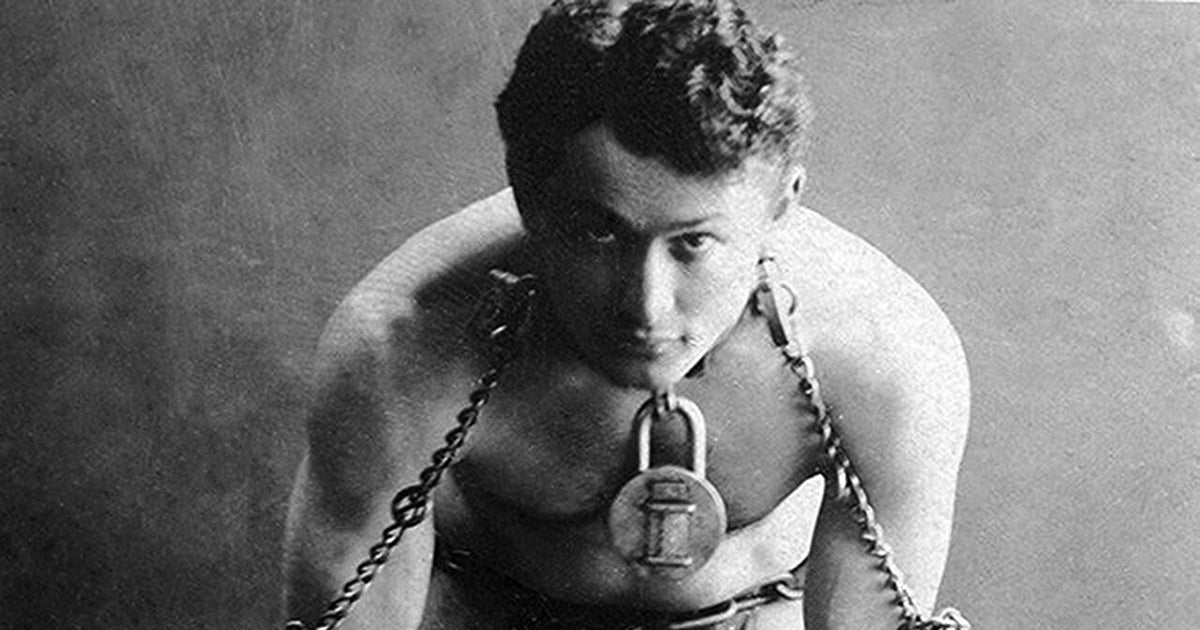
Magician Harry Houdini died in Detroit, Michigan, 100 years ago on Oct. 31, 1926, at age 52. The illusionist’s death followed a final performance at the Garrick Theatre on Oct. 24, where he performed his "3 Shows In One" revue despite having a 104-degree fever. He was later hospitalized at Detroit’s Grace Hospital, where he underwent surgeries for a ruptured appendix and peritonitis, a bacterial infection of the abdominal lining. While his death certificate officially lists the cause of death as peritonitis, researchers and historians continue to examine the specific circumstances and timing of his final days.
The events leading to Houdini’s death began on Oct. 22, 1926, in Montreal. Following a lecture at McGill University about exposing fraudulent mediums, Houdini was visited backstage by students. According to accounts from PBS and historian Roger Dreyer, a student asked if Houdini could withstand punches to the abdomen. Before Houdini could brace himself, the student delivered multiple blows. While the punches were widely reported to have aggravated a pre-existing condition of appendicitis, a new book by surgeon Larrian Gillespie, "Houdini: The Man Who Died Twice," argues that a previously unreported intestinal blockage and a last-minute surgery were the actual causes of death.
During his final week, Houdini traveled 15 hours by train from Montreal to Detroit. Despite being advised by doctors to seek immediate medical care upon his arrival at Michigan Central Station and later at the Statler Hotel, Houdini proceeded with his performance at the 1,400-seat Garrick Theatre. His contract reportedly included a $1,000 penalty for every night the theater remained dark. Witnesses, including a touring nurse, reported that Houdini collapsed backstage during intermission and required assistance to stand during his "Chinese Water Torture Cell" escape. He was rushed to the hospital after the show ended.
The circumstances of Houdini's death affect how historians and the medical community document one of the 20th century's most prominent public figures. Surgeon Larrian Gillespie reports that Houdini’s team may have favored the stomach-punch narrative to secure a double indemnity insurance payout. In 1926, this policy would have paid an additional sum valued at approximately $500,000 in contemporary currency if the death was ruled accidental rather than natural.
The exact date of Houdini's death is also a point of modern contention. While official records state he died at 1:26 p.m. on Oct. 31, 1926, Gillespie presents a case that he may have actually died on Oct. 30. A shift to Oct. 31 would ensure that the anniversary of his death coincided with Halloween, a day closely associated with the occult and spiritualism that Houdini spent his final years debunking. This association has influenced a century of commemorative events, including annual séances held by his wife, Bess, for 10 years after his death, and ongoing rituals held at his gravesite in Machpelah Cemetery in Queens, New York.
The legacy of these events continues to impact the tourism and museum sectors in Detroit and New York. The Detroit Historical Museum is scheduled to host a commemorative event on Oct. 31, 2026, marking the centenary. While the Garrick Theatre and the original Grace Hospital building have since been demolished, current residents of Houdini’s former Harlem townhouse, such as Vincent Toms, continue to host séances on the anniversary. These upcoming events and the publication of new research serve to formalize the transition of Houdini's death from living memory into a permanent subject of historical and forensic study.