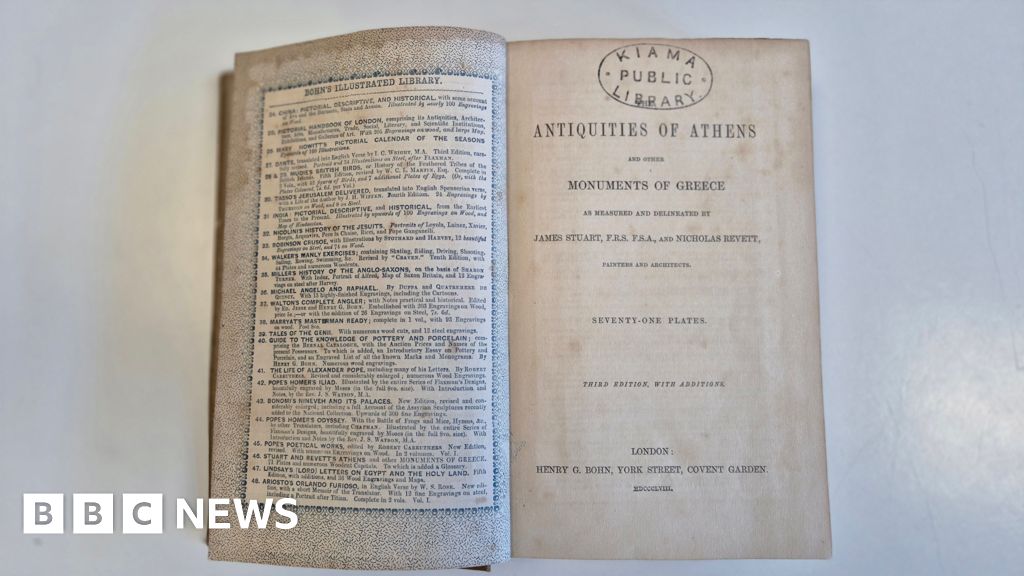
A book titled "Antiquities of Athens" has been returned to the Kiama Library in Australia approximately 150 years after it was borrowed. The cloth-bound volume, which focuses on classic Greek architecture, was discovered inside a tea chest that had been hidden behind a boarded-up fireplace for decades. Ross Simmons, 77, returned the item after identifying a library stamp on the inside cover while reviewing family records.
The book is believed to have been borrowed in the mid-1870s by John Simmons, an architect and the great-grandfather of Ross Simmons. John Simmons had previously served as an apprentice stonemason working on the Houses of Parliament in London between 1839 and 1844 before emigrating to Australia in 1857. After moving to Kiama to lead the construction of a sandstone church, he reportedly kept the book as a reference for his architectural work.
According to library records from the period, the institution was established in 1872 with a £200 grant. The returned book was marked as item number 506 in a collection that totaled fewer than 1,000 volumes at the time. While the original borrowing records have been lost, the inside cover of the book detailed strict 19th-century rules, including a limit of one book per borrower and a fine of three pence for every week a book was late.
The incident has concrete day-to-day effects on the local community and library visitors. Kiama Council libraries manager Michelle Hudson reported that the story has drawn visitors from towns up to 40 minutes away who wish to view the artifact. The book itself, which features detailed illustrations and fold-out pages of Greek monuments, will no longer be available for public borrowing. Instead, it has been moved into a special collection where it can only be viewed upon request, changing its status from a functional reference tool to a protected historical item.
The return also highlights the preservation of local history and the impact of genealogical research on public institutions. By identifying the Kiama Library stamp during a personal review of family documents, Ross Simmons facilitated the recovery of a 158-year-old publication that had been missing since the Victorian era. The library confirmed that the item, though suffering from some water damage, remains in good condition. Moving forward, the book will remain a permanent fixture of the Kiama Library’s special items collection, ensuring its availability for research while preventing its loss in the future.
What happens next: The book has been officially cataloged into the library's special collection. Members of the public who wish to see the volume must now schedule a request with library staff, as it will no longer be placed on general circulation shelves. No further legal or financial actions are expected following the waiver of the late fees.