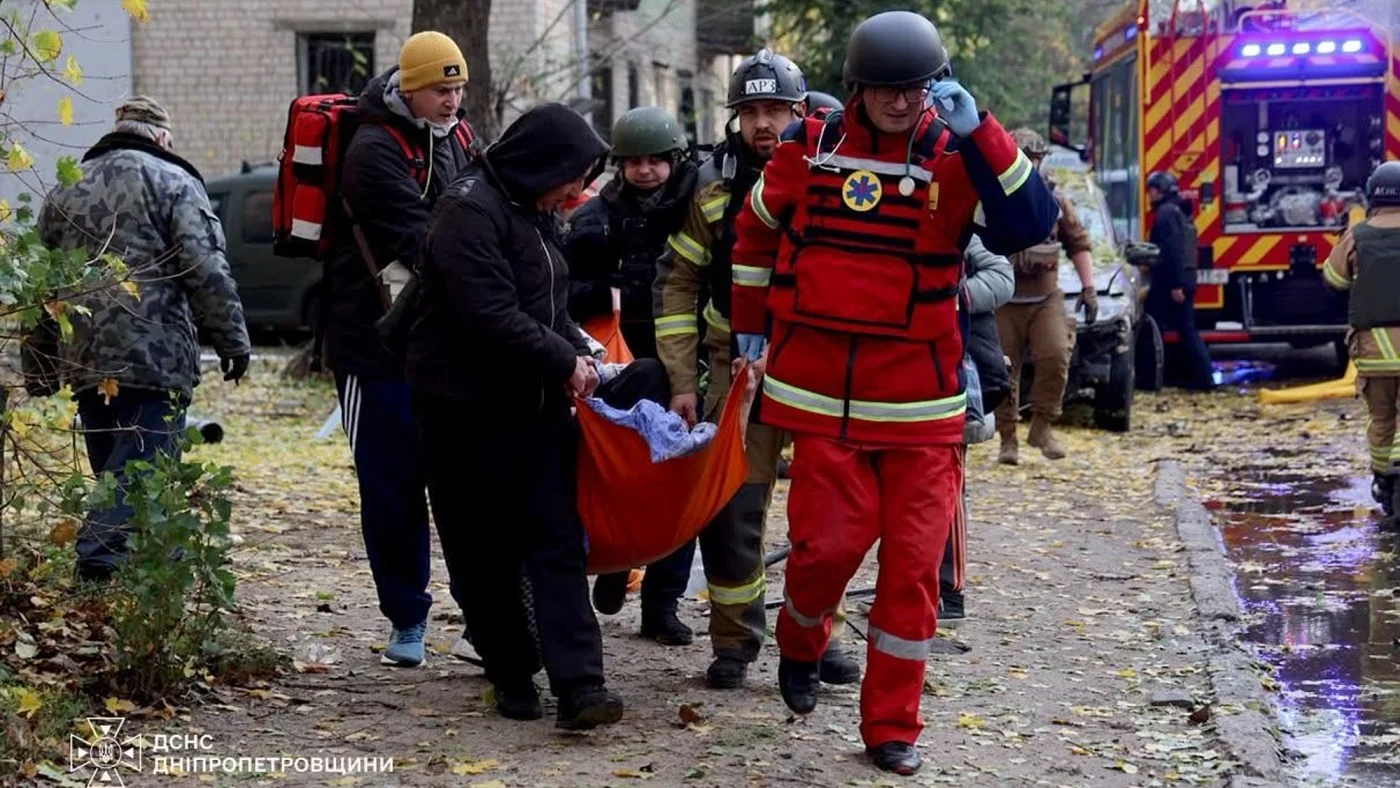
At least 29 people were confirmed dead and 48 remained missing on Tuesday following a Russian air strike on a humanitarian aid facility in southern Ukraine. The strike, which occurred on Monday in the village of Komyushuvakha, involved bunker-busting bombs containing approximately 1.5 tons of explosives, according to local officials.
The event followed the expiration of a brief, U.S.-brokered humanitarian ceasefire in the Kherson region on Sunday night. During the overnight period leading into Tuesday, President Volodymyr Zelenskyy reported that Russia launched a broad offensive consisting of 289 drones, 17 ballistic missiles, and 59 cruise missiles across nine Ukrainian regions. In response, Russia's Ministry of Defense stated it intercepted 856 Ukrainian drones, including 493 directed toward Moscow.
In the Zaporizhzhia region, acting head of the military administration Mykhailo Semikin stated the dead included four police officers and two rescue workers. In Kharkiv, local authorities reported 62 people wounded and the evacuation of 200 patients from a damaged medical facility. Meanwhile, a Ukrainian drone strike on an oil refinery in Yaroslavl, Russia, wounded two employees and damaged infrastructure, according to Governor Mikhail Yevrayev. Additionally, emergency alert apps in both Ukraine and Russia were hacked on Sunday night, sending false warnings of nuclear and chemical attacks to millions of users.
The physical scale of the attacks has immediate consequences for the health care and energy sectors. In Kharkiv, the transfer of 200 patients due to hospital damage shifts the burden to neighboring medical facilities already managing 62 new casualties from recent strikes. In Russian-occupied Crimea, Moscow-installed officials implemented rolling blackouts across southern, western, and eastern districts following strikes on power infrastructure. These outages directly impact daily household electricity access and the operational capacity of essential services.
What happens next: Search and rescue operations continue in Komyushuvakha as volunteers attempt to locate the 48 missing residents beneath the rubble of the aid center. Zaporizhzhia has entered a three-day period of official mourning. While Ukrainian human rights commissioner Dmytro Lubinets stated that both sides are discussing further humanitarian measures following the recent local truce, no new ceasefire dates have been established. President Zelenskyy has called for increased international support for air defense systems to mitigate future strikes.