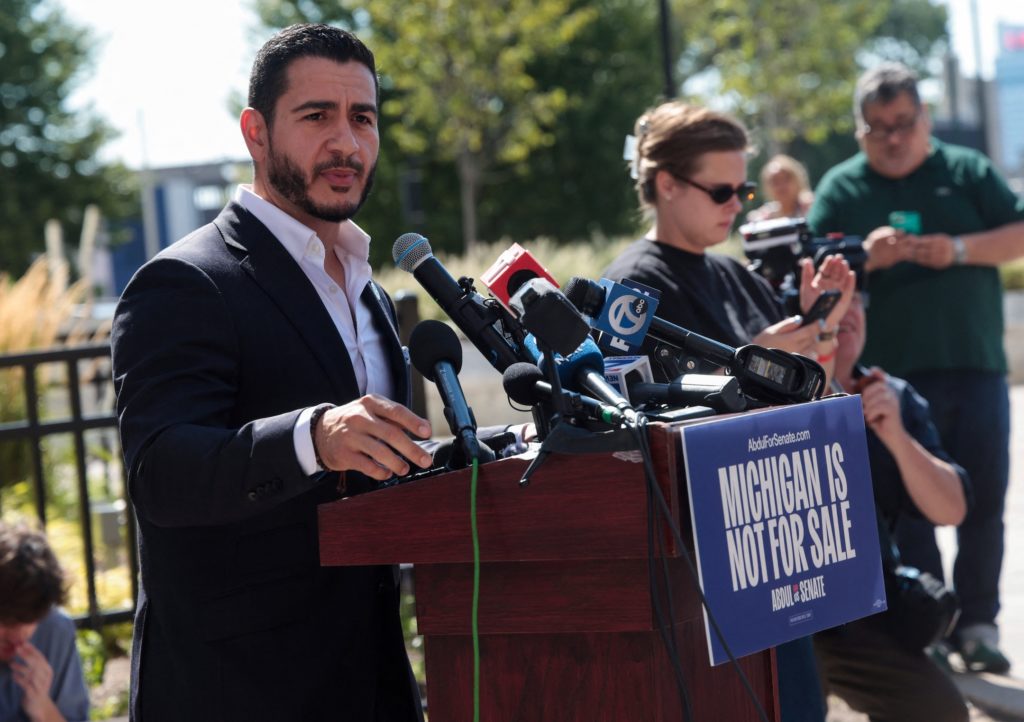
Abdul El-Sayed won the Democratic primary for Michigan’s U.S. Senate seat on Tuesday, defeating Rep. Haley Stevens. El-Sayed, a progressive candidate who has not previously held elected office, will face Republican nominee Mike Rogers in the November general election. The race was described by Democratic strategist Lis Smith as a contest between an establishment-backed incumbent and a candidate offering a different direction for the party following the 2024 election.
The primary was one of the most expensive in the country, with outside groups spending more than $60 million to support Stevens. Despite this spending, El-Sayed maintained that his campaign focused on direct voter engagement regarding the costs of groceries, gas, housing, and health care. In his victory speech on Wednesday, El-Sayed stated that the "power of our many is greater than the power of their money."
A central point of division in the campaign was U.S. policy toward Israel. Stevens advocated for unconditional aid to Israel, while El-Sayed argued against providing a "blank check" to the government of Prime Minister Benjamin Netanyahu. El-Sayed also frequently criticized the American Israel Public Affairs Committee (AIPAC), an organization that funds campaigns, as part of a broader message against corporate and outside spending in Democratic politics.
For Michigan residents, the results signal a shift in the political platform they will see on their ballots in November. Voters will notice a choice between two distinct approaches to federal policy: El-Sayed’s platform, which includes opposition to unconditional aid for Israel and a focus on domestic cost-of-living issues, versus Rogers’ Republican platform. This primary victory for a progressive candidate in a "purple" state serves as a test case for whether a platform centered on challenging party establishment and corporate spending can succeed in a general election against a Republican opponent.
The knock-on effects of El-Sayed’s win are being felt across the national Democratic Party as it undergoes what strategists call a "post-2024 reckoning." While progressives saw a victory in Michigan, establishment-backed candidates were successful in other races, such as Wesley Bell’s defeat of Cori Bush in Missouri. This suggests an ongoing debate within the party regarding its leadership and ideological direction. The next major milestone is the general election in November, where El-Sayed must attempt to expand his coalition to include independent and swing voters to secure the Senate seat.