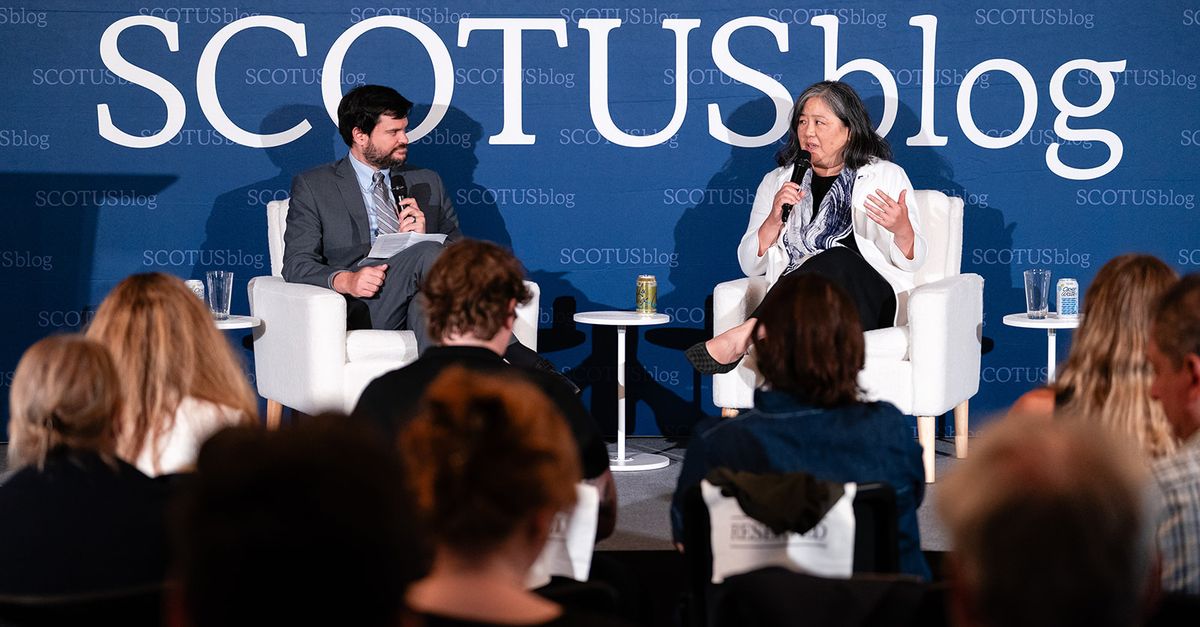
In a July 2026 interview with SCOTUSblog, ACLU National Legal Director Cecillia Wang discussed the organization’s recent litigation strategy and the implications of several Supreme Court rulings. The conversation focused heavily on the limits of executive power following a term where the ACLU acted as respondent in multiple high-profile cases involving birthright citizenship, firearms regulations, and immigration status.
The discussion followed a Supreme Court term marked by the second term of the Trump administration. Wang noted that the ACLU's Supreme Court docket has reached peak levels of activity during this period, handling five merits cases and 10 amicus briefs in the most recent term. The interview highlighted an era of increased legal challenges to executive orders and federal statutes affecting civil liberties.
A primary focus was the case of Trump v. Barbara, which addressed the constitutionality of birthright citizenship. The Supreme Court ruled 5-4 to strike down an executive order intended to end the practice. Chief Justice John Roberts wrote the majority opinion, joined by Justices Sonia Sotomayor, Elena Kagan, Amy Coney Barrett, and Ketanji Brown Jackson. Justice Brett Kavanaugh joined the majority on statutory rather than constitutional grounds, while Justices Clarence Thomas, Samuel Alito, and Neil Gorsuch dissented.
Wang also detailed the ACLU's involvement in United States v. Hemani, a Second Amendment case. The court ruled in favor of Ali Hemani, who challenged a federal law making it a felony for an unlawful user of a controlled substance to possess a firearm. Despite the ACLU’s internal policy that the Second Amendment does not provide an individual right to possess firearms, Wang stated the organization intervened to challenge what she described as an arbitrary deprivation of rights and a "categorical presumption of dangerousness."
For individuals like the client in United States v. Hemani, the court’s decision impacts how federal law enforcement applies 18 U.S.C. § 922(g)(3). This statute previously allowed for felony charges against any person possessing a firearm while using a controlled substance, including marijuana. The ruling provides a check against what Wang characterized as discriminatory or retaliatory prosecutions, potentially affecting any firearm owner who also uses substances currently prohibited under federal law. The outcome reinforces due process protections, ensuring that the right to bear arms—as currently interpreted by the Court—cannot be stripped based on substance use alone.
The ACLU’s losses in other cases, such as Louisiana v. Callais and matters regarding Temporary Protected Status (TPS), signal a shift in how the court applies equal protection and the Voting Rights Act of 1965. In the TPS cases, the court’s decision allows the president to decline the renewal of temporary status for foreign nationals who cannot safely return to their home countries. This affects thousands of residents who previously lived under the auspices of congressional protection programs. Wang noted that the ACLU intends to pivot toward legislative reforms in Congress and state legislatures to address these issues, as the Supreme Court rulings have finalized the legal limits of these specific programs for the foreseeable future.