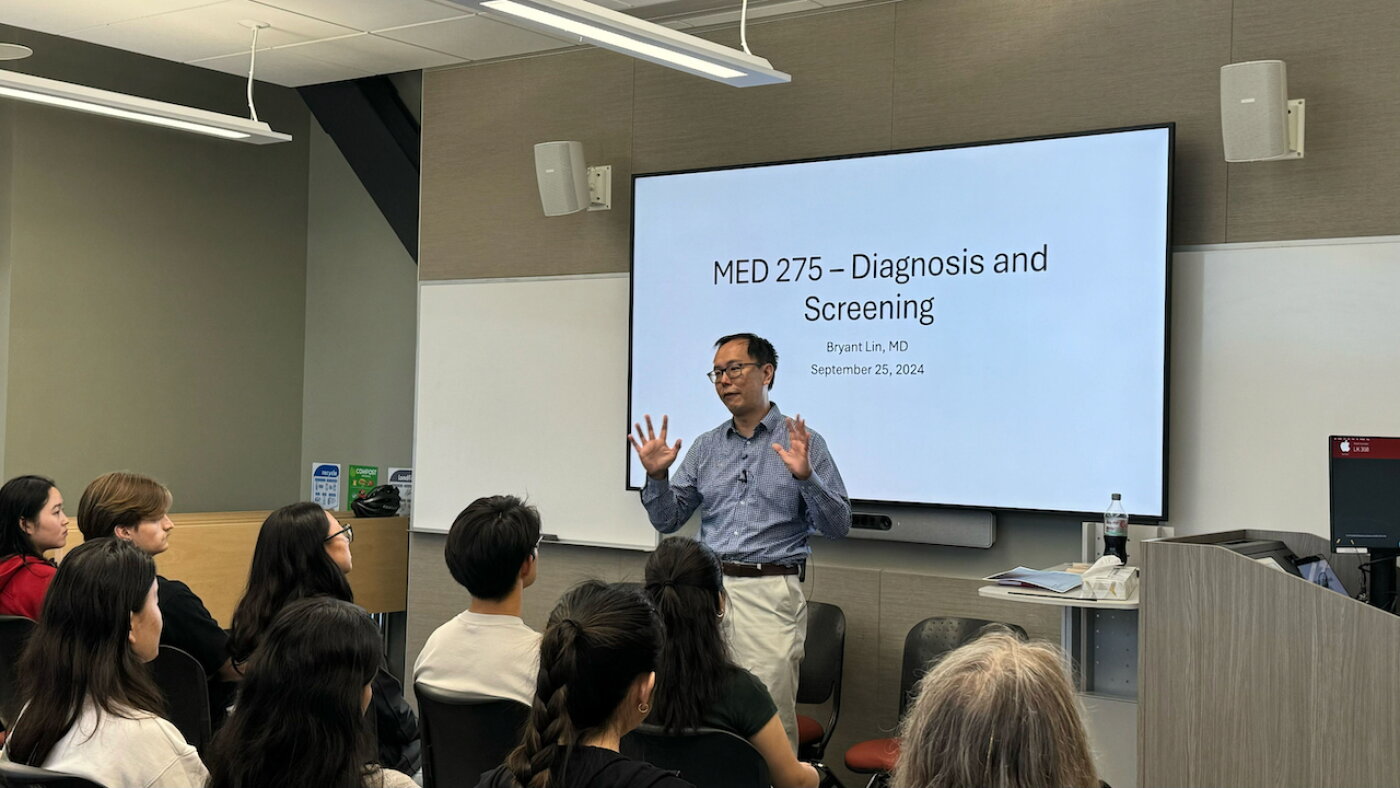
Stanford medical professor Bryant Lin, who founded the school’s Center for Asian Health Research and Education, was diagnosed with Stage IV lung cancer in May 2024. Dr. Lin, a non-smoker, has used his experience as both a patient and an expert to advocate for personalized therapeutics and expanded screening. He reported that while lung cancer remains a leading cause of death, advances in genetic testing and targeted drugs are shifting how the disease is managed.
The genetics of lung cancer are complex, but recent technological developments allow oncologists to identify specific mutations driving cell growth through comprehensive genomic testing. According to UCLA oncologist Dr. Jonathan Goldman, identifying these biomarkers allows doctors to select drugs designed for specific cancer subtypes. These targeted treatments often result in fewer side effects than general chemotherapy and have increased survival from under a year to several years for some patients.
Despite the effectiveness of targeted therapy, Dr. Goldman stated that fewer than half of U.S. lung cancer patients receive genetic testing before treatment. He noted that such evaluation is not yet the "standard of care" and that rapid changes in technology mean some general oncologists may not be up-to-date on new developments. Patient advocate Jill Feldman and Dr. Eric Singhi of MD Anderson emphasized that while biomarker testing can take two to three weeks, waiting for results helps avoid the "wrong treatment" and correlates with better clinical outcomes.
Medical costs remain a significant barrier for many patients. Dr. Lin reported that his own treatment involved drugs costing $16,000 per month, with some oral and intravenous therapies reaching hundreds of thousands of dollars. He noted that insurers often require prior authorization or deny coverage for new drugs that are not yet considered standard protocol, which delayed his own treatment at a critical stage.
New research is exploring personalized mRNA vaccines and treatments that crossover from other cancers. For example, a drug named Rasonque (daraxonrasib) was approved in August 2026 for pancreatic cancer after clinical trials showed it doubled survival to over 13 months. Because both pancreatic and certain lung cancers are driven by the KRAS gene family, researchers are investigating if similar mRNA vaccines can re-enlist the immune system to fight lung tumors.
A person diagnosed with lung cancer will now face a choice between starting immediate chemotherapy or waiting two to three weeks for biomarker results that could lead to less toxic, pill-based treatments. For those whose initial treatments fail, the rapid pace of drug approvals—such as the combination of amivantamab and lazertinib for EGFR mutations—provides a sequence of backup options that did not exist a decade ago. However, the day-to-day reality for many involves a "limbo" of waiting for scans and fighting for insurance authorizations for expensive, non-standard medications.
What happens next: Researchers are currently focused on improving screening rates, which remain at 18% for high-risk patients. Future developments include the implementation of AI imaging and sensitive blood tests to detect disease years earlier than current CT scans. For patients like Dr. Lin, the immediate next steps involve monitoring for cancer progression; following a recent scan showing growth, he is now evaluating a switch to a different antibody drug approved in 2025 or enrolling in new clinical trials.