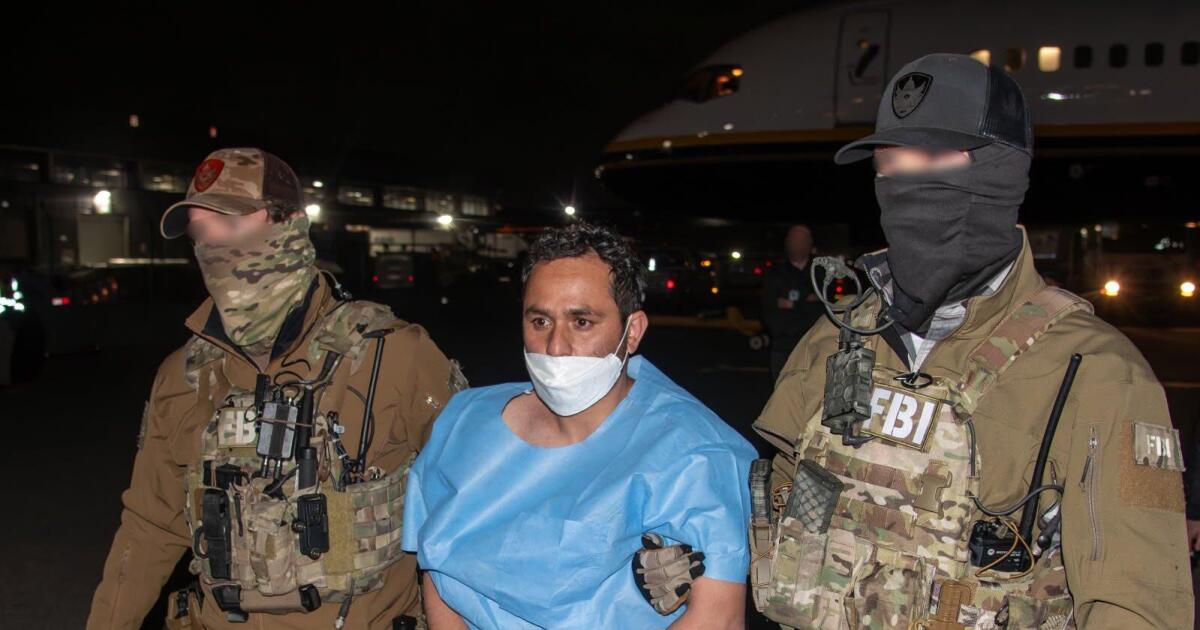
A 28-year-old Afghan man was sentenced to 20 years in prison on Wednesday for providing material support to the Islamic State affiliate known as ISIS-K. U.S. District Judge Anthony Trenga imposed the maximum sentence against Mohammad Sharifullah following his conviction by a federal jury in Virginia in April. Sharifullah was extradited to the United States after being captured in early 2025 by Pakistani intelligence and the CIA near the Afghanistan-Pakistan border.
The sentencing follows a trial where jurors were unable to reach a unanimous decision on whether Sharifullah bore responsibility for the August 26, 2021, suicide bombing at Hamid Karzai International Airport’s Abbey Gate. That attack, which occurred during the U.S. military withdrawal from Afghanistan, killed 13 U.S. service members and approximately 160 Afghans. Prosecutors alleged that Sharifullah scouted a route to the airport to ensure it was clear of Taliban checkpoints for the bomber.
During the proceedings, Judge Trenga described Sharifullah as a "dedicated terrorist" who showed no remorse. The court heard victim impact statements from parents of the deceased U.S. service members, including Mark Schmitz, father of Marine Corps Lance Cpl. Jared Schmitz, and Paula Knauss-Selph, mother of Army Staff Sgt. Ryan Knauss. While prosecutors sought 20 years, defense attorneys requested 17, arguing there was no evidence linking him to the airport attack beyond statements he made while fearing he or his family would be tortured in Pakistani custody.
Beyond the 2021 bombing, the Justice Department stated Sharifullah provided surveillance and logistical support for other ISIS-K operations. These included a 2016 suicide bombing targeting security guards at the Canadian embassy in Kabul and a March 2024 attack on a Moscow concert hall that killed roughly 140 people. Prosecutors noted Sharifullah had pledged an oath to ISIS-K as a teenager and previously expressed a desire to kill Americans following the U.S. invasion after the September 11, 2001, attacks.
For the public and federal law enforcement, the case underscores the ongoing legal pursuit of individuals associated with ISIS-K, a group that has claimed responsibility for mass-casualty events in Afghanistan, Russia, and elsewhere. While the 20-year term is the maximum for the conviction, it is less than the life sentence Sharifullah could have faced had the jury unanimously found that his actions directly resulted in the deaths at Abbey Gate. This distinction highlights the evidentiary challenges in prosecuting international conspiracy cases where specific links to a singular event are contested.
The case involved statements made by a detainee who was previously held by foreign intelligence agencies. Defense attorneys argued the statements were coerced by the fear of torture, a claim that remains a point of contention in terrorism prosecutions. With the sentencing now complete, Sharifullah will begin his two-decade term in federal prison. There were no further court dates or pending charges against him reported in the immediate aftermath of the ruling.