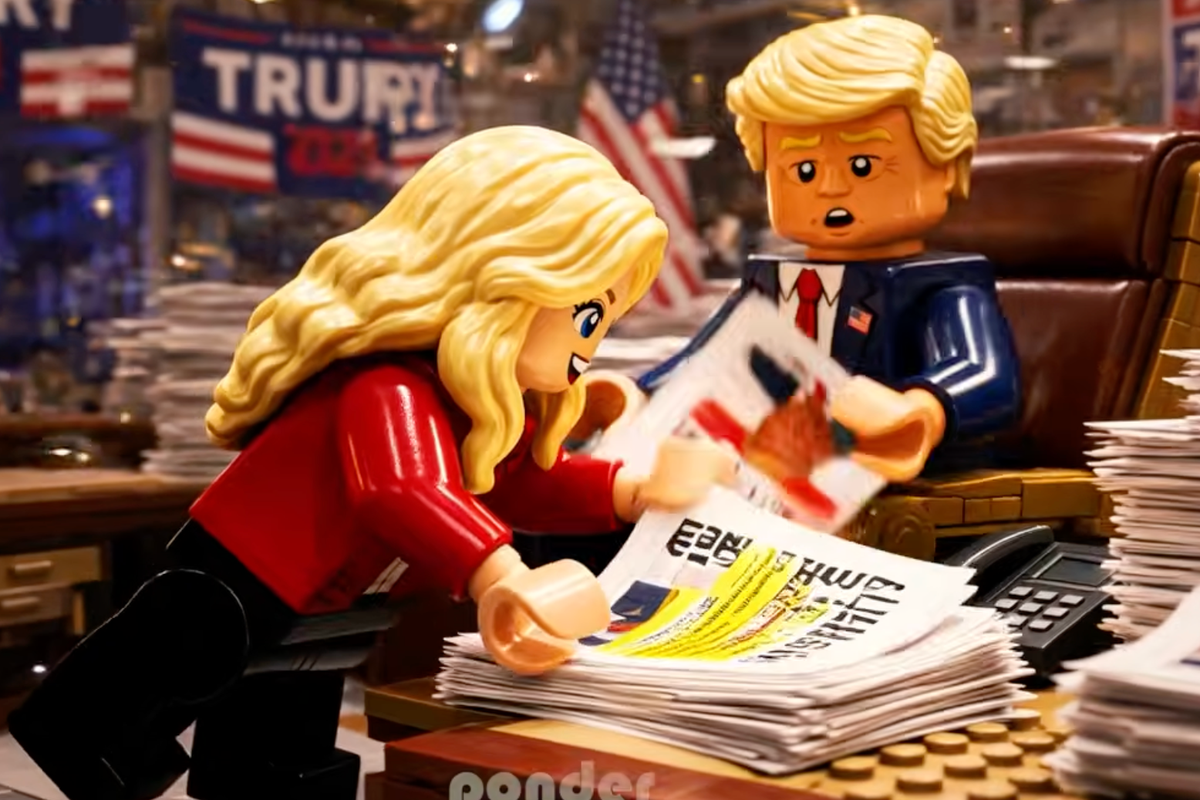
A new artificial intelligence-generated video featuring Lego-style versions of President Donald Trump and White House aide Natalie Harp was released Thursday. Created by Drew Ponder, the parody video depicts Harp, 35, following the president in various settings while carrying a portable printer. The video also features a Lego version of First Lady Melania Trump reacting to Harp’s proximity to the president.
The parody draws on recent reports regarding Harp’s professional duties and her working relationship with the president. The New York Times previously reported that Harp has earned the nickname "the human printer" because she carries a portable device to provide the president with physical copies of positive news articles, social media commentary, and opinion pieces. The video also references claims that Harp once sprinted behind the president’s golf cart in Scotland and reportedly wrote devotional letters to him.
In the video, an AI-generated country-style song includes lyrics questioning Harp’s constant presence and depicts the First Lady as skeptical. The creator, Ponder, has produced similar AI-generated Lego parodies in the past featuring other administration figures, including FBI Director Kash Patel and Defense Secretary Pete Hegseth. The animation style is noted for resembling videos previously released by pro-Iranian groups.
The scale of the attention on this staffer reached a national level last week when Sen. Jon Ossoff (D-GA) mentioned Harp by name during a rally. Ossoff criticized the president for traveling with Harp on what he described as a "defenseless flying palace." These comments affected the day-to-day political discourse for White House officials, who issued backlashes against the senator’s remarks. For the general public, the situation demonstrates how AI technology can quickly turn specific reported details about government operations—such as the use of a portable printer—into viral media.
The use of AI to create these parodies sets a precedent for how political figures and their subordinates are portrayed in the digital age. While the videos themselves are parodies, they are built on reported claims about internal White House conduct, such as Harp reportedly apologizing in writing for "forgetting to eat" or "forgetting to sleep" while working. What happens next depends on how the administration continues to manage the public profile of its aides; no specific legislative or legal actions related to the video have been scheduled, though Harp remains a subject of discussion among both Democratic critics and Trump allies.