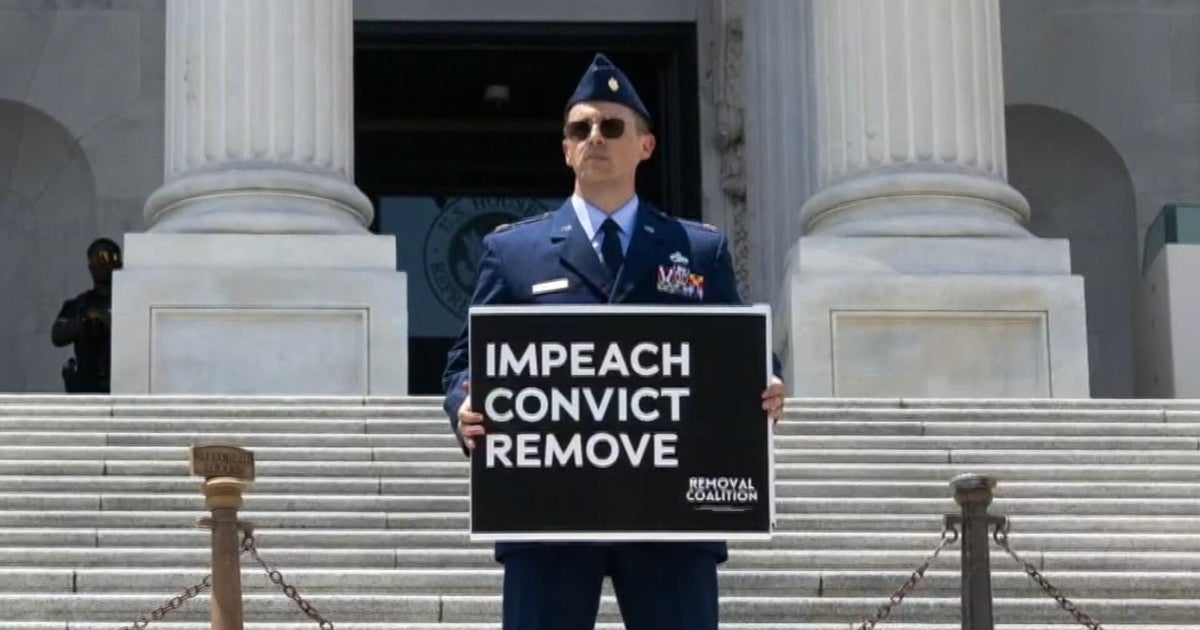
An Air Force officer faces criminal charges under the Uniform Code of Military Justice (UCMJ) for making public statements critical of President Trump regarding conflict with Iran. Major Jason Watson is charged with three violations of Article 88, which prohibits commissioned officers from using contemptuous words against certain government officials. According to reports, this is the first time a major has been charged under this specific article in U.S. military history.
The case follows two recent instances where Watson was detained by authorities. In July, he was detained while protesting in uniform at the U.S. Capitol with a sign calling for the president's impeachment. He was detained a second time following a television interview in which he accused the president of violating the Constitution and engaging in corruption. In addition to the Article 88 violations, the 40-year-old officer is charged with conduct unbecoming an officer and disobeying orders.
Watson's attorney stated that the officer stands by his actions, noting that Watson believed he acted so that others would not have to. Following the initial July detention, Air Force Secretary Troy Meink issued a statement via social media emphasizing that all airmen are expected to comply with laws and policies regarding personal conduct, political participation, and the proper wear of the military uniform. While military disciplinary matters are often handled internally, these charges represent a formal criminal proceeding within the military justice system.
For the individual service member, this case highlights a concrete distinction in legal rights: while a civilian may publicly call for a president's impeachment without legal penalty, a commissioned officer doing so while in uniform or in a public forum faces potential imprisonment, dismissal from the service, and loss of all pay and allowances. Service members will notice a reinforced emphasis on military regulations regarding political activity, which restrict their ability to participate in protests while in uniform or to use their rank to lend weight to partisan statements. The timing of this enforcement suggests that the military leadership is prioritizing the enforcement of political neutrality within the ranks during periods of international conflict.
The knock-on effects could influence how military legal departments advise officers on their social media usage and public appearances. A conviction would provide a modern roadmap for prosecutors to address dissent within the officer ranks, potentially leading to stricter monitoring of public statements by high-ranking personnel. The source does not report a specific trial date or the maximum potential sentence Watson faces. The next steps in the legal process include the formal proceedings under the military justice system, though the specific schedule for hearings has not been disclosed.