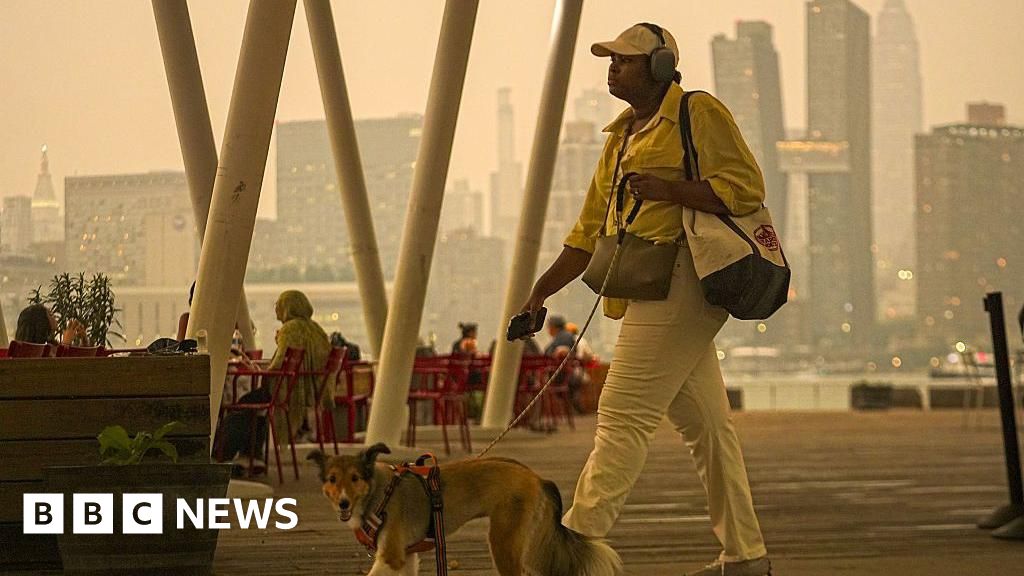
More than 800 active wildfires are burning across Canada, with 858 blazes reported by the Canadian Wildland Fire Information System as of Thursday. The majority of these fires are located in northwestern Ontario and are currently classified as burning out of control. Smoke from these incidents has crossed the border into the United States, prompting air quality alerts across the Upper Midwest, Great Lakes region, and parts of the Northeast.
According to the US Air Quality Index, conditions reached "hazardous" levels in parts of Michigan and Minnesota. In New York City, authorities activated air quality emergency protocols, which included the distribution of masks and the opening of cooling centers. Meteorologists expect northwesterly winds to continue transporting smoke into the United States through the weekend, with a predicted wind shift on Monday expected to move the plumes toward Quebec.
The ongoing fires have led to political tension between US and Canadian officials. Four Republican House representatives from Michigan issued an open letter to Canadian Prime Minister Mark Carney requesting improved forest management. Prime Minister Carney responded by stating that both nations share a responsibility to address climate change and emphasized that his government is coordinating with local provinces. Ontario Premier Doug Ford defended the provincial response, noting that over 150 fire crews are currently deployed.
The wildfires have caused physical damage and displacements in northern Ontario. Several First Nations communities have been evacuated, and reports indicate damage to homes and infrastructure. Canadian National Rail temporarily suspended operations in the Armstrong region after a freight train was surrounded by flames; the company confirmed that all affected workers were rescued safely.