The Plain Record

Neutral daily news — clear headlines, complete facts.

National

Aleksandar Vucic Concedes Defeat in Serbian Parliamentary Election

Aleksandar Vucic conceded defeat to a student-led movement in Serbia's parliamentary election following high voter turnout and two years of protests.

By The Plain RecordUpdated October 25, 2026 at 7:12 PM EDT
Published October 25, 2026 at 6:05 PM EDT

The short answer

Aleksandar Vucic conceded defeat to a student-led movement in Serbia's parliamentary election following high voter turnout and two years of protests. Aleksandar Vucic, the former president of Serbia and prime ministerial candidate for the Serbian Progressive Party (SNS), conceded defeat on Sunday, October 25, 2026, in a snap parliamentary election.

Updates (2)

  • Update — October 25, 2026 at 7:12 PM EDT: Aleksandar Vucic and the SNS party lost their parliamentary majority to a youth-backed movement following two years of anti-government protests.
  • Update — October 25, 2026 at 6:05 PM EDT: The snap elections came following nearly two years of student-driven demonstrations against perceived corruption and creeping authoritarianism
Aleksandar Vucic Concedes Defeat in Serbian Parliamentary Election

The Facts

Who
Aleksandar Vucic, the Serbian Progressive Party (SNS), and the Student List movement.
What
Aleksandar Vucic conceded the Serbian parliamentary election to the Student List movement.
When
Sunday, October 25, 2026
Where
Serbia
Why
Vucic conceded after preliminary results showed the student-led opposition winning a majority of parliamentary seats following a high-turnout election prompted by long-standing anti-corruption protests.

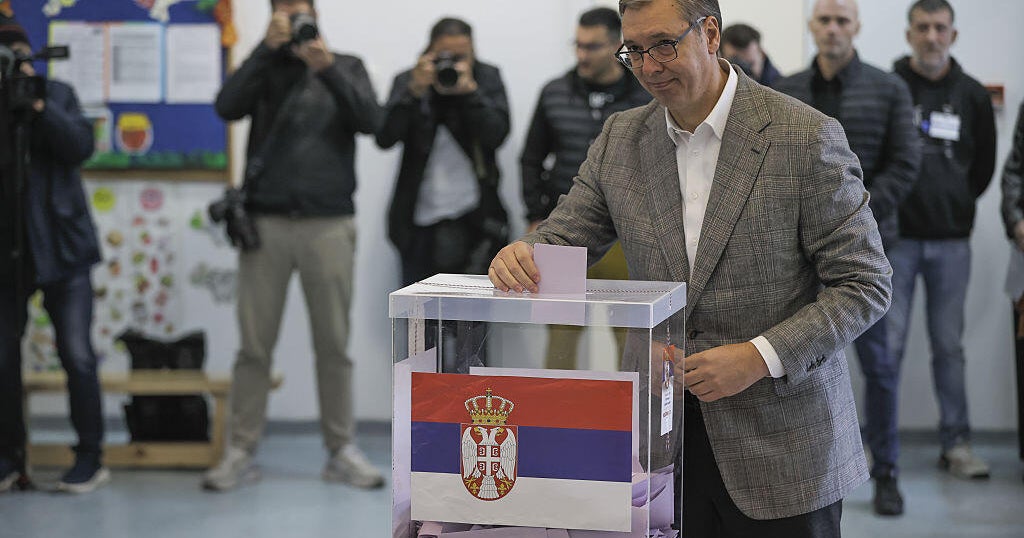
Aleksandar Vucic, the former president of Serbia and prime ministerial candidate for the Serbian Progressive Party (SNS), conceded defeat on Sunday, October 25, 2026, in a snap parliamentary election. Preliminary results indicated that the Student List, a movement backed by youth and university students, won the majority of seats in the 250-member parliament. Vucic announced his party's loss at a campaign event in Belgrade approximately 90 minutes after polls closed.

The election followed two years of protests triggered by the November 2024 collapse of a concrete canopy at the Novi Sad railway station, which resulted in 16 deaths. Demonstrators attributed the tragedy to government corruption and graft. Vucic, who had served as president for two near-full terms, resigned that office last month to lead the SNS campaign. During the race, he characterized the student movement as a foreign-led effort to unseat him and cited alleged interference by European countries and U.S. interests.

According to projections provided by Vucic and pollsters CeSID-Ipsos, the Student List is expected to secure between 135 and 140 seats, while the SNS party is projected to hold between 104 and 105 seats. Remaining seats are expected to be held by ethnic minority parties. Vucic reported that the Student List received approximately 2.2 million votes, compared to 1.7 million for the SNS. The election saw a turnout of approximately 67.6% to 70%, which monitors noted as the highest participation rate in Serbia since the 1992 breakup of Yugoslavia.

The scale of the shift is represented by the transfer of parliamentary control to a movement whose candidates include academics, farmers, and athletes rather than established politicians. This outcome may influence Serbia’s standing as a candidate for European Union membership, as the EU had been monitoring the vote following reports of media control and surveillance of activists. The result also establishes a precedent for youth-led political movements in the region, drawing parallels to recent electoral changes in neighboring Hungary.

In the immediate term, residents in Belgrade and other cities observed celebratory gatherings following the announcement. However, independent monitors, including CRTA, reported irregularities such as vote-buying and voter pressure during the balloting process. The new parliament will be responsible for forming a government and selecting the next prime minister. While Vucic has conceded based on preliminary data, the final official seat counts and the formal start date for the new legislative session have not yet been reported.

Timeline of what happened

Key dates and decisions, in the order they occurred.

  1. November 1, 2024

    Novi Sad train station canopy collapse kills 16

  2. September 2026

    Vucic resigns presidency to lead snap election campaign

  3. October 25, 2026

    Serbian citizens vote in parliamentary election

  4. October 25, 2026

    Vucic concedes defeat after polls close

Summaries are written by The Plain Record to state the facts of a story plainly and without political slant. Drafted with AI assistance and checked against the source record before publication. See how we report, or report a correction.

← Back to the front page

Questions readers ask

What happened: Aleksandar Vucic Concedes Defeat in Serbian Parliamentary Election?

Aleksandar Vucic conceded the Serbian parliamentary election to the Student List movement.

Who is involved?

Aleksandar Vucic, the Serbian Progressive Party (SNS), and the Student List movement.

When did this happen?

Sunday, October 25, 2026

Where did this happen?

Serbia

Why does this matter?

Vucic conceded after preliminary results showed the student-led opposition winning a majority of parliamentary seats following a high-turnout election prompted by long-standing anti-corruption protests.