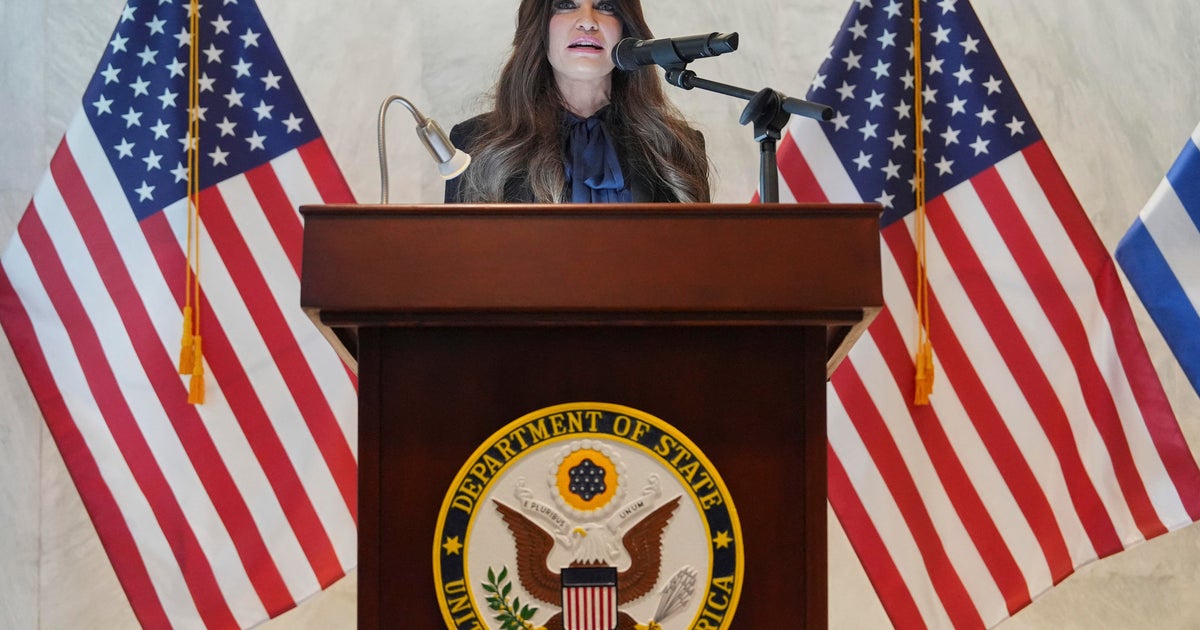
Businessman Eric Deters, a retired Kentucky lawyer and supporter of President Donald Trump, has alleged that U.S. Ambassador to Greece Kimberly Guilfoyle requested $100,000 to pay off a credit card debt in exchange for political access. Deters described the request as a "quid pro quo" and "pay to play" arrangement during interviews with CBS News and ABC News. He stated that he did not provide the money, citing his wife's disapproval and a lack of funds as reasons.
The allegations center on text messages reportedly sent on July 3, 2025, six days before Guilfoyle’s Senate confirmation hearing. According to screenshots and reports from the Wall Street Journal, Guilfoyle allegedly asked Deters to wire the funds directly to her American Express account so the transaction would not be publicly visible. Sources told CBS News that White House officials were informed the messages were authentic, while Guilfoyle’s attorney, Jesse Binnall, disputed their authenticity to the Journal.
Deters claimed he sought Guilfoyle’s help in extraditing an Ohio surgeon, Abubakar Atiq Durrani, and resolving an IRS inquiry regarding a tax deduction. In exchange for assistance with administration officials like then-Attorney General Pam Bondi and then-IRS Commissioner Billy Long, Deters alleged he was asked for the $100,000 payment. Deters previously paid Guilfoyle $300,000 for appearance fees at his Freedom Fest event, along with payments to Donald Trump Jr. and Eric Trump.
Secretary of State Marco Rubio, speaking to reporters in Greece, declined to comment on the specific allegations, stating that reported information from unnamed sources is "not the gospel." Vice President JD Vance said he had no personal relationship with Guilfoyle and expressed disapproval of the concept of selling access to government officials, though he noted he did not have full details on the specific case.
For ordinary citizens and government observers, the case highlights the process of Senate confirmation for high-level diplomats and the rules surrounding gifts and lobbying. If the allegations were proven to involve a trade of government action for personal debt payment, a person in Guilfoyle's position could face investigations by the State Department or Congress regarding ethics violations or federal laws governing public officials. The reports suggest these exchanges occurred just before her July 9, 2025, hearing, raising questions about the vetting process for individuals appointed to represent the U.S. abroad.
The knock-on effects include potential scrutiny of the State Department’s internal oversight and the precedent for how the administration handles allegations against confirmed ambassadors. Deters has stated he intends to take Guilfoyle's deposition and seeks her removal from her post in Greece. As of October 8, 2026, the State Department had not announced a formal investigation, though some Trump aides reportedly expressed displeasure. Further developments may depend on whether additional communications from the messaging app Signal are recovered or if congressional committees initiate inquiries.