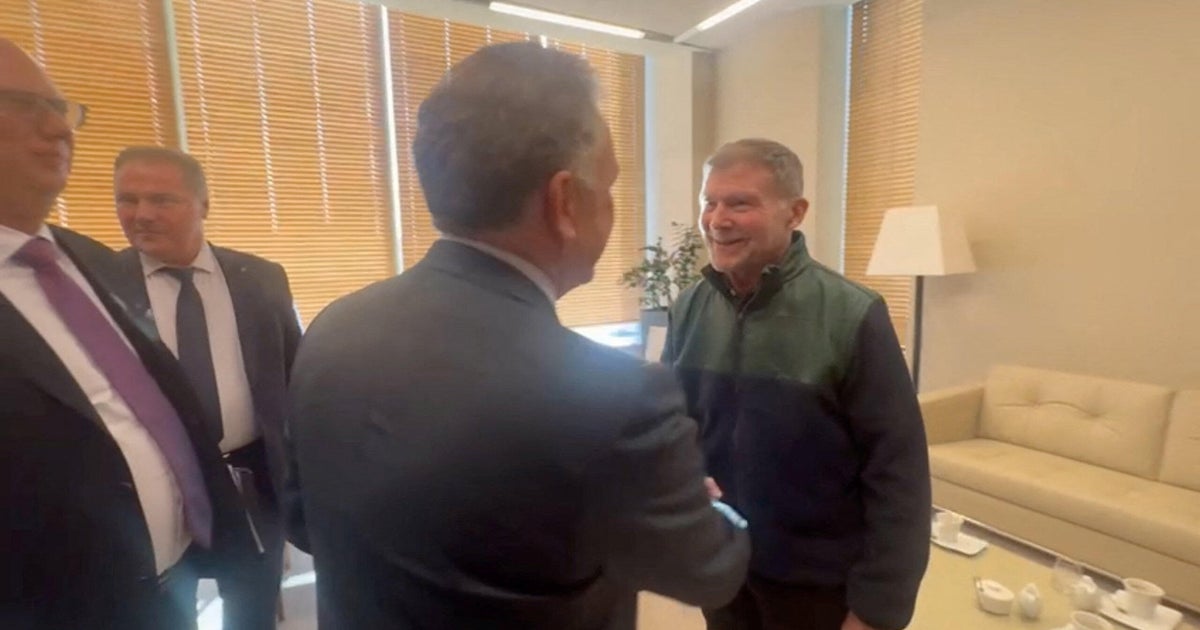
Stephen Hubbard, a 74-year-old American citizen, was released from Russian custody on October 21, 2026, after more than four years of imprisonment. U.S. special envoy Steve Witkoff and Russian President Vladimir Putin announced the release during a meeting, following which Hubbard departed from St. Petersburg. President Trump stated he requested the release and noted that his decision to waive new sanctions against Russia played a role in the agreement.
Hubbard, a retired schoolteacher, was captured in Ukraine in 2022 shortly after the Russian invasion began. Russian authorities accused him of manning a checkpoint for mercenaries and sentenced him to nearly seven years in a penal colony following a closed-door trial. The U.S. government had designated Hubbard as wrongfully detained, and his family and legal team consistently disputed the charges, stating there was no evidence he served in the Ukrainian military.
Fr. Joseph Coleman, Hubbard's son and a Greek Orthodox priest living in Cyprus, said in a television interview that his father had expressed "extreme tiredness with life" during a phone call from prison in May 2025. Coleman noted that the family had lost track of Hubbard for approximately three years following his initial detention. Martin De Luca, Hubbard's attorney, stated that when his team began the case in February 2025, neither the family nor the U.S. Embassy knew Hubbard’s exact location until Russian lawyers eventually situated him.
Upon his release, Witkoff described President Putin as a "humanitarian," a comment that received criticism from both Republican and Democratic lawmakers. Critics noted that Putin is currently wanted by the International Criminal Court for alleged war crimes. Coleman described the release as an act of "compassion and even mercy" and a step toward peace, though he acknowledged his father may have made a mistake by not leaving the war zone when Russian forces advised foreign nationals to depart.
The scale of the diplomatic exchange involved the waiver of U.S. sanctions against Russia, though the specific dollar value of these sanctions was not reported. President Trump linked the release to his administration's decision to block new sanctions from taking effect. For the average American, this highlights the ongoing use of high-level diplomatic and economic levers—such as sanctions relief and purchases of Russian diesel—to resolve individual detention cases, even as Russia remains excluded from the list of state sponsors of wrongful detention, a designation currently held by Iran and Afghanistan.
For the Hubbard family, the immediate change is the end of a four-year period of isolation and legal uncertainty. Hubbard will now require medical assessment and a period of adjustment to freedom after his time in a penal colony. The precedent set by this case involves direct engagement between the U.S. special envoy and the Russian President despite the ongoing conflict in Ukraine. While Hubbard has returned home, the State Department has not announced any changes to its travel warnings, and no specific dates have been set for the potential release of the remaining 20 Americans in Russian custody.