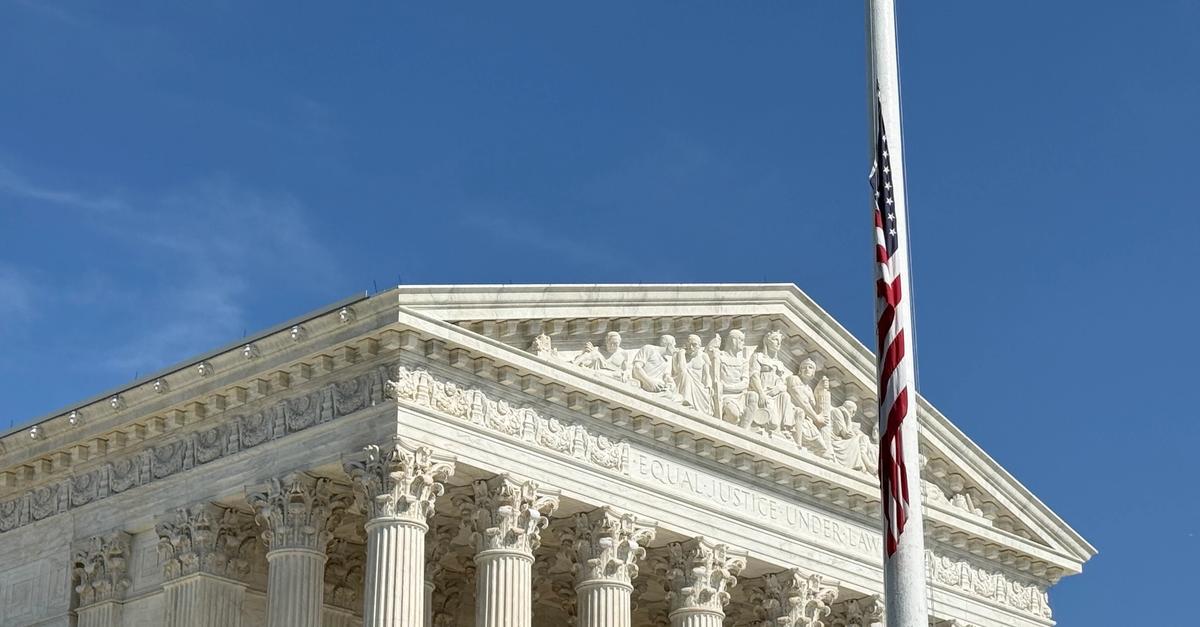
On October 6, 2026, marking the 40th anniversary of Justice Antonin Scalia’s swearing-in to the U.S. Supreme Court, legal scholar Steven Gow Calabresi reflected on Scalia's role in shifting American jurisprudence toward originalism. A central focus of this legacy was a June 14, 1986, speech Scalia delivered at the Conference on Economic Liberties. At the time, Scalia was a judge on the U.S. Court of Appeals for the District of Columbia Circuit and was being considered for a Supreme Court vacancy.
The 1986 speech, titled "Original Meaning," occurred during a period when Attorney General Ed Meese and Judge Robert H. Bork had been advocating for a "jurisprudence of original intent." This philosophy suggested that judges should interpret the Constitution based on the intentions of those who drafted it. Scalia used the address to argue against this approach, proposing instead that judges should follow the "original public meaning" of legal texts.
Scalia’s argument for original public meaning focused on how the words of the Constitution would have been understood by the public at the time of ratification. He contended that legislative history was often contradictory and that dictionaries were more reliable tools for interpretation than the personal writings of the Framers. During the speech, Meese’s chief of staff, Ken Cribb, signaled the attorney general's agreement with the distinction by placing a card reading "Stipulated" on Scalia's podium.
The shift from "original intent" to "original public meaning" affects how federal and state judges interpret the laws that govern American citizens. By prioritizing the public understanding of words over the private intent of drafters, this doctrine changes the evidence lawyers use in court, shifting the focus from historical debates in Congress to contemporary dictionaries and common usage from the time a law was passed. Calabresi notes that today the majority of legal scholars, judges, and justices agree with this approach.
The precedent set by this transition has solidified textualism as a tool in American law. Following the 1986 speech, Scalia interviewed with President Ronald Reagan on June 16, was nominated on June 17, and was later confirmed by the Senate in a 98-0 vote. Meese recently stated that Scalia fulfilled Reagan's highest hopes during his nearly 30-year tenure on the court.