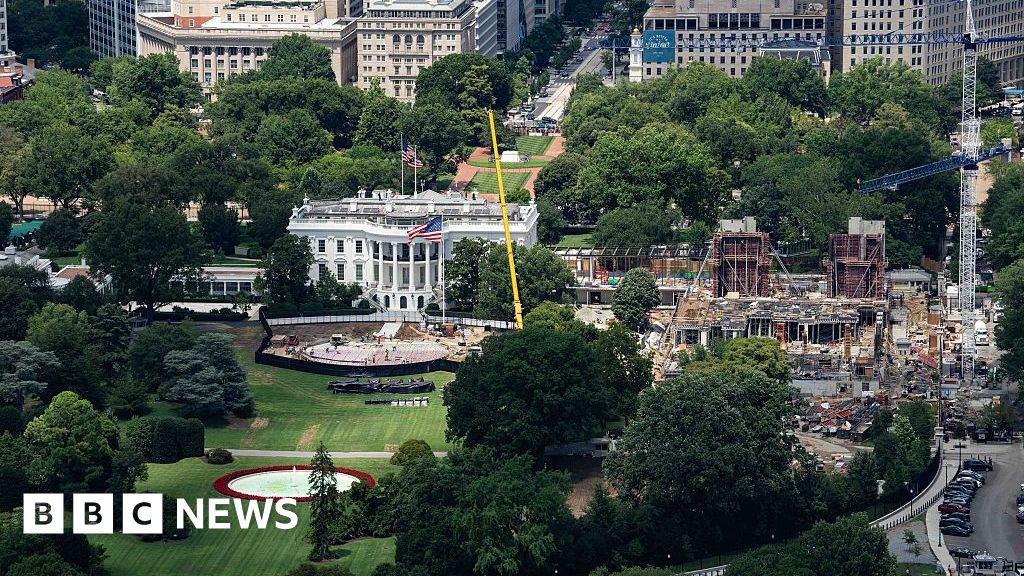
A federal appeals court on Friday ordered the Trump administration to halt construction on a $400 million ballroom project at the White House. The ruling upholds a previous legal challenge asserting that the executive branch requires congressional approval for the project. The court has delayed the implementation of its order for 14 days to allow the administration time to appeal the decision to the U.S. Supreme Court.
The legal dispute began after the administration demolished the East Wing last year to begin the project without authorization from Congress. The National Trust for Historic Preservation subsequently filed a lawsuit and obtained a preliminary injunction. A federal judge previously issued two rulings that blocked above-ground construction while allowing underground work to continue; Friday's decision by the appeals court maintains those restrictions.
In the majority opinion, the appeals panel stated that the decision to build the ballroom rests with Congress rather than being a matter of "Executive self-help." The court noted that the executive branch does not have "unfettered authority" to redesign or reconstruct the White House to suit a specific president's preferences. President Donald Trump has stated that the facility is necessary for hosting state visits and large events, and he has characterized the project as "vital for National Security" following an April assassination attempt at a dinner in Washington, D.C.
For the public and government workers, the ruling maintains the current state of the construction site in Washington, D.C. A final determination by the Supreme Court could set a significant legal precedent regarding the limits of presidential power over federal property versus the legislative branch's power of the purse. If the administration fails to secure a stay or a reversal, the project—which the source notes has doubled in size and cost over the last year—could remain stalled indefinitely or require new legislation to proceed.
The next step in the legal process is a 14-day window during which the Trump administration is expected to file an appeal with the Supreme Court. The appeals court’s ruling will not take effect until that period expires. If the Supreme Court chooses to hear the case, a final ruling will determine whether the administration can proceed with the above-ground rendering of the project or if the site will remain in its current state pending congressional action. As of Friday, the White House has not issued an official comment on the ruling.