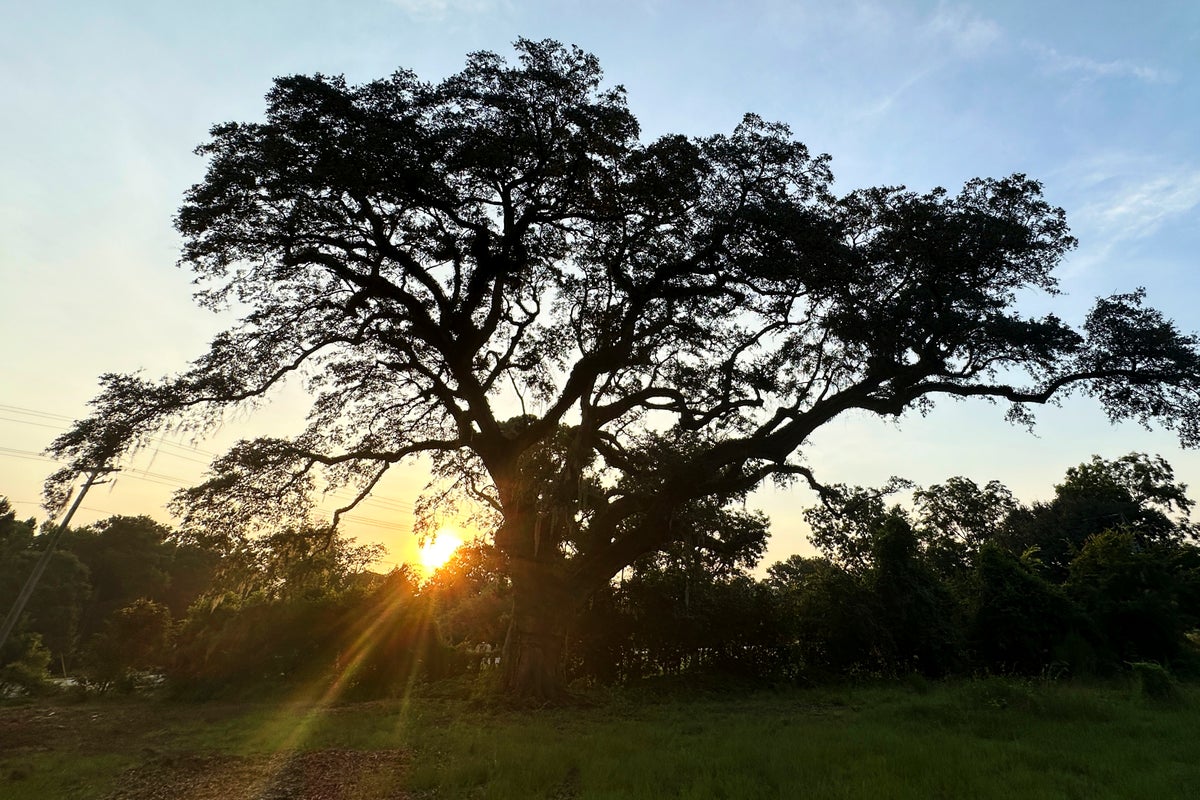
Arborists and preservationists have begun a multi-stage effort to preserve a nearly 300-year-old live oak tree at the Eutaw Springs battlefield in South Carolina. The tree, referred to as a "witness tree," survived the Battle of Eutaw Springs in 1781 but is currently facing health risks caused by metal supports installed five decades ago.
The tree stands approximately 45 feet tall with a 130-foot canopy and a trunk measuring 6 feet across. It previously survived a lightning strike roughly 50 years ago that split its trunk, leading workers at the time to wrap its limbs in steel chains and cables for stability. However, as the tree grew, it began to envelop the metal, which arborist Aron Landsaw stated is now "choking it out" and preventing the intake of nutrients from the soil.
To address these issues, crews from the tree care company SavATree used high-powered air tools to loosen soil and injected a kelp mixture to restore nutrients to the roots. Workers also installed a new lightning protection system consisting of copper rods and cables designed to ground future strikes. Additionally, the team plans to replace the restrictive old chains with a modern stabilization system that connects five major branches to a central hub, allowing for natural movement in the wind.
For historians and students of the Revolutionary War, the tree represents a physical connection to a battle that resulted in 1,461 men killed, wounded, captured, or missing. The removal of the restrictive metal cables is a concrete change that arborists believe will allow the tree to once again pull nutrients from the soil, potentially reversing the decline caused by 50 years of restricted growth. Visitors to the site will notice the new copper lightning rods and cables, as well as the replacement of old chains with the modern hub-and-cable system.
The success of this intervention could set a precedent for the management of other "witness trees" at aging historical sites across the United States. Beyond the immediate health of the oak, the project highlights the ongoing struggle to preserve historical landmarks against natural decay and previous, outdated preservation methods. The work began with soil and lightning rod installation around mid-August; the final stabilization of the limbs is intended to sustain the tree through the upcoming national semiquincentennial commemorations.