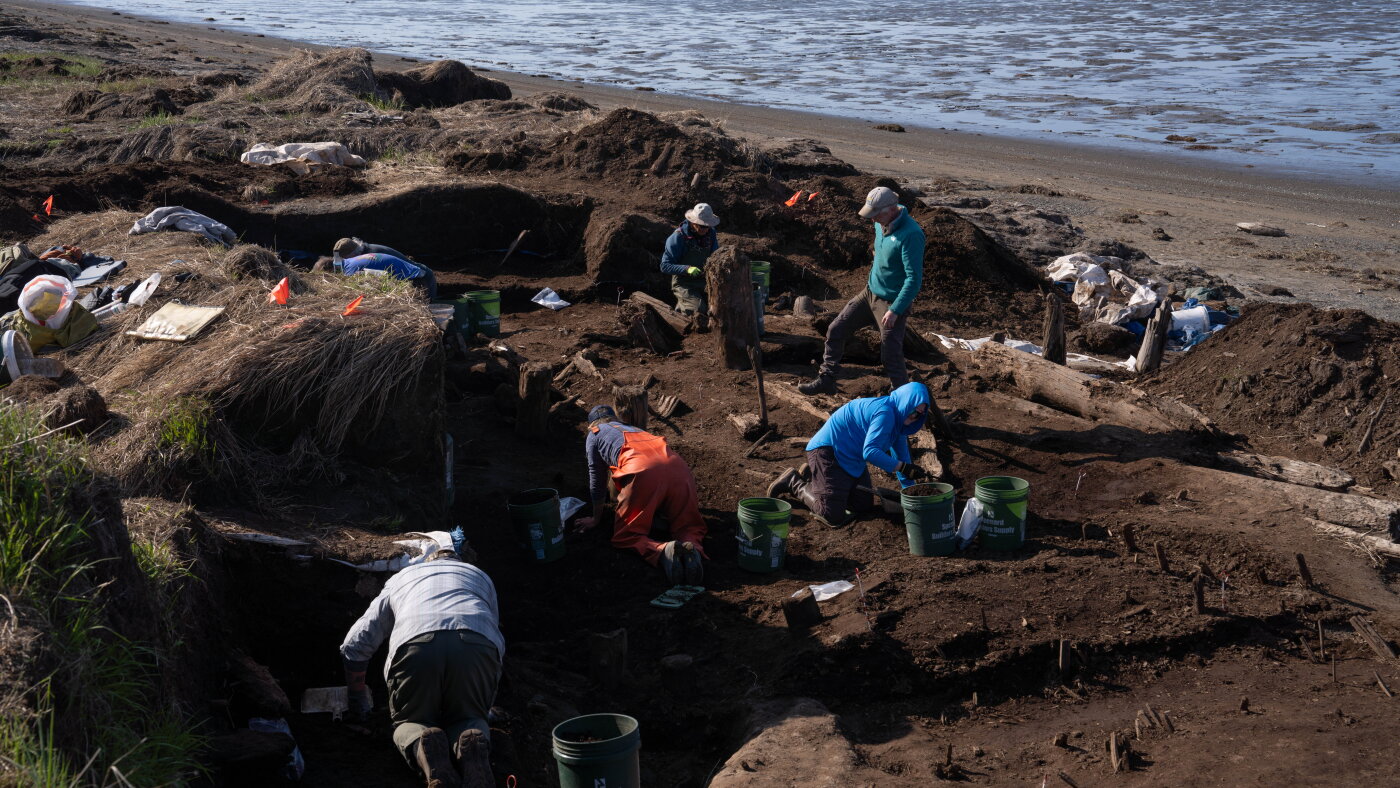
Archaeologists and volunteers conducted an emergency excavation this past summer near Quinhagak, Alaska, to recover Yup’ik artifacts before coastal erosion or storms can destroy them. The effort followed a storm last October, the remnants of Typhoon Halong, which flooded the region and unearthed cultural objects along the coastline. The site, known as Nunalleq, contains pre-contact artifacts that have been preserved for centuries by frozen ground.
The Nunalleq site has been under excavation since 2009 after thawing permafrost first revealed cultural objects in the early 2000s. The local community decided to proceed with the recovery to preserve pieces of their history, including hand-carved animals, sewing needles, and wooden masks. The site provides a record of Yup’ik culture from 400 to 600 years ago, prior to Western contact.
During the emergency dig, teams worked in an area roughly the size of a backyard pool, focusing on the remains of several sod houses. Lead archaeologist Rick Knecht stated that the site is increasingly vulnerable because the Bering Sea has moved closer due to permafrost thaw and decreasing sea ice. During the October storm, the site was submerged under feet of water, which washed away an unknown number of artifacts.
The scale of the threat is tied to the physical geography of the region, where last October's storm displaced over 1,000 people across multiple villages and caused flooding that reached into the archaeological pits. While the total number of items lost is not reported, the site itself is about the size of two Olympic-size swimming pools. The excavation operates on a budget provided by organizations such as the Pacific Northwest Archaeological Society and the Daughters of the American Revolution, meaning the speed of recovery is dictated by available funding and seasonal weather windows.
For the residents, the impact is a race against the fall storm season. Without successful recovery, historical items like ornate wooden masks and kayak pieces could be swept into the Bering Sea. The archaeologists plan to return next summer, but the timing depends on successful fundraising through a GoFundMe campaign and Quinhagak Heritage Inc. The site remains at risk of further erosion as high tides now regularly reach the excavation area.