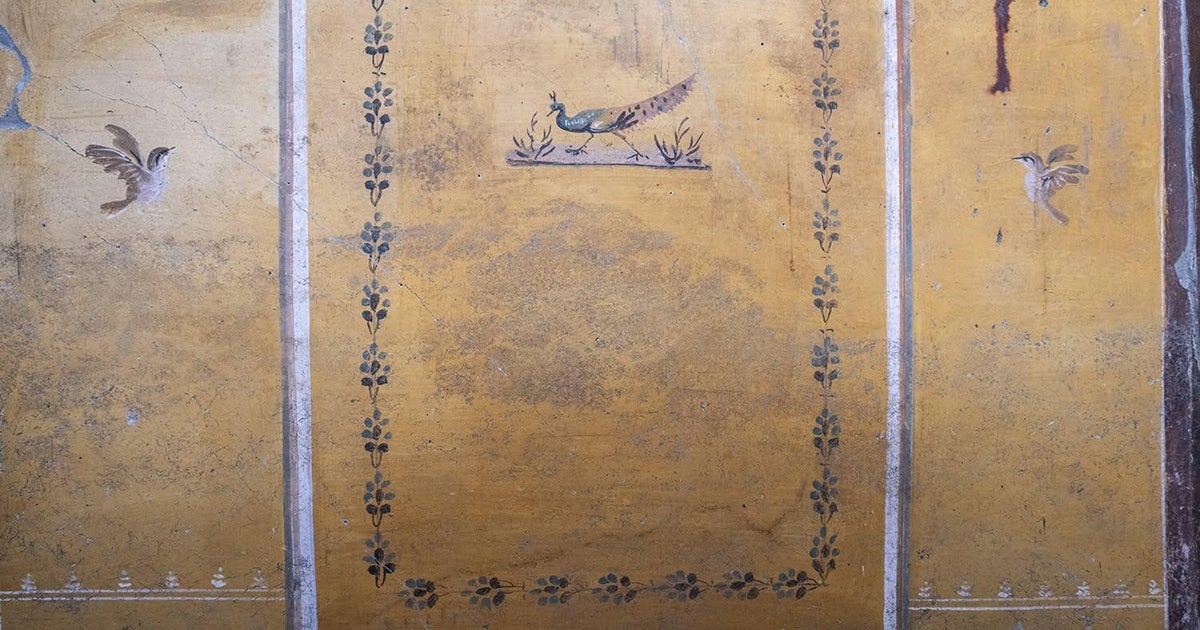
Archaeologists at the Pompeii Archaeological Park discovered a collection of artifacts, including coins, jewelry, and cosmetics, inside a closet of an ancient home. The items were found during excavations of a residence that was previously investigated in 1912. The park reported that the presence of 38 bronze coins in a plant-based container suggests the residents may have lacked the time to retrieve their valuables before the eruption of Mount Vesuvius in A.D. 79.
Pompeii was a Roman city located in what is now southern Italy, home to approximately 10,000 residents before its destruction. The city was buried under ash and volcanic rock following an eruption that lasted nearly 19 hours, preserving buildings and artifacts for centuries. The site was rediscovered in 1748 and has since become a UNESCO World Heritage Site.
The wardrobe contained a bronze lantern, an incense burner, a balsam jar, and a "refined snuff bottle" decorated with pine. Researchers also identified "crepundia," which are necklaces containing at least 20 miniature objects made of bone and crystal. These items often served as protective amulets for children and were sometimes kept into adulthood as mementos. Additionally, mouse skeletons were found within the home, showing that the city contended with pests despite the household’s apparent standard of living.
These objects mirror modern daily items, such as the cosmetics and commercial weights found in a wooden chest of drawers. The discovery of a necklace representing multiple deities highlights the use of amulets for protection. These findings also demonstrate the preservation of organic materials like plant-based coin containers, which rarely survive at other archaeological sites.
The discovery suggests that modern techniques can reveal layers of history missed during early 20th-century digs. The park previously reported in December that some residents may have returned to the city following the eruption, and finds like a 2,000-year-old love note continue to update the historical record. Ongoing work continues under the direction of Gabriel Zuchtriegel.