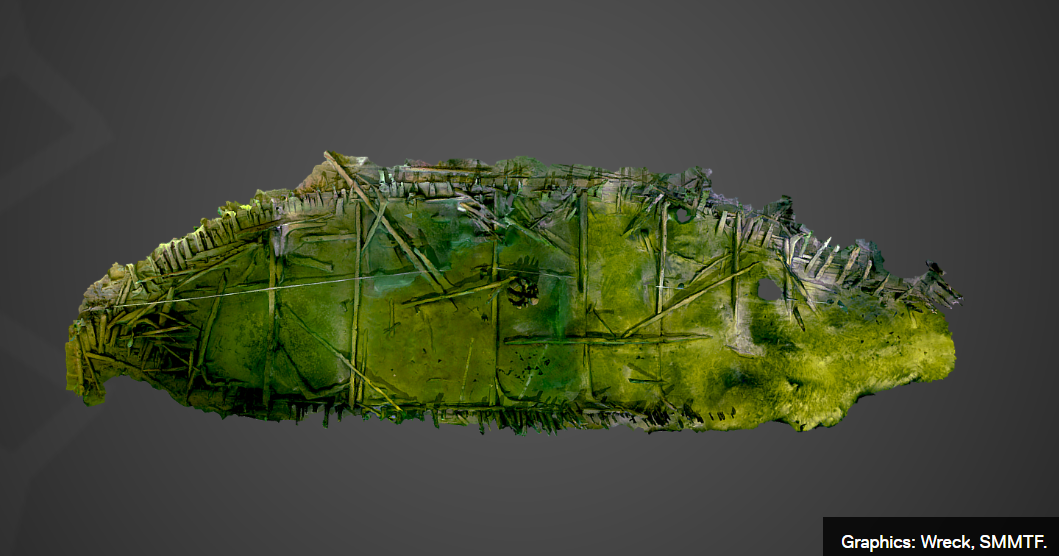
Marine archaeologists in Sweden have identified a shipwreck known as Vrak 5, or Shipwreck 5, as a 15th-century warship. Project leader Hakan Altrock of Sweden’s Museum of Wrecks stated that researchers dated the vessel to the 1480s, or possibly the 1460s, in February 2025. The ship is located off Haringe Castle in the Landfjarden sound, south of Stockholm.
The vessel was originally discovered in the late 1800s but remained one of several unidentified wrecks in the area until recent dating efforts. Altrock noted that the ship was constructed using the carvel technique—a method where hull planks are laid edge-to-edge rather than overlapping. This technique, the first known Scandinavian example in the Baltic, allowed for the construction of larger, sturdier ships capable of carrying heavy cannons.
Recent excavations involved the use of special pumps to clear sediment and a 3D scan to document the site. Divers located bricks believed to be part of the ship's kitchen, or galley, along with rigging components. Marine archaeology PhD student Matilda Jarl, who participated in the project, stated that the crew likely consumed meat, fish, and pottage, drinking beer as a preservation measure. Altrock suggested the ship may have burned or been sunk during a 1501 Danish attack on Haringe Castle, though the cause of the sinking is not confirmed.
The identification of Vrak 5 affects researchers at Sweden’s Museum of Wrecks and academic institutions like the marine archaeology program where Matilda Jarl is a PhD student. The discovery provides the first Scandinavian evidence in the Baltic of carvel shipbuilding, a shift in maritime technology that occurred over 500 years ago. This discovery adds to a cluster of maritime finds in the region, including a 16th-century naval vessel found by the HMS Belos during a military exercise and a 400-year-old Swedish Navy wreck that became visible in central Stockholm due to low Baltic Sea levels in February.
Archaeologists and historians are the primary groups who will notice the impact through new data on 15th-century diet and naval warfare. The use of a 3D scan and sediment vacuuming at the Haringe Castle site provides a record of a ship that Hakan Altrock estimated was 40 to 45 meters long. These findings offer clues about how ships were designed to accommodate heavy artillery during the transition from the medieval period to the early modern era.
The discovery sets a precedent for how older wrecks in the Landfjarden sound, previously assumed to be from the 1600s or 1700s, may be older than initial surveys suggested. Future research will focus on the ship’s kitchen to further detail 15th-century food preservation and status differences on board, where higher-status individuals reportedly consumed wine while the general crew drank beer. No specific dates for future excavations or the release of a final report were provided in the museum’s recent statement.