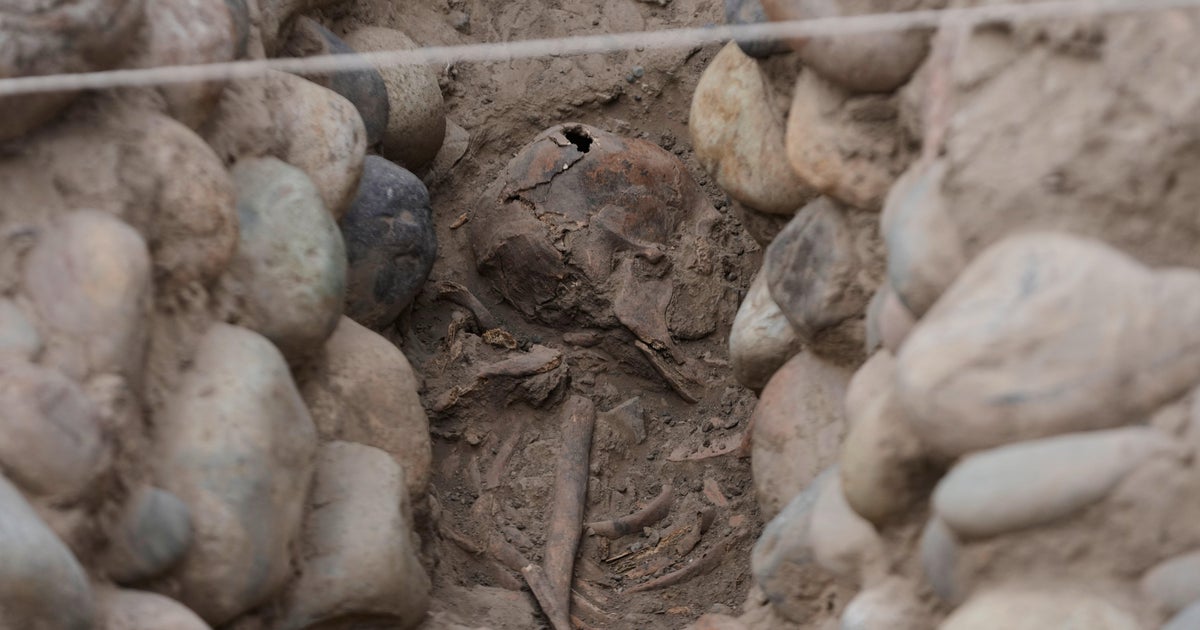
Archaeologists in Peru announced on Tuesday the discovery of skeletal remains belonging to an adult at the Huaca Pucllana archaeological site in Lima. Researchers believe the individual was buried as a ritual offering approximately 1,400 years ago near the base of an ancient adobe pyramid. The Peru culture ministry stated that the remains have been preliminarily dated to approximately 650 AD.
The discovery occurred at Huaca Pucllana, a ceremonial and administrative center for the Lima culture, which inhabited the central coast of Peru between the first and seventh centuries. This culture existed roughly 700 years before the rise of the Inca Empire. The site is currently located within the modern urban districts of Miraflores and San Isidro, surrounded by residential buildings and public parks.
Gladys Paz, the lead archaeologist on the excavation, reported that the body was found positioned on its left side within a canal. The skull was oriented toward the pyramid and the Pacific Ocean. Officials noted that the individual may have been sacrificed during a ceremony marking the closure of a canal connected to a ceremonial pool. A unique feature of this specific site is a ceremonial well constructed from river stones, differing from the mud-brick architecture typically found at Huaca Pucllana.
The find provides concrete data for researchers attempting to reconstruct the specific religious and social practices of the Lima culture, which disappeared centuries before the Spanish founded the modern city in 1535. By analyzing these 1,400-year-old remains, archaeologists can verify the exact methods of ritual sacrifice and the architectural preferences of the era, such as the transition from mud bricks to river stones in ceremonial wells. These details offer a clearer picture of how ancient societies managed water resources and ceremonial life in an arid coastal environment.
What happens next involves the continued analysis of the bones by the Peru culture ministry to confirm the individual's age, health, and exact cause of death. The Huaca Pucllana site remains a functioning tourist destination and research hub, where ongoing excavations continue alongside public access. While the ministry has released images and preliminary findings, a final report on the excavation's results has not yet been scheduled for publication.