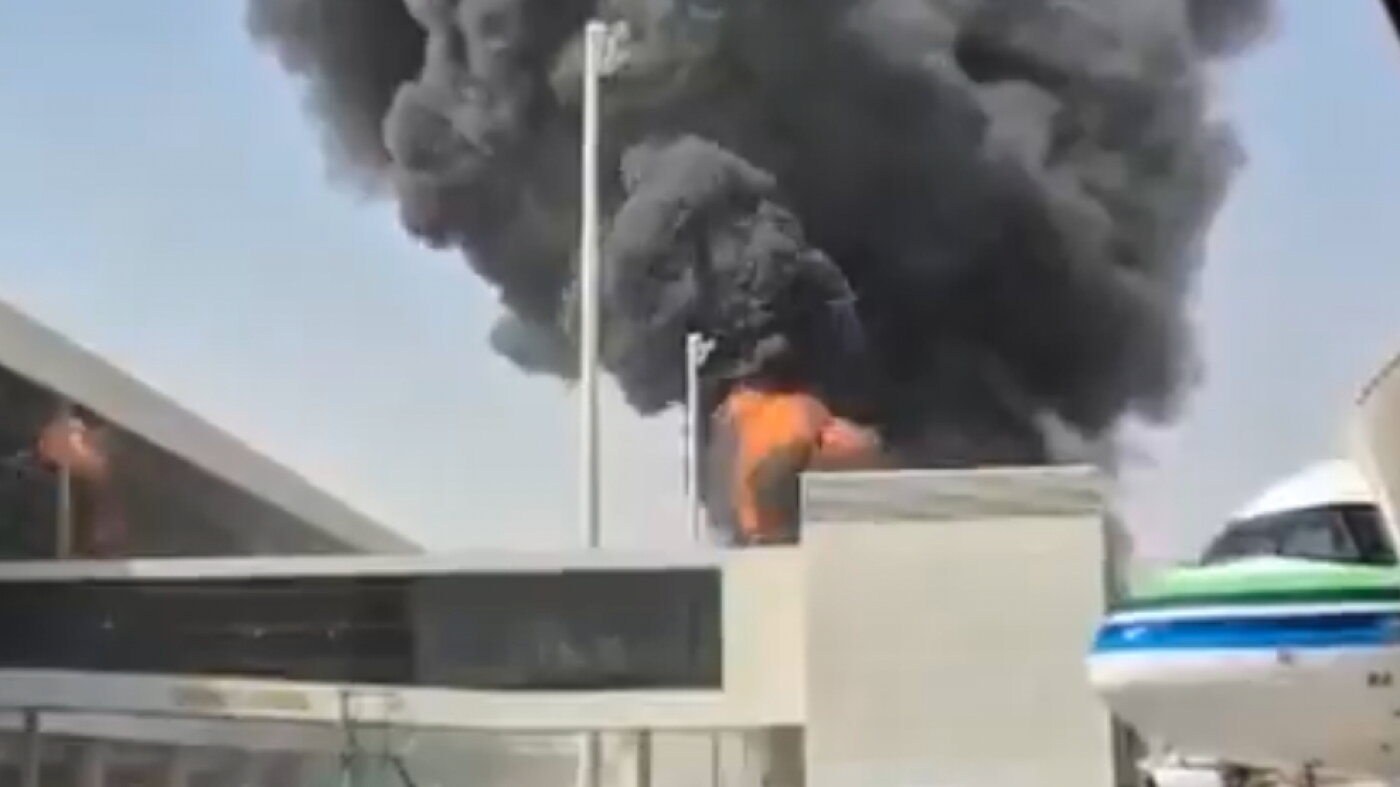
A missile strike on King Khalid International Airport in Riyadh on Saturday killed at least 12 people and injured 309 others. President Donald Trump stated he is evaluating whether the United States should join Saudi-led military strikes against Houthi rebels in Yemen following the attack. The strike hit a complex housing terminals 3 and 4 for domestic flights, leading to a suspension of airport operations.
The incident occurred during a week of increased hostilities, following a major offensive by a Saudi-led coalition against Houthi forces. Earlier in the week, Houthi rebels claimed responsibility for other attacks on the same airport that killed three Saudis. While the rebels have not yet claimed responsibility for Saturday's strike, they recently warned global airlines against operating in Saudi airspace, which they characterized as a theater for military operations.
Saudi civil aviation officials reported that the deceased include four Saudi citizens, two Bangladeshis, and one individual each from Egypt, Jordan, Syria, Palestine, and Sudan. A U.S. State Department spokesperson confirmed one American was among those killed. Regional officials, speaking anonymously, stated that Houthi attacks on Thursday had already damaged three planes at the airport, and the Saudi national carrier confirmed one aircraft was damaged on the ground.
This escalation follows suspensions of flights to the Saudi capital by carriers including Air India, Lufthansa Group, and FlyDubai. The European Union Aviation Safety Agency has warned of an increased risk of misidentification of civil aircraft due to the ongoing missile and drone activity. Five Western governments including the U.S., Britain, Germany, Australia, and Canada have warned citizens to avoid the airport.
The conflict carries economic implications for global energy markets. As the world's top oil exporter, Saudi Arabia’s infrastructure stability affects global fuel prices. The fighting has intensified near the Red Sea, a corridor that serves as an alternative to the Strait of Hormuz.
President Trump’s statement that the U.S. "may" intervene follows a period where American involvement has included intelligence sharing, target identification, and planning. Saudi officials reported a dwindling supply of missile interceptors, prompting requests for air defense support from France, Britain, Pakistan, and Egypt. An international energy conference in Riyadh scheduled to begin on Sunday, October 11, continued to be promoted by the Saudi energy ministry following the attack.