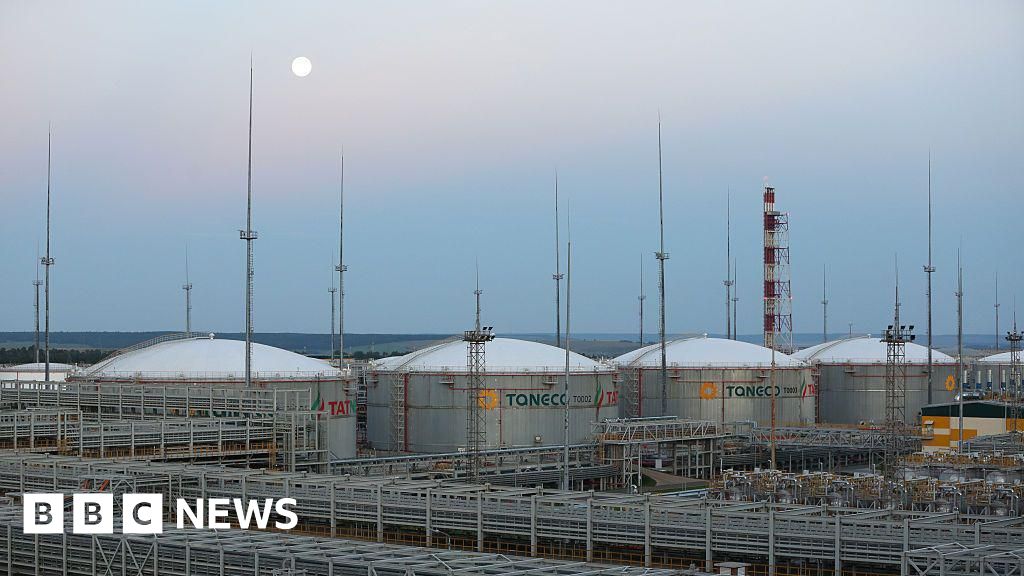
Russian officials reported that a Ukrainian drone strike on the republic of Tatarstan killed at least 13 people and injured 75 others. The attack occurred more than 1,100 kilometers (680 miles) from the Ukrainian border in the city of Nizhnekamsk. The strike lasted several hours overnight and into the morning, according to local sources.
Ukraine's Armed Forces confirmed that the Tanevo oil refinery in Nizhnekamsk was targeted in the operation. FirePoint, a Ukrainian defense technology manufacturer, stated that its FP-1 drones were utilized for the strike. This event follows a previous attack on oil refineries in Nizhnekamsk that took place on June 12.
Russian authorities stated that one child was among the deceased and that the strike affected both industrial facilities and residential areas. The Investigative Committee of Russia said civilian individuals not involved in military operations were present during the attack. The BBC noted it has not independently verified the Russian claims regarding the presence of civilians. Rustam Minnikhanov, the head of Tatarstan, confirmed the strike and declared a period of mourning.
Andriy Kovalenko, head of Ukraine’s Centre for Countering Disinformation, stated that the targeted facilities are used by Russia to manufacture weapons and support its war efforts. Kovalenko said responsibility for civilian deaths in Russia lies with President Vladimir Putin and the decisions made by the Russian government. Meanwhile, Moscow reported that its air defenses shot down more than 450 Ukrainian drones overnight.
The scale of the operation involves over 450 drones, according to Russian reports, and a strike distance of 1,100 kilometers. For the local population, this translates to a disruption of safety and daily life, marked by air raid sirens and visible damage to both industrial and residential sectors. The declaration of a period of mourning by regional head Rustam Minnikhanov highlights the immediate communal impact on the families of the victims and the broader Tatarstan population.
The use of specific technology, such as the FirePoint FP-1 drone, establishes a precedent for long-range Ukrainian aerial capabilities. This shift in reach suggests that industrial facilities previously considered distant from the conflict are now within range of sustained operations. What happens next includes the continuation of investigations by Russia's Investigative Committee and the observation of the declared mourning period in Tatarstan, while both nations continue to exchange large-scale aerial attacks.