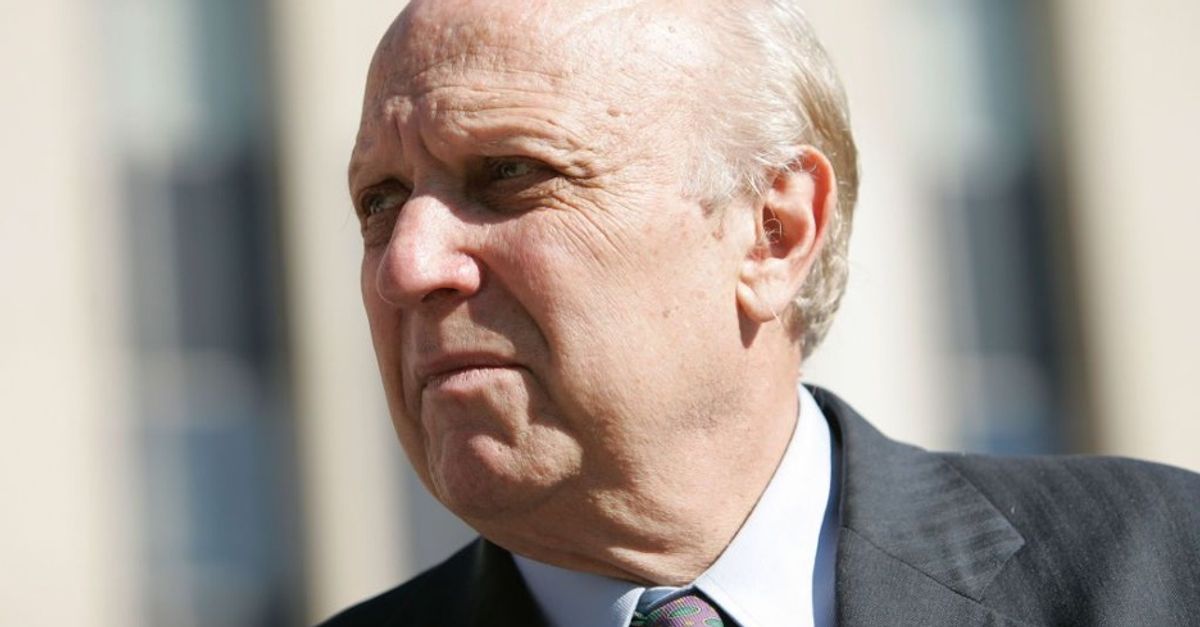
Attorney Floyd Abrams, a specialist in First Amendment law, has reached the age of 90 following a career that includes arguing 15 cases before the U.S. Supreme Court. Abrams is noted for his work representing journalists and media organizations in legal disputes concerning freedom of speech and the press. According to records of his litigation history, he has won 77% of the First Amendment cases he argued before the nation's highest court.
Abrams' legal work began gaining national attention in the 1970s. In the 1971 case New York Times Co. v. United States, also known as the Pentagon Papers case, he served as co-counsel alongside Alexander Bickel. The Supreme Court ruled in that case that the government carries a heavy burden of justification to impose prior restraints—judicial orders that prevent media publication—even when the materials involve classified information related to a war.
In 1976, Abrams represented various publishers and broadcasters in Nebraska Press Association v. Stuart. That case established that court-ordered gag masks directed at the press are presumptively invalid. Legal scholars Jerome Barron and C. Thomas Dienes stated the ruling acted as a "virtual death knell" for such orders. Abrams also successfully argued Citizens United v. Federal Election Commission in 2010, a case involving corporate and union spending in elections that he won by a 5-4 vote.
In the 2010 Citizens United case, the scale of the impact involved every corporation and labor union in the U.S., as well as the federal election system. By winning the case with a 5-4 majority, Abrams helped secure the legal right for these entities to spend money on political communications. While Abrams has acknowledged concerns regarding the "appearance of corruption" or the potential for corporate spending to affect political discourse, the ruling established a precedent that corporate and union speech is protected under the First Amendment. This affects how election campaigns are funded and how voters receive political messaging.
For the general public, these rulings shape the day-to-day flow of information. A person would notice the effects in the types of political advertisements they see on television or the ability of newspapers to report on government secrets without prior censorship. Abrams’ legal philosophy emphasizes that the public is harmed when freedom of expression is sacrificed, except in "most truly threatening circumstances." While his career continues with a 2026 article in the Columbia Law Review, his past victories remain the primary legal framework governing modern press freedom and political speech.
What happens next: Abrams remains active as a lawyer, scholar, and teacher. In 2026, he published "Reviving the Press Clause" in the Columbia Law Review. His litigation history and contributions to constitutional theory continue to be cited in ongoing First Amendment scholarship and legal proceedings. No specific upcoming court dates or deadlines were reported.