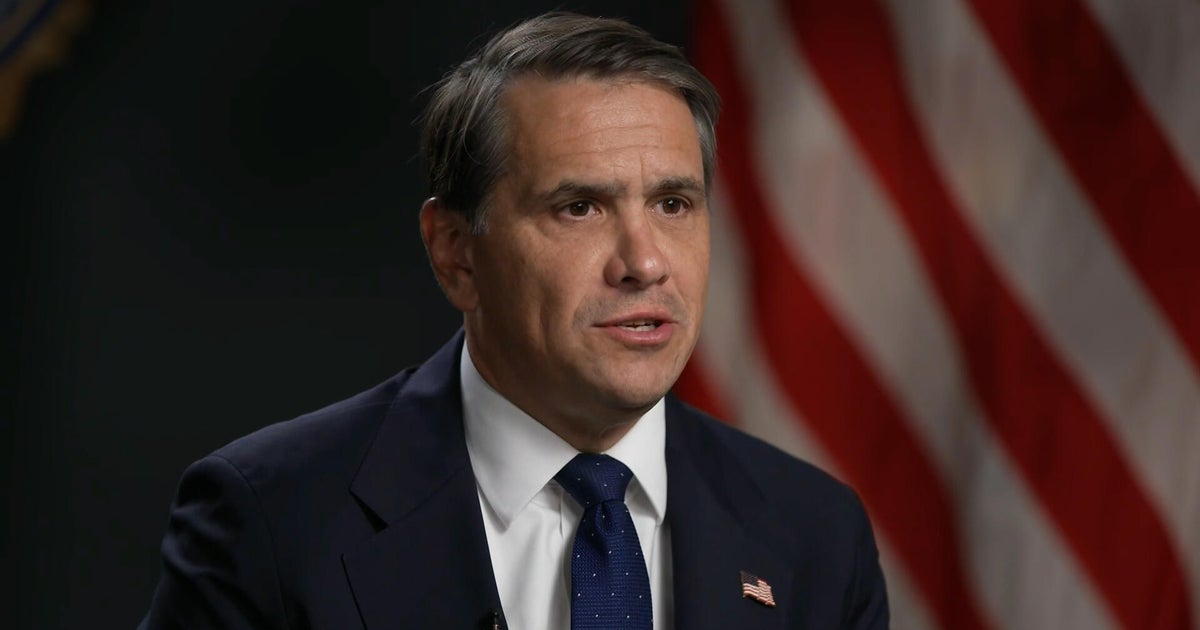
Attorney General Todd Blanche defended the Trump administration's efforts to implement stricter mail-in voting regulations during a recent interview with CBS News. Blanche stated that the Justice Department is currently investigating election practices across several states. While the new rules are currently blocked by court orders, the Attorney General argued that mail voting carries a higher potential for fraud than in-person voting with identification, characterizing the claim as "common sense."
The administrative rule, which was adopted on August 21, requires states to provide the U.S. Postal Service (USPS) with lists of mail ballot recipients and to use USPS-approved envelopes featuring unique barcodes. Under this regulation, the USPS would have the authority to refuse the transmission of ballots that do not meet these specific requirements. Two federal judges have issued preliminary injunctions against the policy, including a judge in Massachusetts earlier this month.
On a Monday evening, the U.S. Supreme Court declined an administration request to lift the Massachusetts injunction, ensuring the restrictions remain blocked for the upcoming midterm elections. Legal proceedings regarding the rule's validity will continue. Outside of this litigation, the Justice Department has instructed 29 states and the District of Columbia to preserve 2024 election records and is seeking voter-registration data that includes sensitive identifiers.
Blanche stated that the government has "hundreds of open investigations" into individuals who are allegedly in the country illegally and have potentially voted. He noted that some individuals have already been charged, while other investigations remain active. When questioned about the storage of voter data, Blanche said he was unaware of a specific database but confirmed the information would be stored and used by federal agencies to identify ineligible voters.
The scale of documented mail-ballot fraud, which the administration cites as the impetus for these changes, remains a point of statistical evidence. According to a 2025 analysis cited in the report, researchers found approximately four cases of mail-ballot fraud for every 10 million ballots cast across the 2016, 2018, 2020, and 2022 elections. This equates to a rate of 0.000043%. A separate 2024 Stanford study of 4.5 million voters in Washington state identified 14 suspicious ballots, a rate of 0.0003%, which researchers noted could be attributed to clerical errors. For the average household, these figures represent a low statistical likelihood of encountering fraudulent activity, though the Attorney General maintains that the potential for such activity justifies stricter oversight.
The effects of these policies could include a precedent for increased federal involvement in state-run election logistics and the sharing of local voter data across federal agencies. If the Justice Department succeeds in its lawsuits for voter-registration data, it would establish a mechanism for the Department of Homeland Security to conduct citizenship checks against state rolls. The immediate next steps involve ongoing litigation in federal courts to determine the legality of the August 21 USPS rule, while the Justice Department continues its investigations into the hundreds of identified cases of alleged illegal voting.