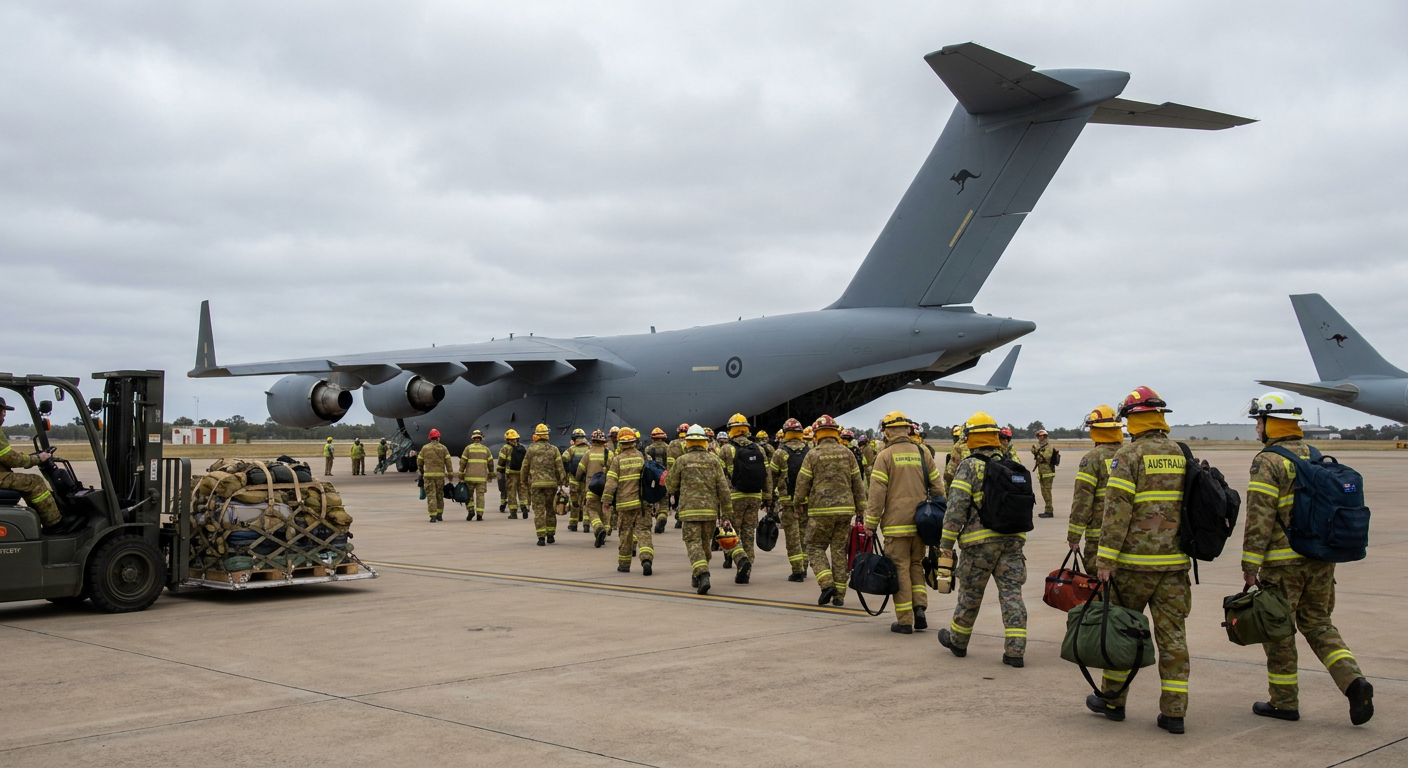
Australia and New Zealand have deployed more than 240 firefighters to the United States to assist in containing active wildfires. According to reporting on Wednesday, this arrival represents the largest contingent ever sent by the two nations to aid American firefighting efforts.
The deployment comes as a destructive wildfire season has pushed domestic U.S. firefighting resources to their limits. International cooperation in wildfire management between the U.S. and these Pacific nations has historically occurred during periods of high fire activity when local capacity is exceeded.
While specific assignments for the incoming crews were not detailed, the personnel arrived during a period of significant fire pressure across the country. The Australian and New Zealand crews typically integrate with American teams to provide ground support, incident management, and specialized fire suppression services.
The scale of the assistance—the largest in the history of this partnership—indicates the level of strain currently placed on the U.S. National Interagency Fire Center and related agencies. While the specific dollar cost of the deployment was not reported, such international agreements typically involve cost-sharing frameworks between the participating governments. The arrival of these crews means that fire managers have more flexibility to rotate exhausted domestic teams, potentially reducing fatigue-related accidents on the fire line.
The knock-on effects extend to future international relations and fire policy, as these joint operations serve as practical training for cross-border disaster response. This set of deployments establishes a precedent for larger-scale international mobilization when domestic resources are exhausted. Moving forward, the effectiveness of this record-sized contingent will likely be assessed by fire agencies to determine how international resources are integrated into U.S. fire strategies for future high-intensity seasons. The specific duration of their stay and the dates they will depart were not reported.