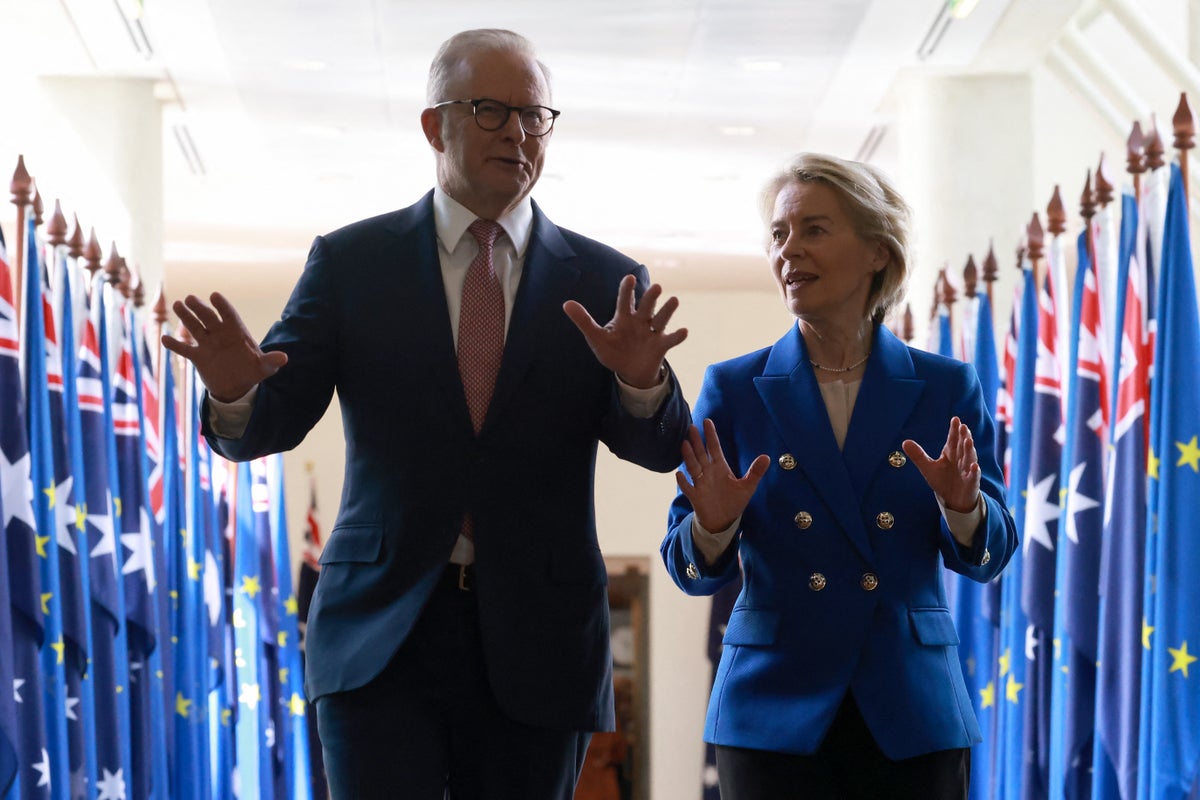
Australian Trade Minister Don Farrell stated on Tuesday, September 15, 2026, that Australia is aligned with Canada’s efforts to seek a closer relationship with the European Union. The statement follows reports that Canada is pursuing a unique alliance with the bloc amid trade tensions with the United States. Farrell told the Sydney Morning Herald that Australia would take great interest in the actions of Canadian Prime Minister Mark Carney.
The shift in Canadian policy follows a report by the Wall Street Journal that Canada was exploring "associate member" status with the EU. On Sunday, September 13, 2026, Prime Minister Carney clarified that the nation is seeking a "unique alliance" rather than full membership. Australia has also sought to diversify its trade partners after facing U.S. tariffs on exports, even though it maintains a long-standing security pact and free trade agreement with Washington.
According to the Journal, Canada and the EU are discussing the free movement of goods, services, and workers in sectors including artificial intelligence, energy, defense, and critical minerals. These talks reportedly involve shared infrastructure projects such as underwater cables, data centers, and satellite networks. Carney has held discussions with EU leaders, including French President Emmanuel Macron, regarding visa-free living and working arrangements for Canadians in the EU.
Farrell indicated he was open to various options for future arrangements with the EU but noted that shared fiber-optic cables would be impractical due to the geographical distance between Australia and Europe. He characterized the global economic climate as a division between "protectionists and free traders," stating that Australian prosperity over the last 50 years has relied on global engagement. Australia and the EU previously signed a free trade agreement in March 2026, which removed tariffs on almost all goods.
For professionals in specialized fields such as artificial intelligence and defense, the "unique alliance" model proposed by Canada could set a precedent for visa-free labor mobility. A worker in these sectors might notice a change in their legal right to accept contracts or residency in EU member states without the traditional visa hurdles, though the exact timing for such a change remains unknown. If Australia follows this path, it could impact its trade dependency on the United States and toward a more integrated European partnership, despite the geographic distance.
The knock-on effects of these negotiations could influence future global trade policy and the stability of existing agreements like the United States-Mexico-Canada Agreement (USMCA) or Australia's security pacts. If the EU effectively "shifts its border" to include Canadian services and labor, it creates a new type of international membership that does not require full political union. The next steps involve ongoing discussions between Canadian and EU officials; however, no specific dates for a vote or the implementation of a "unique alliance" have been established. A spokesperson for Australia’s Department of Foreign Affairs and Trade did not respond to a request for comment.