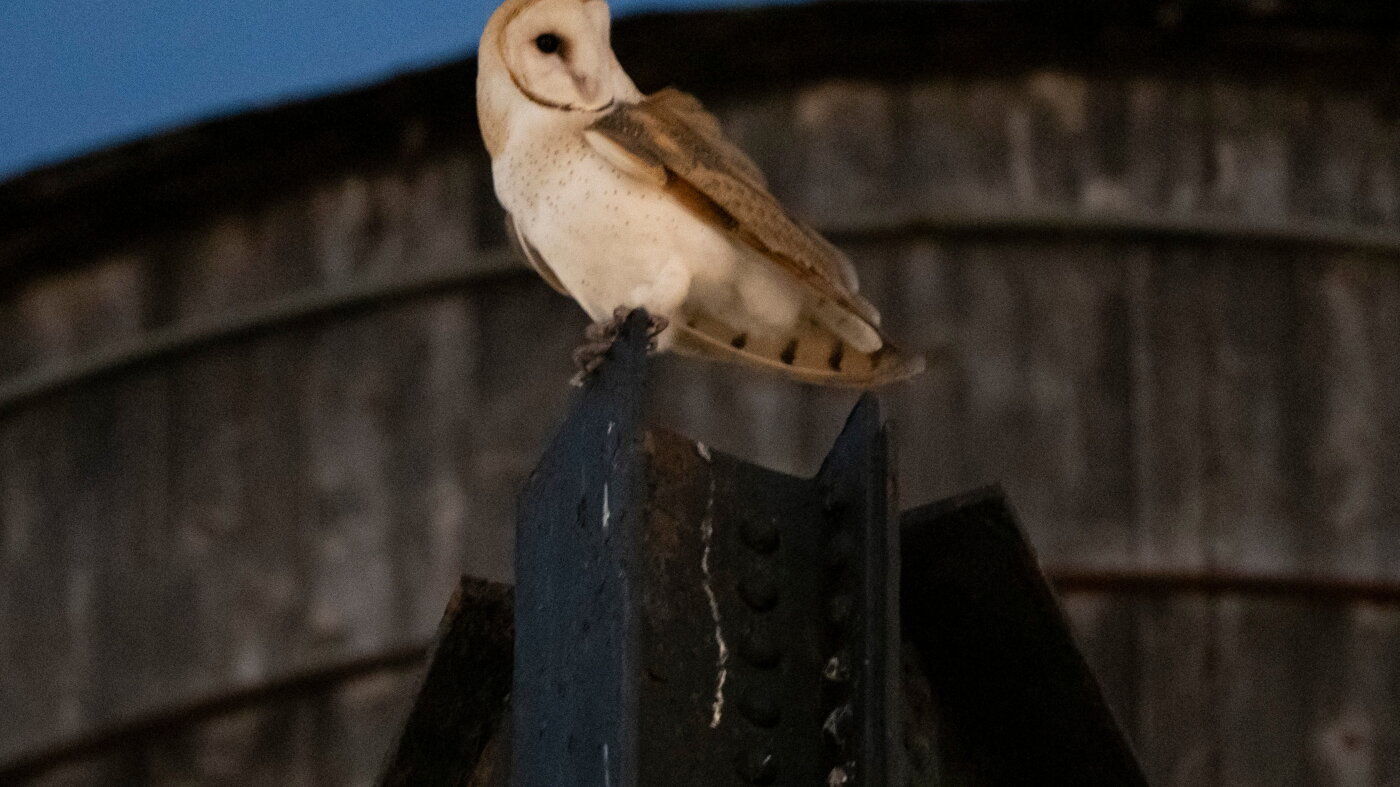
A family of American barn owls has established a nest in a water tower on Manhattan’s Upper West Side, marking a rare occurrence for the borough. The owls, located on a building near Central Park on West 75th Street, have drawn nightly crowds of onlookers and photographers since their presence became widely known. Andrew Farnsworth, a migration ecologist at the Cornell Lab of Ornithology, stated that this is the first documented instance of barn owls nesting in Manhattan in recorded history.
The presence of the birds was first reported to a local news outlet on Oct. 6 by resident Elisabeth Williams, who observed multiple owls at the water tower. According to Manhattan birder David Barrett, the group consists of at least one adult and five or six fledglings. Residents reported hearing unusual screeching and wailing noises in the area starting in early September, which experts say is a typical communication method for the species.
While other birds, such as the Eurasian eagle-owl Flaco and a red-tailed hawk known as Pale Male, have previously gained public attention in Manhattan, barn owl sightings remain infrequent in the city. The New York City Department of Parks & Recreation notes that such sightings are rare in local parks, and the state Department of Environmental Conservation has reported a significant decline in the barn owl population over time as the region sits at the northern edge of the species' range.
The scale of the event involves a single family of birds—two adults and approximately five to six offspring—living in one water tower. For the neighbors, the most immediate day-to-day change has been the auditory impact; residents reported hearing screeching noises every night for several weeks starting in September, with some initially mistaking the sounds for a person in distress. Additionally, the presence of the birds has raised concerns among some observers regarding the use of rodenticide in the city, as barn owls rely on hunting rodents to feed their young.
The nesting sets a precedent as the first recorded breeding event for barn owls in Manhattan history, according to the Cornell Lab of Ornithology. This development may influence how urban ecologists view the adaptability of the species to man-made structures like water towers. What happens next depends on the survival and eventual departure of the fledglings; for now, photographers and birders continue to monitor the site nightly at dusk, though no specific deadline for the owls' departure has been established.