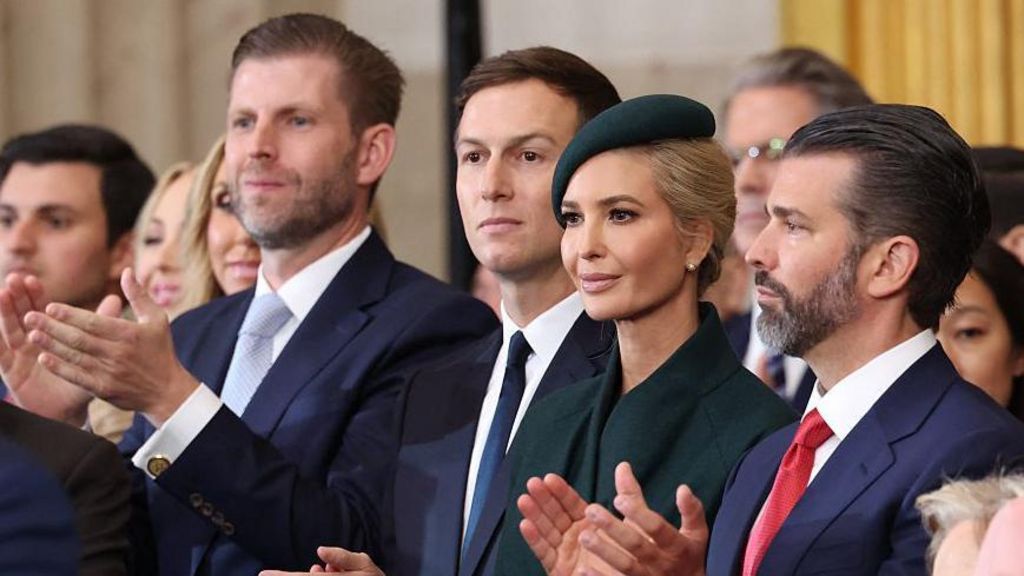
The BBC has filed a court request to subpoena members of President Donald Trump’s family for testimony and documents in a $10 billion defamation lawsuit filed by the president. Legal representatives for the broadcaster are seeking information from Donald Trump Jr., Ivanka Trump, and Jared Kushner regarding a 2021 speech delivered by the president. The BBC’s lawyers stated in court filings that these individuals possess personal knowledge of the president’s intentions during the event in question.
The legal dispute centers on a 2024 episode of the BBC program Panorama, which edited together two separate sections of a speech the president gave on January 6, 2021. President Trump sued the BBC and its subsidiaries in December, alleging the broadcaster "intentionally, maliciously, and deceptively" altered the footage. The BBC has apologized for the edit, noting it created a "mistaken impression" of a call for violence, but the broadcaster has moved to dismiss the suit, arguing it does not meet the legal criteria for defamation.
Court filings indicate that the BBC attempted to serve subpoenas to the family members in May but was unsuccessful. According to the documents, a legal representative was denied entry at a police checkpoint near the Florida home of Ivanka Trump and Jared Kushner, where the Secret Service stated they could not accept the documents. In New York, attempts to serve Donald Trump Jr. at Trump Tower were reportedly unsuccessful due to the absence of specific staff members. The BBC is now asking the court for permission to serve the subpoenas via email and certified mail.
The concrete day-to-day impact for the individuals named would be the legal obligation to provide testimony and produce documents related to their private communications and observations from 2021. If the court grants the BBC’s request to serve subpoenas by email, it establishes a specific procedural path for the broadcaster to compel cooperation from the president's family. A person following this case would notice that the broadcaster is relying on evidence previously gathered by a U.S. congressional committee to justify the subpoenas, specifically regarding who was present during the drafting and delivery of the speech.
The knock-on effects of this case involve the legal standards for defamation when a news organization admits to an editing error but denies legal liability. The outcome could set a precedent for how international broadcasters are held accountable in U.S. courts for content produced abroad, as the BBC argues the program was not available on its U.S. platforms. The president’s legal team recently dropped the BBC’s commercial arm, BBC Studios, from the suit after acknowledging it had no role in the production. A trial is currently scheduled for February 2027, provided the case is not dismissed or settled beforehand.