The Plain Record

Neutral daily news — clear headlines, complete facts.

National

Belfast Court Authorizes First Orange Order March on Garvaghy Road Since 1998

The High Court in Belfast authorized an Orange Order march on Garvaghy Road for the first time in decades, sparking protests and calls for calm from U.K. and local leaders.

Published September 27, 2026 at 7:50 AM EDT

The short answer

The High Court in Belfast authorized an Orange Order march on Garvaghy Road for the first time in decades, sparking protests and calls for calm from U.K. and local leaders.

Belfast Court Authorizes First Orange Order March on Garvaghy Road Since 1998

The Facts

Who
U.K. Prime Minister Andy Burnham, Secretary of State Chris Bryant, First Minister Michelle O'Neill, DUP Leader Gavin Robinson, and the Orange Order.
What
High Court authorization of an Orange Order march and subsequent protests.
When
Sunday morning following a 2:15 a.m. court ruling.
Where
Portadown and Belfast, Northern Ireland.
Why
The march is the first allowed on this flashpoint route since the 1998 peace agreement, testing the region's stability and power-sharing institutions.

The High Court in Belfast authorized a march by the Orange Order through a contentious area in Portadown, leading to a protest that delayed the event. U.K. Secretary of State for Northern Ireland Chris Bryant and other officials called for calm on Sunday after the court issued the decision during a late-night sitting that concluded at 2:15 a.m.

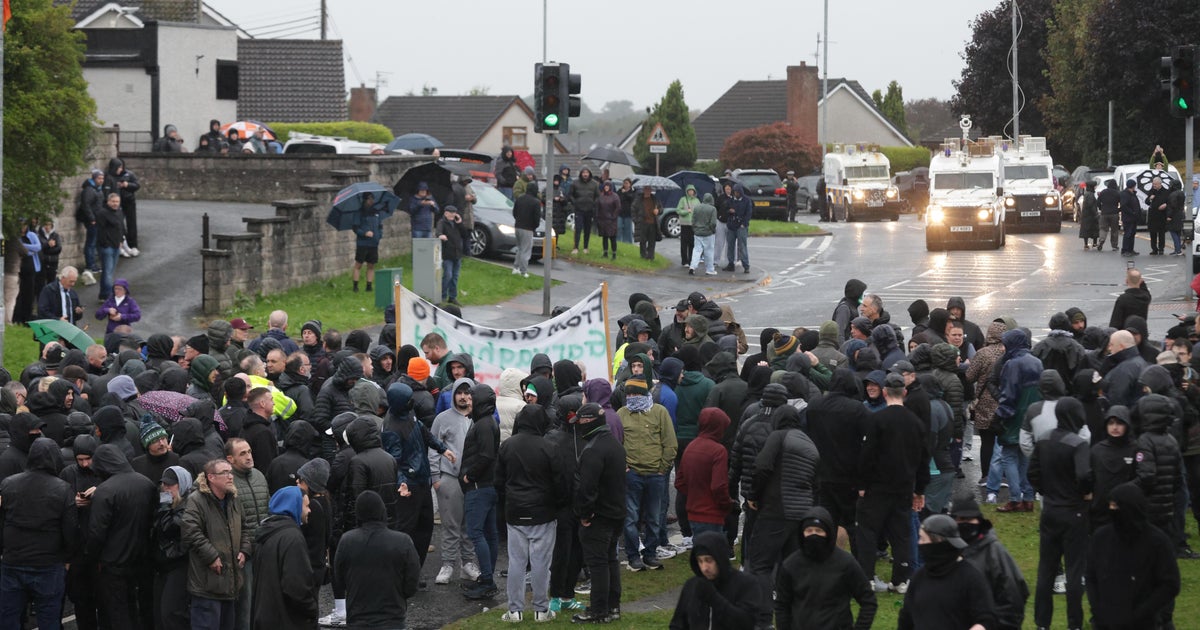
The Orange Order, a group that supports Northern Ireland remaining part of the United Kingdom, sought to march down Garvaghy Road for the first time in nearly 30 years. The route was a frequent site of conflict during "the Troubles," a three-decade period of political violence that largely ended with the 1998 Good Friday Agreement. Protesters, many wearing balaclavas, blocked the road in an area where many residents favor unification with the Republic of Ireland.

Northern Ireland First Minister Michelle O'Neill of Sinn Féin criticized the decision, stating it "brings into question how this whole peace process works." Conversely, Gavin Robinson, leader of the Democratic Unionist Party (DUP), stated that the "rule of law cannot apply only when Sinn Féin likes the outcome." Jon Boutcher, head of the Police Service of Northern Ireland, reported that while the road was blocked, there were no signs of violence or disorder as police engaged with all parties.

For individual residents and the 90 members of the Northern Ireland Assembly, the event tests the stability of the power-sharing institutions reestablished in February 2024. A return to civil unrest could impact daily security, as the region moved away from the era of British Army deployments and security checkpoints that characterized the 1970s and 1980s. The tension also reflects ongoing disagreements over the post-Brexit trade arrangements, such as the Windsor Framework, which some unionists believe separates Northern Ireland from the rest of the U.K. market.

The situation sets a precedent for how the High Court and the Parades Commission manage future commemorative marches, which remain a source of sectarian division. It also influences the debate over a potential "border poll" or referendum on Irish unification, a vote the U.K. Secretary of State is required to hold if a majority preference for a united Ireland appears likely. While the court has cleared the march to proceed, police continue to monitor the protest on Garvaghy Road to ensure compliance with the law and prevent a return to active violence.

Timeline of what happened

Key dates and decisions, in the order they occurred.

  1. 1969

    U.K. government deploys British Army to Northern Ireland

  2. 1972

    U.K. imposes direct rule from London over Northern Ireland

  3. November 1985

    Anglo-Irish Agreement signed by FitzGerald and Thatcher

  4. 1993

    Downing Street Declaration establishes principles of consent

  5. June 10, 1996

    Multi-Party talks open in Northern Ireland

  6. April 10, 1998

    Good Friday Agreement signed in Belfast

  7. May 22, 1998

    Referendums in Ireland and Northern Ireland endorse the agreement

  8. January 2020

    U.K. withdraws from the European Union (Brexit)

  9. February 2024

    Northern Ireland devolved government reestablished

Summaries are written by The Plain Record to state the facts of a story plainly and without political slant. Drafted with AI assistance and checked against the source record before publication. See how we report, or report a correction.

← Back to the front page

Questions readers ask

What happened: Belfast Court Authorizes First Orange Order March on Garvaghy Road Since 1998?

The High Court in Belfast authorized a march by the Orange Order through a contentious area in Portadown, leading to a protest that delayed the event. U.K. Secretary of State for Northern Ireland Chris Bryant and other officials called for calm on Sunday after the court issued the decision during a late-night sitting that concluded at 2:15 a.m. The Orange Order, a group that supports Northern Ireland remaining part of the United Kingdom, sought to march down Garvaghy Road for the first time in nearly 30 years.

Who is involved?

U.K. Prime Minister Andy Burnham, Secretary of State Chris Bryant, First Minister Michelle O'Neill, DUP Leader Gavin Robinson, and the Orange Order.

When did this happen?

Sunday morning following a 2:15 a.m. court ruling.

Where did this happen?

Portadown and Belfast, Northern Ireland.

Why does this matter?

The march is the first allowed on this flashpoint route since the 1998 peace agreement, testing the region's stability and power-sharing institutions.