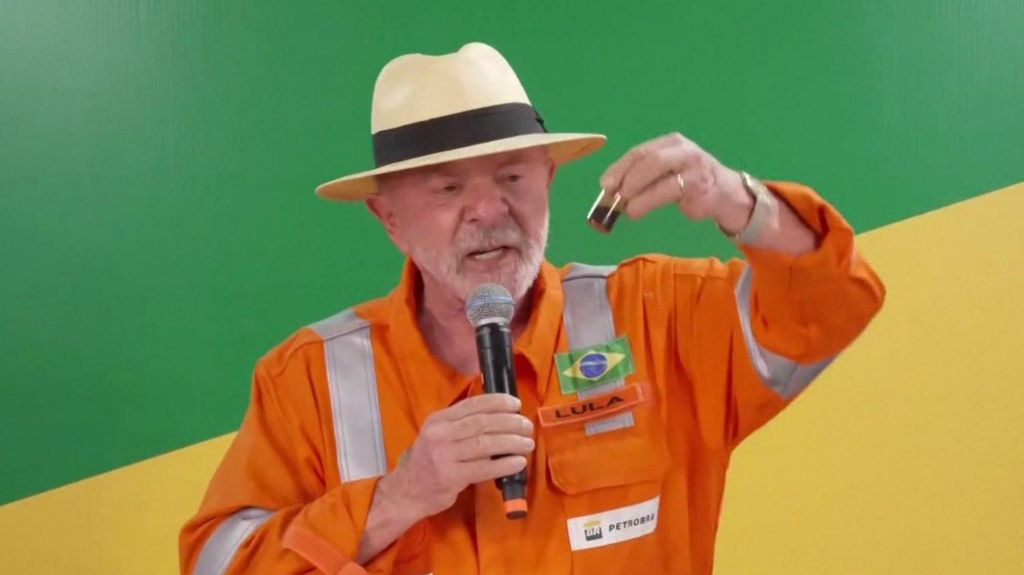
Brazilian President Luiz Inácio Lula da Silva announced on Monday the discovery of oil in the Brazilian Equatorial Margin, an offshore area near the mouth of the Amazon River. The find was confirmed by the state-run oil company Petrobras following exploratory deep-water drilling that began in October 2025. President Lula described the discovery as a potential "passport to the country's future," though it is not yet known if extraction at the site will be commercially viable.
The exploration project has faced criticism from environmentalists who express concern that oil spills could damage the region's diverse ecosystem, including nearby reefs and coastal wetlands. In response to international and domestic opposition, the president stated on Monday that the discovery involves "national sovereignty" and rejected what he termed foreign "interference" in Brazil's energy decisions.
The discovery occurred approximately 175 kilometers (110 miles) off the coast at a depth of 2,886 meters (9,469 feet). Petrobras Chief Executive Magda Chambriard stated that the find confirmed the company's optimism regarding the region and affirmed a commitment to national energy security. President Lula, who is seeking another four-year term in the October elections, argued that oil revenues are necessary to fund the country's eventual transition to renewable energy and biofuels.
For citizens, the impact will be felt in two primary ways: potential economic growth in remote northern regions and possible environmental risks to the Amazonian coast. Residents in Oiapoque may notice changes in housing availability and local infrastructure due to the population increase. Conversely, environmental groups warn that a spill could reach coastal wetlands, which would affect the livelihoods of those dependent on the local ecosystem and biodiversity. The president stated he is proceeding with the project because the "interests of our country and our company were at stake," suggesting a policy prioritization of immediate resource development alongside long-term climate goals.
The development sets a precedent for industrial activity in the ecologically sensitive Equatorial Margin, a move that drew specific opposition from European critics prior to the COP30 climate conference. The next significant steps include determining the commercial viability of the field and the outcome of the presidential election scheduled for October 2026. If extraction proceeds, it will require technical operations at depths exceeding 9,000 feet, which may influence future offshore drilling regulations and environmental safety standards in Brazil.
What happens next involves the October presidential election, where President Lula will seek a new term. The timeline for commercial extraction remains unknown, as Petrobras has not yet reported the size of the field or a date for when production might begin. Further technical assessments will be required to determine if the oil located nearly 3,000 meters below the surface can be profitably removed from the site.