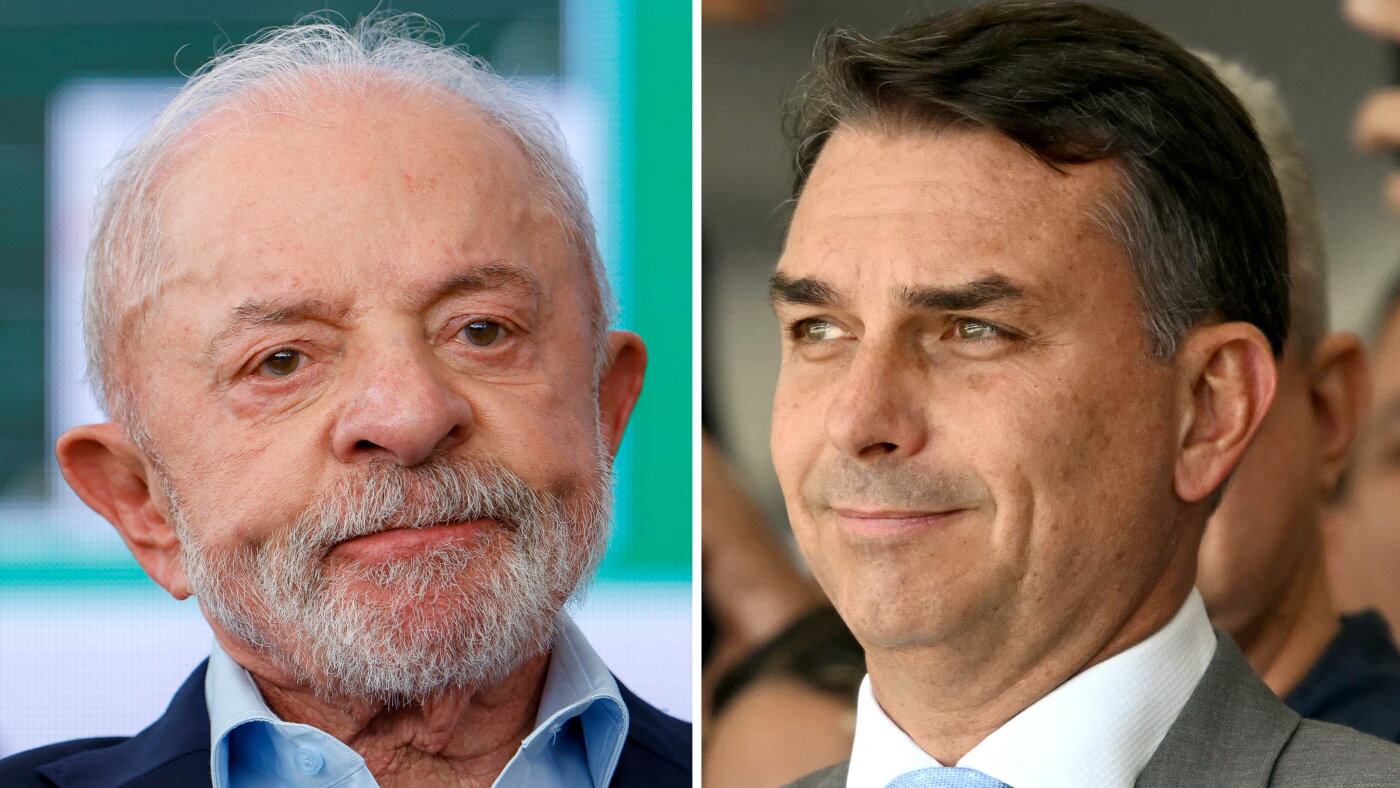
Brazil’s presidential election will proceed to a runoff after neither of the two lead candidates secured more than 50% of valid votes in Sunday’s first-round contest. With over 98% of the vote counted, Senator Flávio Bolsonaro, son of the former president, received over 47% of the vote, while incumbent President Luiz Inácio Lula da Silva, 80, followed with 44%. The two candidates are scheduled for a final vote on October 25.
The election occurs as former President Jair Bolsonaro remains under house arrest, serving a 27-year sentence for plotting to overturn the 2022 election result. Senator Bolsonaro, 45, campaigned on a platform to continue his father’s legacy, while President Lula, seeking a fourth nonconsecutive term, campaigned on his record of social spending. Results from Sunday also indicated a shift in Brazilian politics, with Bolsonaro’s camp making gains in the Senate and House of Representatives.
The Superior Electoral Court in Brasilia reported that Bolsonaro received over 55.8 million votes compared to Lula’s nearly 53.2 million. The campaign was marked by domestic concerns over the economy, public debt above 82% of GDP, and a corruption investigation involving the defunct Banco Master. Additionally, President Lula accused the United States of meddling in the election, a claim the U.S. State Department denied. Electoral court chief Kassio Nunes Marques stated Sunday that voting proceeded normally with no concrete indications of international interference.
The result affects specific groups including evangelical voters, who cited religious freedom as a priority, and the LGBTQ+ community, where some members expressed concern over a potential Bolsonaro presidency. Economically, the next leader will manage a country where inequality has fallen but living costs and household debt remain high. The winner will also face a Congress where the right-wing base has expanded, potentially impacting the ability to pass legislation or influencing efforts by some lawmakers to impeach Supreme Court Justice Alexandre de Moraes.
What happens next: The runoff campaign will last for three weeks as both candidates seek to attract moderate voters and those who supported third-, fourth-, and fifth-place right-wing candidates. Two former candidates, Ronaldo Caiado and Renan Santos, have stated they will not endorse either bidder. The final vote is scheduled for October 25, 2026, and the next presidential term is set to begin on January 5, 2027. Despite past instances of political violence during the 2022 runoff, electoral authorities have expressed confidence in the security and transparency of the electronic voting system.