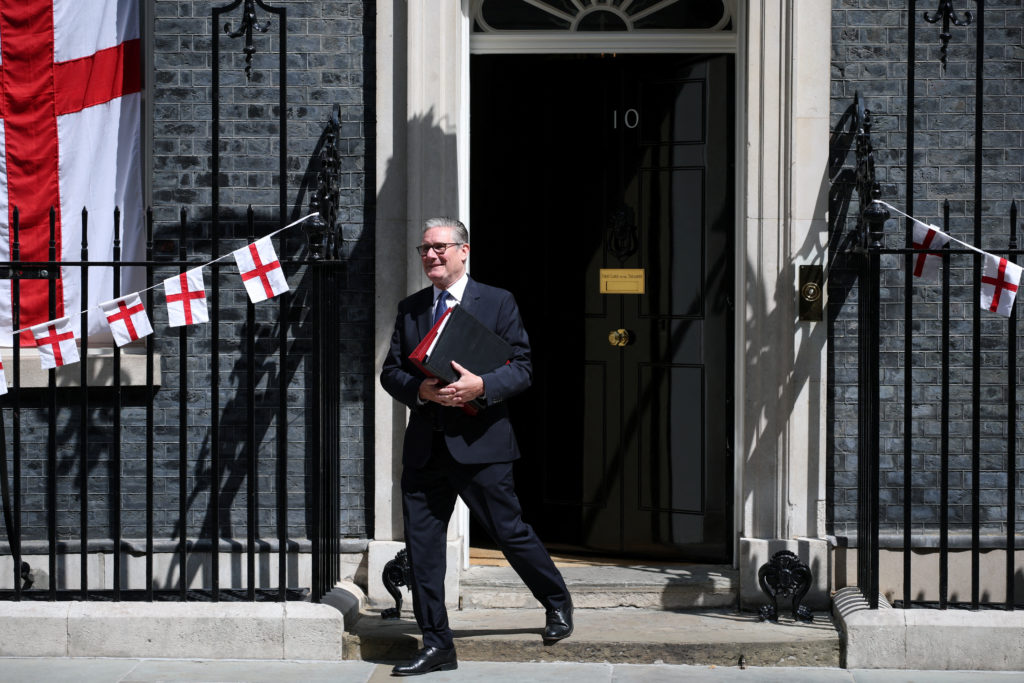
British Prime Minister Keir Starmer participated in his final session of Prime Minister’s Questions on Wednesday, marking the conclusion of his two-year premiership. Starmer, who was elected in a landslide in July 2024, announced his resignation following local election losses and internal party pressure. He is scheduled to formally step down on Monday, with Andy Burnham set to succeed him as leader of the Labour Party and Prime Minister.
During the session, Starmer stated that he was leaving the United Kingdom in "better shape than I found it," citing domestic achievements in labor protections and defense spending. He also addressed the recent killing of former lawmaker Ann Widdecombe, calling for increased protection for democratic institutions. Starmer confirmed he intends to remain in Parliament as a backbench lawmaker.
Conservative opposition leader Kemi Badenoch noted that Starmer’s departure served as a reminder that leadership changes are not a "silver bullet" for political challenges. While Starmer faced criticism during his tenure for economic stagnation and controversial political appointments, he received cross-party praise for his foreign policy, specifically his support for Ukraine and efforts to improve relations with European Union neighbors.
The transition of power will take place on Monday when Starmer submits his resignation to King Charles III. Under the British parliamentary system, a change in party leadership allows for a new Prime Minister to take office without a general election; the next national vote is not required until 2029.