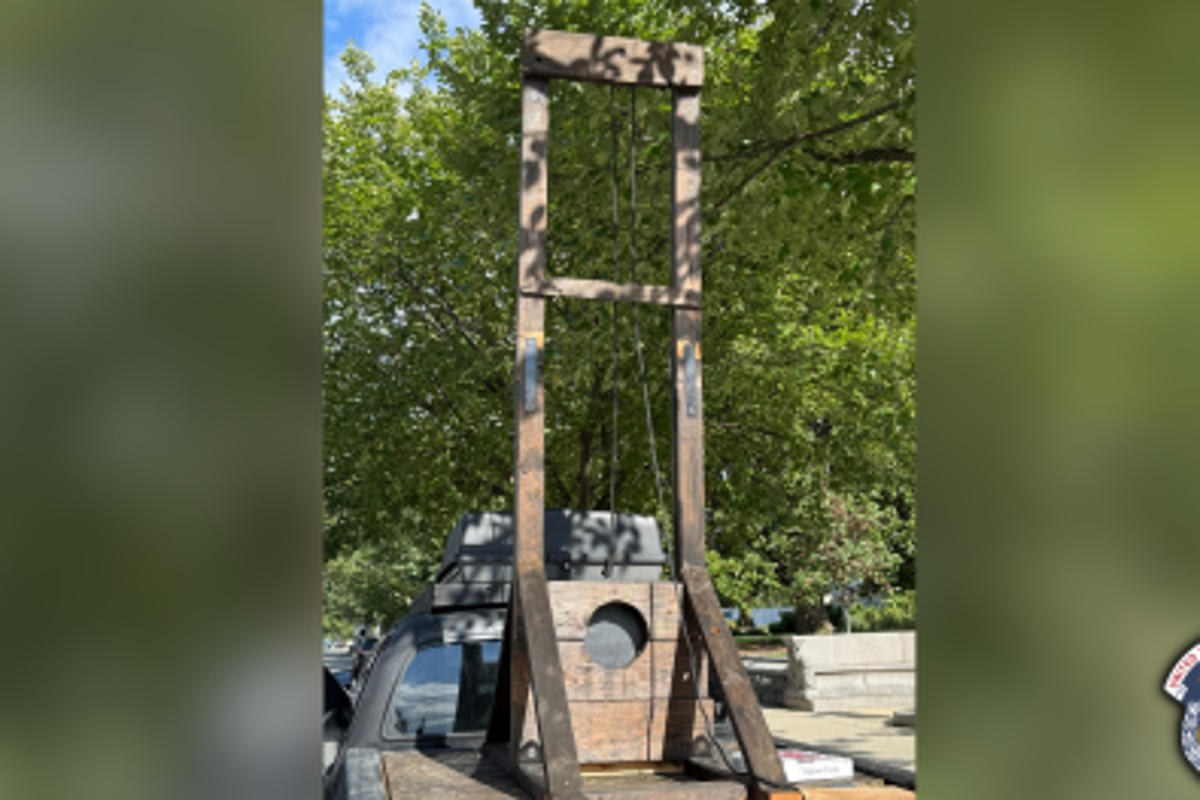
U.S. Capitol Police arrested a California man on Tuesday after discovering a guillotine in the bed of his pickup truck near the U.S. Capitol complex. Officers detained 35-year-old Philan-Tam-Duy Le of Julian, California, shortly after 3 p.m. after spotting his vehicle illegally parked east of the Capitol grounds.
Authorities are currently investigating the circumstances behind Le's cross-country trip and his motivations for bringing the device to Washington, D.C. According to social media posts documented by NBC News, Le had shared videos of the guillotine earlier that day, including one filmed outside the FBI headquarters. The posts reportedly used phrases such as "Guillotine adventures" and "Capital hill next."
The suspect's brother, Kelvin Le, told the Los Angeles Times that he believed the device was intended to symbolize his brother's disapproval of the current political climate. He noted that his brother did not support President Donald Trump or California Governor Gavin Newsom, though he did not cite specific policy grievances. Kelvin Le described his brother as a cook and tattoo artist who frequently traveled, stating that he did not believe his brother intended to harm anyone.
The presence of the device is significant due to its historical association with executions and its more recent use as a symbol in American political demonstrations. Similar imagery was noted by authorities during the January 6, 2021, attack on the U.S. Capitol. This event highlights the ongoing challenge for the Capitol Police—an agency with an annual budget exceeding $700 million—in monitoring social media activity and managing potential threats in a highly polarized political environment. The incident reinforces the strict parking and security regulations enforced around federal landmarks, which affect any driver or visitor entering the district.
The case sets a precedent for how law enforcement interprets the transportation of historical execution devices as potential threats or symbolic speech. While the brother of the suspect maintains the act was a form of political expression, the proximity to the FBI and the Capitol led to a swift tactical response. What happens next involves a formal investigation by the U.S. Capitol Police into Le’s intent. Court dates and specific charges have not yet been reported, but the outcome will likely depend on whether the guillotine is classified as a weapon or a prop under District of Columbia law.