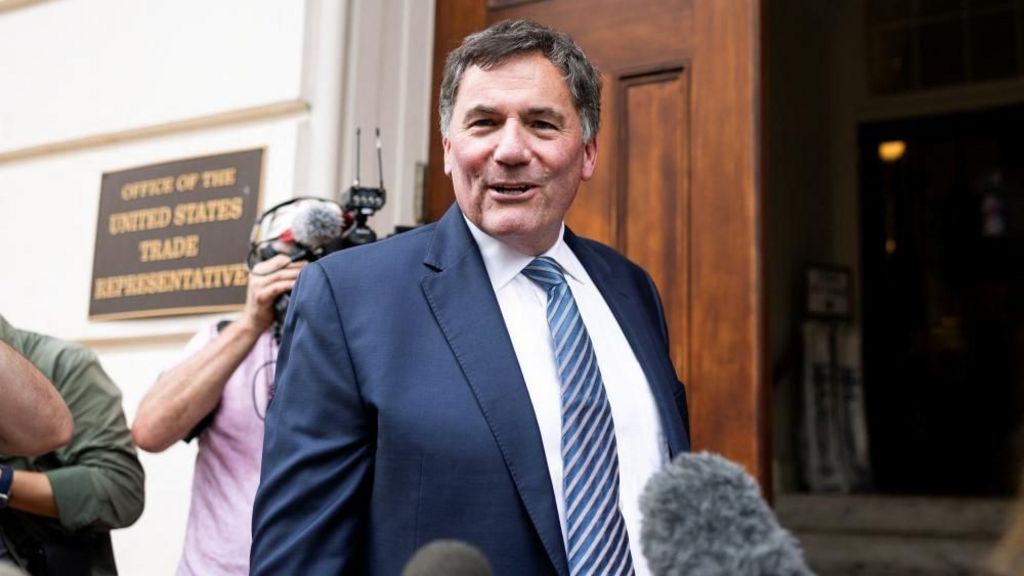
Canadian and U.S. negotiators continued discussions in Washington on Friday to finalize a trade agreement before a midnight deadline. Canada-U.S. trade minister Dominic LeBlanc met for approximately eight hours with U.S. Trade Representative Jamieson Greer, stating afterward that "more work to do" remained. The talks are aimed at establishing a framework to prevent a new wave of U.S. tariffs on Canadian exports.
The negotiations follow a three-day pause on new tariffs granted by President Donald Trump. While the full terms have not been released, reports indicate the U.S. may reduce tariffs on Canadian steel and aluminum from 50% to 25%, and on automobiles from 25% to 15%. In exchange, Canada is reportedly considering allowing U.S. dairy producers greater access to its market and restoring the sale of American alcohol on provincial liquor store shelves.
The proposed terms have met with domestic resistance in Canada. Conservative opposition leader Pierre Poilievre described any deal containing "one-sided" tariffs as a "bad deal" that could lead to de-industrialization. Manitoba Premier Wab Kinew and Quebec Premier Christine Fréchette have expressed reservations, with Fréchette specifically citing concerns regarding the impact on dairy farmers. Conversely, the leaders of Nova Scotia and the Yukon territory indicated they are prepared to restore American alcohol sales to facilitate an agreement.
The scale of the impact is reflected in the specific tariff adjustments under discussion. For steel and aluminum producers, a 25% tariff would represent a reduction from the 50% threat but still double the costs compared to previous levels. Similarly, a 15% tariff on automobiles would represent a significant cost per vehicle for manufacturers compared to tariff-free trade. Local leaders, such as the mayor of an Ontario city hosting a major steel producer, noted that even at 25%, the tariffs would remain a significant burden on the local economy and community.
Beyond immediate costs, the agreement sets a precedent for how Prime Minister Mark Carney’s government manages trade relations with the Trump administration. Polls by Leger indicate that 56% of Canadians prefer a hardline approach to negotiations, putting political pressure on the administration to avoid appearing to make significant concessions. The final resolution will likely influence future trade policy between the U.S. and Mexico as well. Negotiators face a hard deadline of Friday night to reach an agreement before the current tariff pause expires.