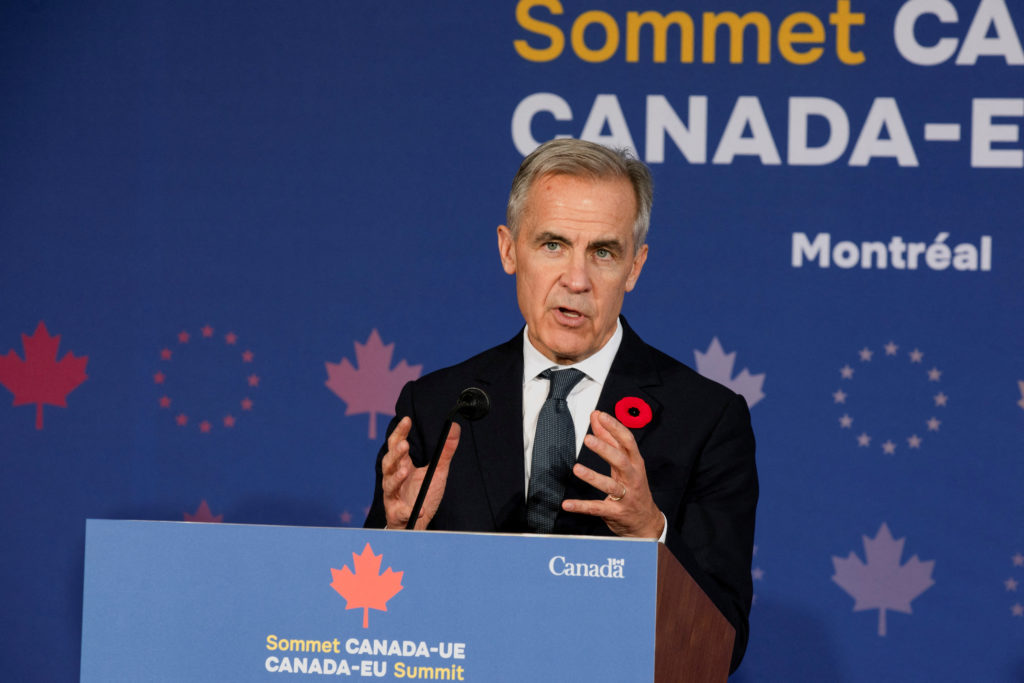
Canadian Prime Minister Mark Carney and U.S. President Donald Trump reported progress on a potential trade deal following a conversation on Sunday, November 1, 2026. Negotiators for both nations are scheduled to continue working toward an agreement in the coming weeks to resolve a trade dispute that escalated earlier this year.
The discussion followed a period of tension that began in August 2026, when Canada walked away from negotiations. Prime Minister Carney stated at the time that U.S. demands threatened Canadian sovereignty, the auto industry, and French-language protections. In response, President Trump imposed 50% tariffs on approximately $20 billion in Canadian goods, which led to retaliatory measures from Canada.
On Sunday, President Trump stated that both countries now have the "concept" of a mutually beneficial deal. He specified that the discussions have included the construction of the Keystone XL pipeline and the potential removal of tariffs paid by U.S. farmers for products sold in Canada. Carney noted that recent progress resulted from Washington moving closer to Canada's established positions, though as recently as Wednesday, October 28, 2026, he had expressed doubt that a deal could be reached before the U.S. midterm elections.
The trade dispute affects manufacturers and consumers in both nations, particularly those involved with the $20 billion in goods currently subject to 50% U.S. tariffs. The two sides have discussed possible relief from U.S. tariffs on Canadian steel and automobiles, while Trump suggested the agreement could erase tariffs paid by U.S. farmers for Canadian products.
The scale of the economic impact is centered on the $20 billion in trade currently under tariff, alongside the broader goal set by Carney to double Canadian exports to countries other than the U.S. over the next decade. The dispute has already influenced U.S. political campaigns; for example, Republican Senate candidate Mike Rogers in Michigan has called for an end to the trade war. In Canada, Conservative opposition leader Pierre Poilievre stated on Sunday that Canadians "cannot afford to wait" for results.
Beyond the immediate trade of goods, the negotiations touch on infrastructure through the Keystone XL pipeline and international alliances. As Canada seeks to reduce its economic dependence on the U.S., it launched a new economic and security alliance with the European Union on Friday, October 30, 2026, seeking to become the bloc's first "associate member." Negotiators will continue work over the "coming weeks." While the leaders expressed optimism on November 1, no specific date for a final signing has been set, and the U.S. midterm elections remain scheduled for Tuesday, November 3, 2026.