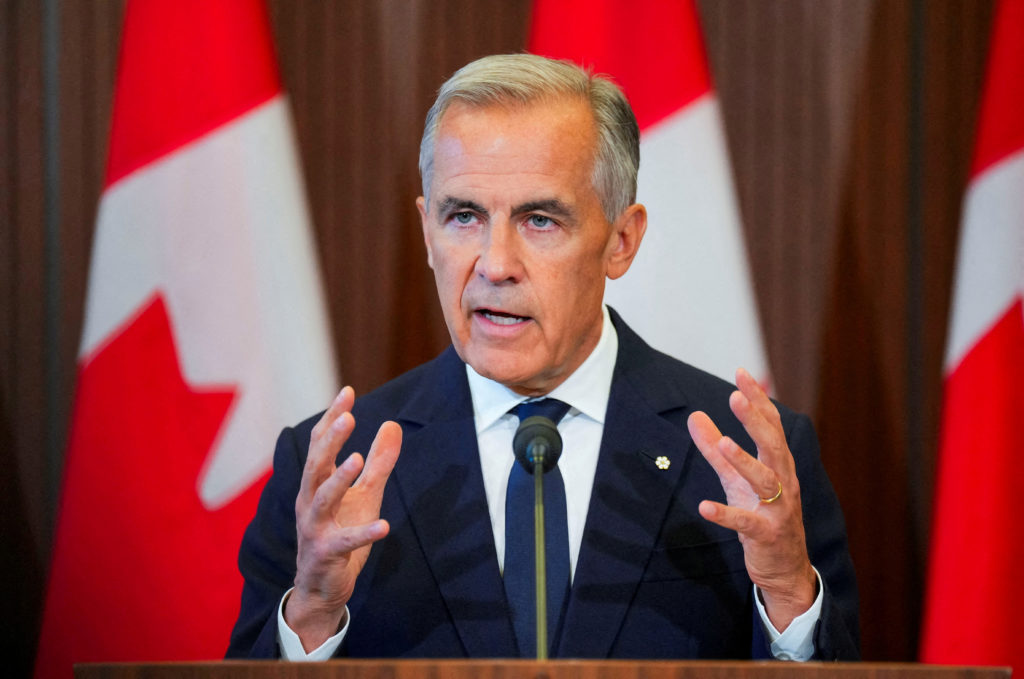
Canada announced Tuesday it will impose retaliatory tariffs on approximately $20 billion worth of American goods, including steel, dairy, appliances, and farm equipment. The move follows the collapse of trade negotiations and the Trump administration's weekend imposition of 50% tariffs on Canadian products. Canadian Prime Minister Mark Carney stated the tariffs are intended to protect domestic industries rather than raise revenue, citing concerns that U.S. demands were aimed at subordinating Canadian interests.
The trade disagreement escalated following President Donald Trump's Monday remarks, where he told Canadian leaders to "fall in line" or face consequences "far WORSE" than current duties. The president also threatened new 50% tariffs on Canadian vehicles, auto parts, and steel. On Tuesday, Trump stated the U.S. was giving "serious consideration" to renaming Lake Ontario "Lake America," a proposal following his executive order last year to rename the Gulf of Mexico to the Gulf of America.
The Canadian tariffs will take effect on Sept. 8 with rates of 15%, 25%, and 50%, matching corresponding U.S. rates on more than 700 products. Goods such as certain steel, aluminum, furniture, and clothing will face a 50% duty. Appliances, dairy products, and seafood will be subject to a 25% tariff. To mitigate the economic impact, the Canadian government announced a $7.5 billion CAD ($5.4 billion USD) support package for affected workers and businesses, adding to more than $30 billion CAD ($21.7 billion USD) provided since the start of 2025.
The scale of the economic measures involves approximately $20 billion in U.S. goods now facing duties at the border. For U.S. exporters, the impact is already measurable; Canadian officials reported that steel imports from the U.S. dropped by 30% under previous 25% tariffs and are expected to decline further under the new 50% rate. Households in both countries may notice price changes on everyday items as the list of affected goods includes seafood, cheese, clothing, cosmetics, and toilet paper, with some prices potentially reflecting duties as high as 50%.
The day-to-day impact for consumers will likely manifest in higher bills for groceries and household goods starting Sept. 8. While the Canadian government has provided over $30 billion CAD in support to businesses to cushion the blow, the knock-on effects could disrupt regional markets and future trade policy between the two neighbors. What happens next depends on future negotiations; Carney stated Canada will return to the table when the U.S. adopts a different "attitude," while Trump has maintained threats of further tariffs on the Canadian auto industry.