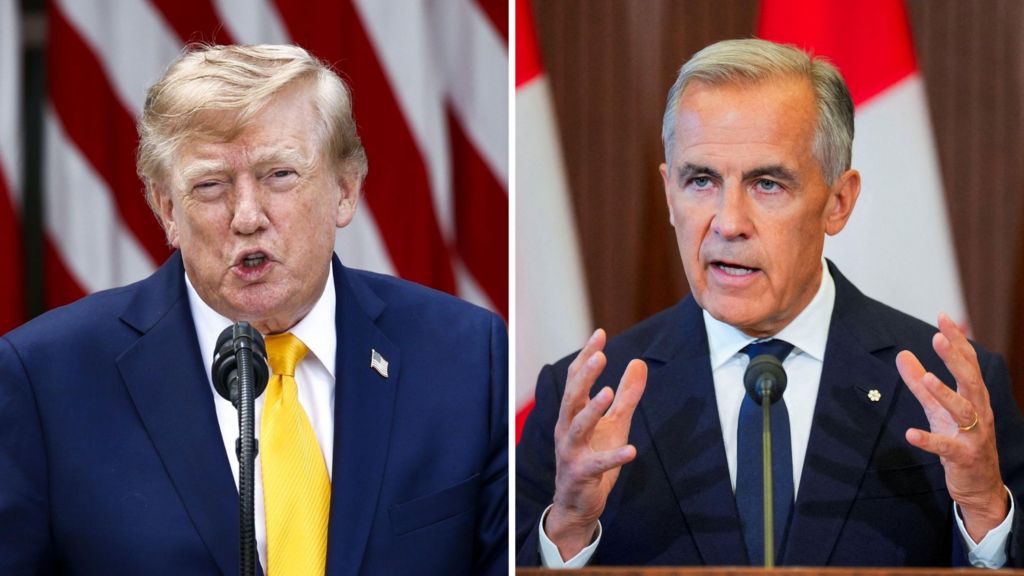
The Canadian government is preparing retaliatory measures in response to a trade dispute with the United States, targeting specific American industries as cross-border tensions escalate. Prime Minister Mark Carney and provincial leaders have identified energy exports, critical minerals, and consumer goods as areas where Canada could apply economic pressure. The Canadian Finance Department stated that additional measures to protect domestic workers and businesses would be announced on Tuesday.
The move follows the breakdown of trade negotiations and a recent threat from the Trump administration to increase tariffs on Canadian autos and auto parts to 50% starting January 1. Canada currently serves as the top export market for 26 U.S. states and is a primary supplier of natural gas, electricity, and crude oil to the U.S. market.
Canadian officials are finalizing a list of "dollar-for-dollar" countermeasures focusing on steel, dairy, electronics, agricultural equipment, appliances, and pulp and paper. Ontario Premier Doug Ford has also suggested an "energy surcharge" on electricity exports, noting that Canada is a global leader in potash and critical minerals like lithium and nickel. Meanwhile, 11 of Canada's 13 provinces and territories maintain an existing ban on U.S. alcohol in response to previous tariff waves, which U.S. distillers report has caused export values to drop by over 70%.
On the Canadian side, financial analysts estimate that recent 50% tariffs on $20 billion of imports could reduce the country's Gross Domestic Product (GDP) by 0.3% to 0.6% in the short term. The impact is also visible in the travel sector, where Canadians made 800,000 fewer trips to the U.S. in April compared to the same month in 2024, contributing to a $2.35 billion (C$3.3 billion) loss in U.S. revenue last year. Despite these economic pressures, an Angus Reid poll indicated that 76% of Canadians support the government's decision to walk away from trade negotiations.
The outcome of this friction may influence the upcoming U.S. midterm elections, particularly in border states like Michigan and Maine that rely heavily on exports to Canada. Prime Minister Carney argued that U.S. workers in states like Ohio, Kentucky, and Alabama would be affected because Canada is their largest consumer of automobiles. The next significant development is scheduled for January 1, when the proposed U.S. tariff increase on Canadian autos and parts is set to take effect.