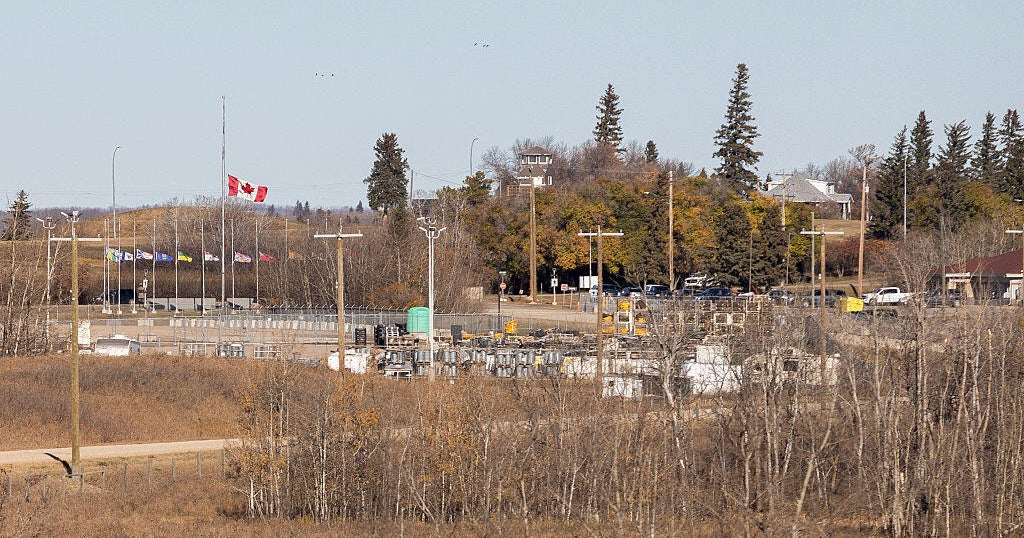
Canadian officials reported on Thursday that a fire that killed four soldiers and injured 39 others at Canadian Forces Base Wainwright began on an automatic grenade launcher range. The blaze broke out on Oct. 17 during routine live-fire training exercises involving approximately 84 soldiers from Charlie Company, 3rd Battalion, Princess Patricia’s Canadian Light Infantry, and Army reservists.
The fire initially ignited within a designated training area known as "Permanent Danger Area 2." Brig. Gen. Vanessa Hanrahan, the Canadian Forces Provost Marshal, stated that firefighters were unable to battle the blaze directly while it was within this zone, leading crews to monitor it. Maj. Gen. Wade Rutland noted on Sunday that officials believed the fire was contained for several hours and permitted training to continue before conditions changed.
A sudden shift in wind direction and velocity caused the fire to spread rapidly. Prime Minister Mark Carney said the flames moved nearly one kilometer in less than a minute, overtaking soldiers at a secondary location where they were practicing simulated attacks. The Canadian Armed Forces identified the deceased as Sgt. Morgan Wong, Pvt. Shaun Farrell, Pvt. Aidan Goulding, and Pvt. Hayden Lykkemark. As of Thursday, 27 soldiers remained hospitalized, while 12 had been treated and released.
The Canadian Forces National Investigation Service is leading a probe into the incident with support from 50 investigators and the Royal Canadian Mounted Police. Investigators are examining whether the fire spread through vegetation or was driven by wind, and will review military safety protocols. While initial local reports suggested a gas main may have been struck, officials stated there is no evidence that natural gas or oil infrastructure was involved, nor is there indication of terrorist activity.
For the soldiers involved and their families, the concrete impact includes the loss of life and severe burn injuries that officials expect will require intensive, long-term care. The 39 injured service members constitute nearly half of the 84-person company training at the time. These soldiers were preparing for a scheduled deployment next spring to reinforce NATO troops in Latvia as part of the Global Response Task Force. The loss of personnel and the ongoing investigation may affect the readiness or timeline of that mission.
The investigation into the fire sets a precedent for how the Canadian military manages live-fire exercises in regions prone to fast-moving grass fires. The findings will likely dictate future safety standards for training on the Wainwright range, one of the country's busiest bases. What happens next includes the continuation of the investigation led by the Canadian Forces National Investigation Service. While Prime Minister Carney pledged a transparent probe, specific deadlines for the final report have not been disclosed. The 27 hospitalized soldiers continue to receive treatment as officials monitor their recovery.