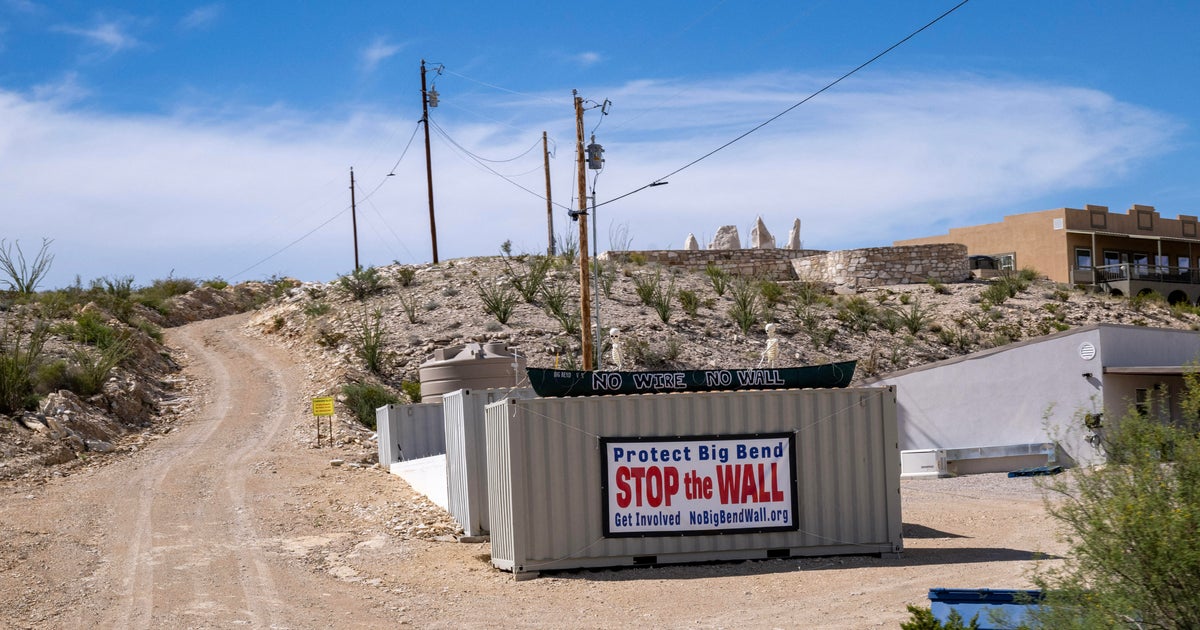
Customs and Border Protection (CBP) Commissioner Rodney Scott announced a pause on construction activities within Big Bend National Park on Monday to conduct an on-the-ground evaluation. The decision followed the arrival of heavy machinery at the 801,163-acre West Texas park, which had been authorized for new infrastructure under federal border security funding. The pause allows for meetings with local sheriffs, county officials, and residents who have organized in opposition to the project.
The Department of Homeland Security (DHS) designated the Big Bend Sector as an "area of high illegal entry" in February. This designation cited more than 89,000 apprehensions and various drug seizures across the 517-mile sector between fiscal years 2021 and 2025. To expedite construction, DHS waived several environmental and historic-preservation laws. However, CBP data also shows that apprehensions in the sector decreased by 74% from 2023 to 2025, representing about 1.3% of all Southwest border arrests last year.
The infrastructure plan includes approximately $7.5 billion for the Big Bend Sector. While CBP officials stated they would not build a 30-foot bollard wall inside the national park, the current contracts, including one valued at $1.7 billion, cover more than 200 patrol roads, new detection technology, and 17 miles of vehicle barriers standing four to six feet high. Before the pause, crews had begun clearing vegetation for patrol roads near Santa Elena Canyon.
Opposition to the project includes a coalition of cattle ranchers, environmentalists, and local law enforcement. Terrell County Sheriff Thaddeus Cleveland, a Republican and former Border Patrol agent, argued that the region's natural geography, featuring cliffs between 500 and 1,000 feet tall, serves as a "God-made barrier" that makes physical fencing redundant. Texas Governor Greg Abbott and more than 40 state lawmakers have also expressed concerns, with Abbott stating he was previously assured that no barriers would be erected within the park.
The scale of the spending is significant for these remote communities. The $7.5 billion allocated for the Big Bend Sector represents roughly $14.5 million in contracts for every mile of the border in that region. For residents in Terrell County, which has 700 people and no grocery stores, Sheriff Cleveland noted that this budget is equivalent to 2,800 years of the county's annual operating revenue. Residents would notice a transformation of the landscape through the construction of hundreds of miles of paved roads and the installation of 55 autonomous surveillance towers, which CBP says are necessary to prevent cartels from exploiting unmonitored areas.
The outcome of the current pause will set a precedent for how federal border security mandates interact with national park protections and private property rights in Texas. While Commissioner Scott is conducting a review, he has not canceled the project or specified a date for construction to resume. Property owners currently working with groups like the No Big Bend Wall coalition continue to monitor federal requests for land access. The situation remains a point of tension between federal security objectives and local residents who argue that the unique, mountainous terrain of West Texas requires a different approach than other border regions.