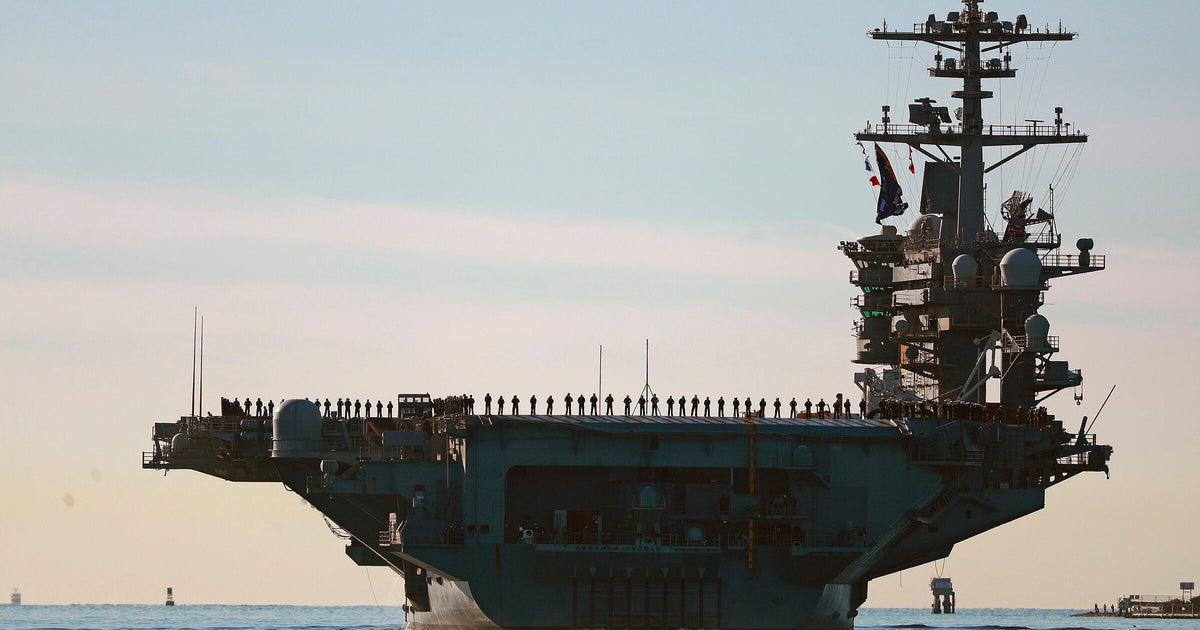
Adm. Brad Cooper, commander of U.S. Central Command (CENTCOM), visited the aircraft carrier USS Abraham Lincoln over the weekend following reports of deteriorating conditions and declining morale among the crew. Cooper stated that deployment at sea is challenging and that mental health requires the same attention as physical health, though he did not confirm or deny specific allegations regarding the ship's status.
The visit occurred as the USS Abraham Lincoln enters its ninth month of deployment during the U.S.-Iran war, exceeding the standard six-month rotation. Families of service members and publications such as Military Times and Stars and Stripes have reported suicide attempts, mental health stressors, and poor sanitary conditions, including plumbing issues and food supply shortages. The Navy stated it has not observed an increase in suicidal ideation or attempts, though it is investigating an August 3 incident in which a sailor fell overboard and was recovered.
Government officials have offered conflicting accounts of the situation. Defense Secretary Pete Hegseth stated that reports of the ship's conditions were "completely misrepresented," while President Trump said the deployment length was "not nearly long enough." Conversely, Rep. Don Bacon (R-NE) called for congressional oversight and testimony from Navy officials, and Sen. Richard Blumenthal (D-CT) sent a letter to the Pentagon demanding a relief plan and addressing reports of water contamination and deck safety concerns.
The scale of the reported issues involves the ship's entire complement, which traditionally includes thousands of personnel. If reports of water contamination and supply shortages are accurate, these service members face daily challenges regarding basic needs like hygiene and nutrition. The Navy's ongoing investigation into the August 3 overboard incident and reported suicide attempts highlights a potential shift in the mental health landscape for a significant portion of the Navy's forward-deployed force in the Middle East.
The situation sets a precedent for how the military manages long-term deployments during active conflicts and how it balances personnel health with strategic presence. A U.S. official reported that the USS George Washington is scheduled to replace the USS Abraham Lincoln, a move that would eventually return the Lincoln's crew to their home port. However, a specific date for this transition has not been reported, meaning the current crew remains under the reported stressors indefinitely until the relief ship arrives in the region.
The scale of the reported issues involves the ship's entire complement, which traditionally includes thousands of personnel. If reports of water contamination and supply shortages are accurate, these service members face daily challenges regarding basic needs like hygiene and nutrition. The Navy's ongoing investigation into the August 3 overboard incident and reported suicide attempts highlights a potential shift in the mental health landscape for a significant portion of the Navy's forward-deployed force in the Middle East.
The situation sets a precedent for how the military manages long-term deployments during active conflicts and how it balances personnel health with strategic presence. A U.S. official reported that the USS George Washington is scheduled to replace the USS Abraham Lincoln, a move that would eventually return the Lincoln's crew to their home port. However, a specific date for this transition has not been reported, meaning the current crew remains under the reported stressors indefinitely until the relief ship arrives in the region.