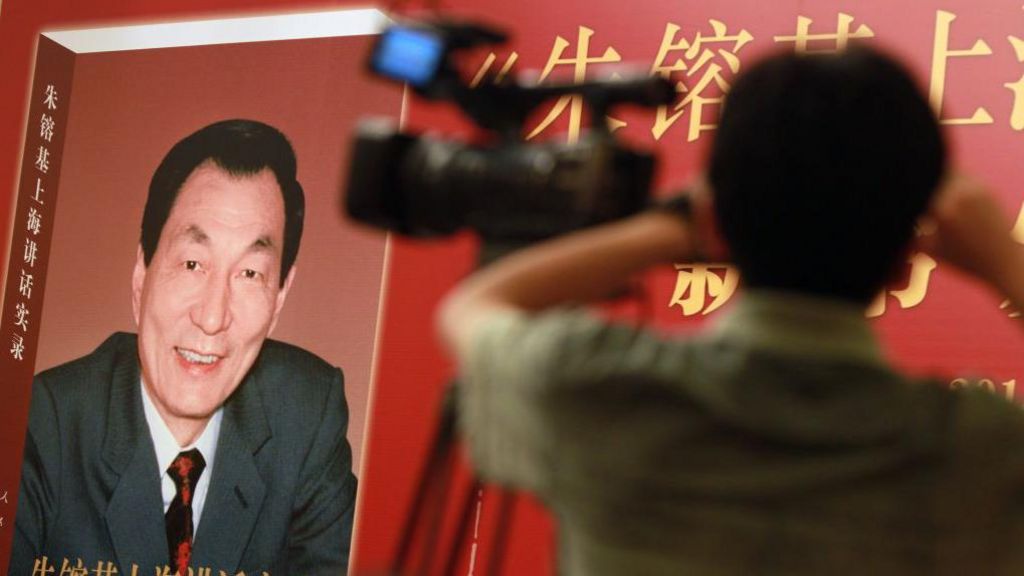
Former Chinese Premier Zhu Rongji, who served from 1998 to 2003, was scheduled for cremation at a funeral in Beijing on Tuesday following his death at age 97. The Chinese government flew flags at half-mast and deployed security vehicles in central Beijing to mark the passing of a leader described by state media as a "loyal Communist fighter." Zhu’s death occurred last week due to an unspecified illness, shortly before the party gathered to commemorate the birth centenary of former President Jiang Zemin.
While official channels praised Zhu’s service, Chinese authorities have monitored and restricted public expressions of grief on the internet. An essay by economist Zhao Jian, which described Zhu’s era as a time of slower pace and greater candor, was removed from the WeChat social media platform the day after it was published. Analysts noted that the Chinese Communist Party (CCP) has historically been cautious of public mourning for senior officials, citing the 1976 and 1989 deaths of leaders that preceded widespread protests.
Zhu is recognized for leading China through significant economic changes, including the country’s entry into the World Trade Organization in 2001 and the shuttering of unprofitable state-owned firms. During his tenure alongside President Jiang Zemin, China also dismantled its old housing system in favor of a commercial property market. In recent days, social media users have shared images of the two former leaders, praising what they described as a candid leadership style and their willingness to "tell the truth" regarding reform challenges.
For the average household, this shift is felt through a move away from the "breakneck reforms" of the past toward President Xi’s policy of greater central control and state-driven economic autonomy. While citizens during Zhu’s era saw the emergence of a commercial property market, today’s families are dealing with the demographic decline and economic cooling that have replaced the optimism of the early 2000s. The removal of online commentary, such as Zhao Jian’s essay, demonstrates the immediate limitations on how citizens can publicly compare their current living standards and political environment to those of previous decades.
The passing of these figures sets a precedent for how the CCP manages its historical narrative, ensuring that past leadership is presented as a precursor to current policies rather than an alternative path. President Xi emphasized this during a 40-minute speech on Monday, calling for the party to carry forward Jiang’s legacy while warning of "potential dangers" and "raging storms" ahead. Moving forward, the government is expected to continue promoting a unified history that links the economic transformations of the 1990s directly to Xi's goal of a "great renaissance," while suppressing nostalgia that implies a preference for the former reformist era.
category: