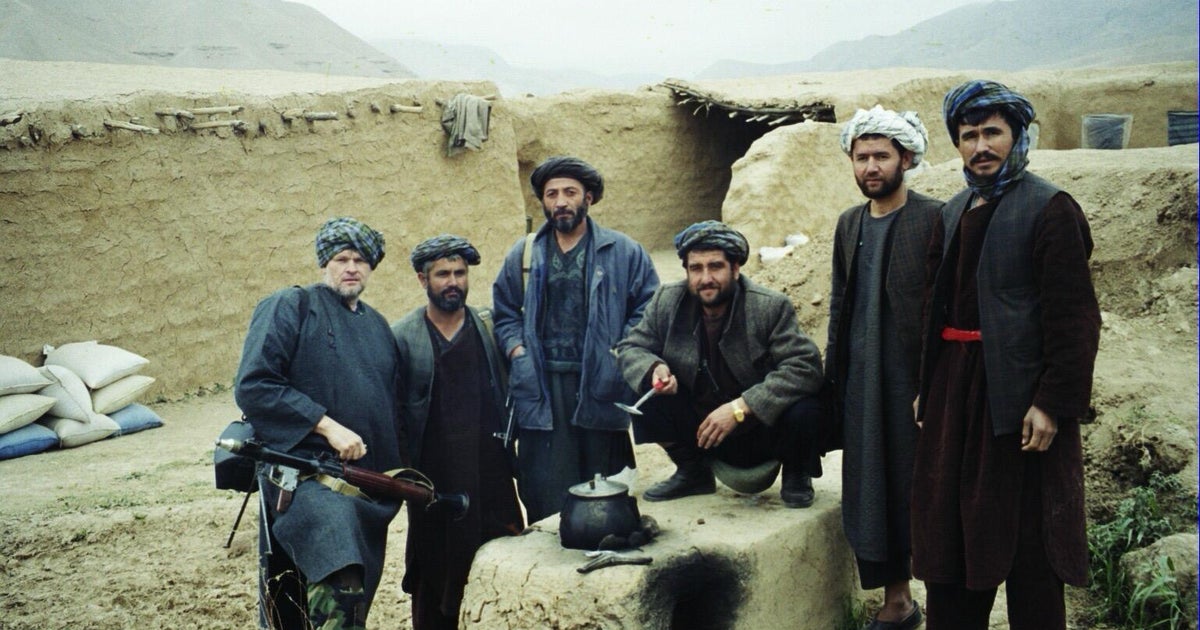
Fifteen days after the attacks of September 11, 2001, a seven-man CIA team code-named JAWBREAKER landed in Afghanistan’s Panjshir Valley to begin operations against al-Qaeda and the Taliban. The team flew from Uzbekistan aboard a Soviet-designed Mi-17 helicopter, a vehicle chosen to blend in with local aircraft used by both the Taliban and the Northern Alliance. The mission marked the first deployment of U.S. personnel behind enemy lines following the terrorist attacks.
The mission was authorized by President George W. Bush, who directed CIA Director George Tenet to target al-Qaeda using all available means. Because the CIA had spent several years building relationships with the Northern Alliance prior to the attacks, officers were able to deploy quickly. The JAWBREAKER team carried millions of dollars in cash to equip and enlist Afghan allies, specifically seeking to shore up ties with Northern Alliance forces following the assassination of their leader, Ahmad Shah Massoud, two days before 9/11.
On October 17, 2001, a second group known as Team Alpha was inserted into northern Afghanistan. This eight-man team, which included CIA case officer David Tyson and Green Beret Justin Sapp, worked with Uzbek leader Abdul Rashid Dostum. The mission involved traveling by horseback for up to 14 hours a day through mountainous terrain. On November 25, 2001, during an uprising at the Qala-i-Jangi fortress near Mazar-e-Sharif, CIA officer Johnny Micheal "Mike" Spann was killed. He was the first American killed in combat during the conflict.
The Mi-17 helicopter used in the initial deployment, which the crew gave the call sign "9-11-01," flew more than 300 missions before its retirement in 2012. To avoid being targeted by friendly aircraft, the crew painted "USA" and a partial American flag on the stabilizers, though they lacked blue paint to finish the flag. The aircraft was recently restored and is now on display at CIA headquarters in Langley, Virginia.
The deployment of these small CIA teams established the model for the U.S. war in Afghanistan. By late November 2001, the collaboration between approximately 100 CIA officers, 300 U.S. Special Forces, and local tribal allies led to the collapse of the Taliban regime across much of northern Afghanistan. For the Afghan partners involved, the conflict resulted in long-term displacement; the nonprofit Badger Six currently supports approximately 35 families of Afghan fighters with food, medicine, and resettlement assistance following the 2021 U.S. withdrawal and the Taliban's return to power.
For the CIA, the mission represented a shift toward more agile and collaborative paramilitary operations. The agency reports that more than half of its current workforce was hired after 9/11, and the integration between intelligence directorates and military partners established during this campaign is now a standard component of agency operations. The campaign also resulted in the recovery of Soviet-era Stinger missiles and the capture of foreign fighters, including American-born Taliban member John Walker Lindh.
The mission's legacy is preserved through artifacts at the CIA Museum, including the Mi-17 helicopter and the rifle used by David Tyson during the Qala-i-Jangi uprising. While the military and intelligence objectives were met within three months—leading to the overthrow of the Taliban and the elimination of al-Qaeda safe havens by December 2001—the subsequent 20-year conflict concluded with the Taliban reclaiming control of the country. Former officers continue to provide private relocation and resettlement support to Afghan allies who were not evacuated during the official U.S. withdrawal in 2021.