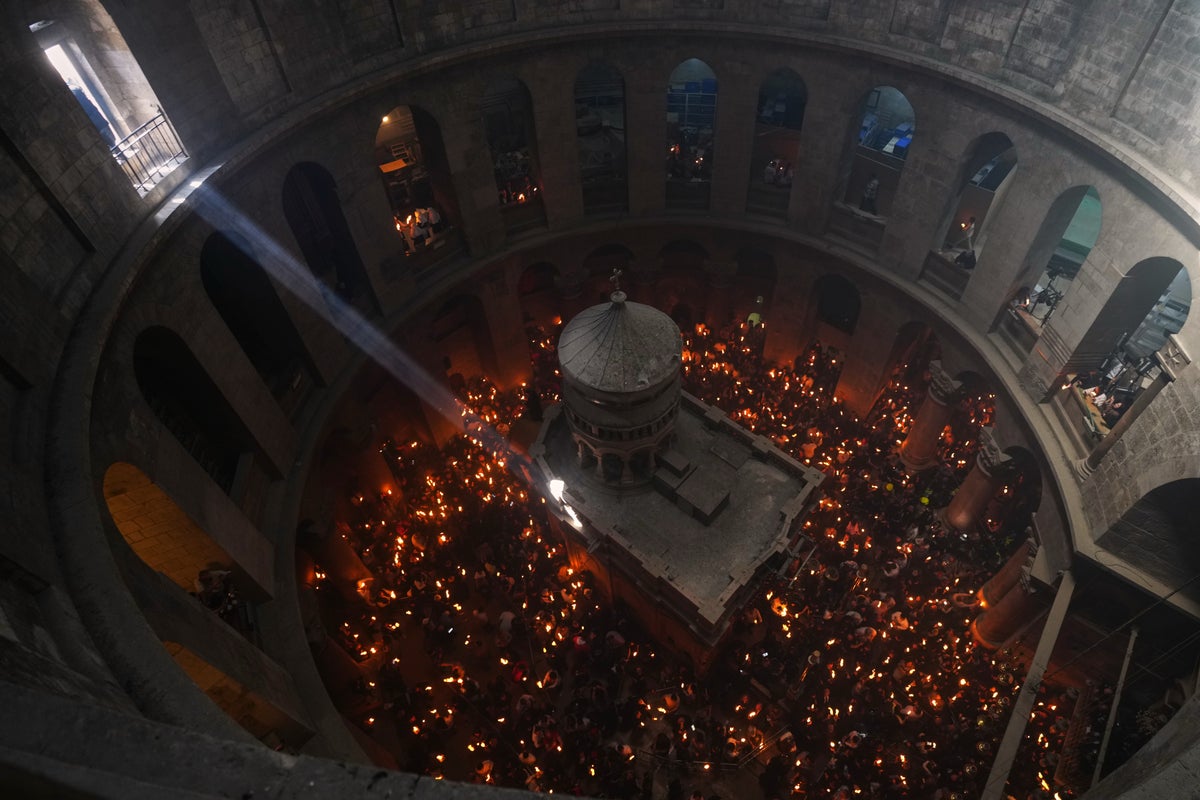
A small group of clergy and pilgrims spent a night locked inside the Church of the Holy Sepulcher in Jerusalem, participating in a centuries-old ritual where the doors are bolted from the outside. The basilica, which Christians believe marks the site of Jesus' crucifixion, burial, and resurrection, is shared by several denominations including the Armenian Apostolic, Catholic, and Greek Orthodox churches. The nightly lockout begins at 9 p.m. and concludes at dawn, during which time resident clergy conduct liturgies and prayers.
The arrangement for the church's security is managed by two Muslim families who have served as custodians of the keys and the entrance since the 13th century. Each evening, a representative of the family uses a ladder to secure the upper bolts of the massive doors before passing the ladder back through a small slot in the door to a priest inside. This system allows a small number of registered pilgrims to remain inside the dark, labyrinthine complex for private prayer alongside the resident monastic communities.
Current conditions in the region have significantly impacted the site's activity. Rev. Giuseppe Gaffurini, who leads a community of 10 Franciscan monks at the site, noted that the Israel-Hamas war, the Iran war, and the residual effects of the COVID-19 pandemic have reduced the number of international visitors. Despite these external tensions, religious leaders at the basilica reported a period of collaboration between the different Christian rites, which also include Coptic, Ethiopian, and Syrian Orthodox clergy under a 19th-century status quo agreement.
For the religious practitioners and the small number of pilgrims who still gain access, the change is noticed in the daily experience of the site. Rather than navigating dense crowds, those present find a largely empty basilica where their steps echo on stones dating back to the 4th century. A person visiting now would experience a quiet environment for prayer but must navigate what clergy describe as "increasingly tense" encounters in the surrounding streets between different religious groups.
The current situation sets a precedent for how these ancient religious sites function during periods of sustained regional warfare. While the nightly ceremonies and rotation of liturgies continue as they have for centuries, the scale of participation has shifted from a global audience to a small group of resident clergy and a few dozen overnight guests. The next steps for the site depend on the duration of the conflicts; the doors will continue to open at approximately 6 a.m. daily for those permitted to enter, with the 19th-century arrangement governing church access remaining the legal framework for the foreseeable future.