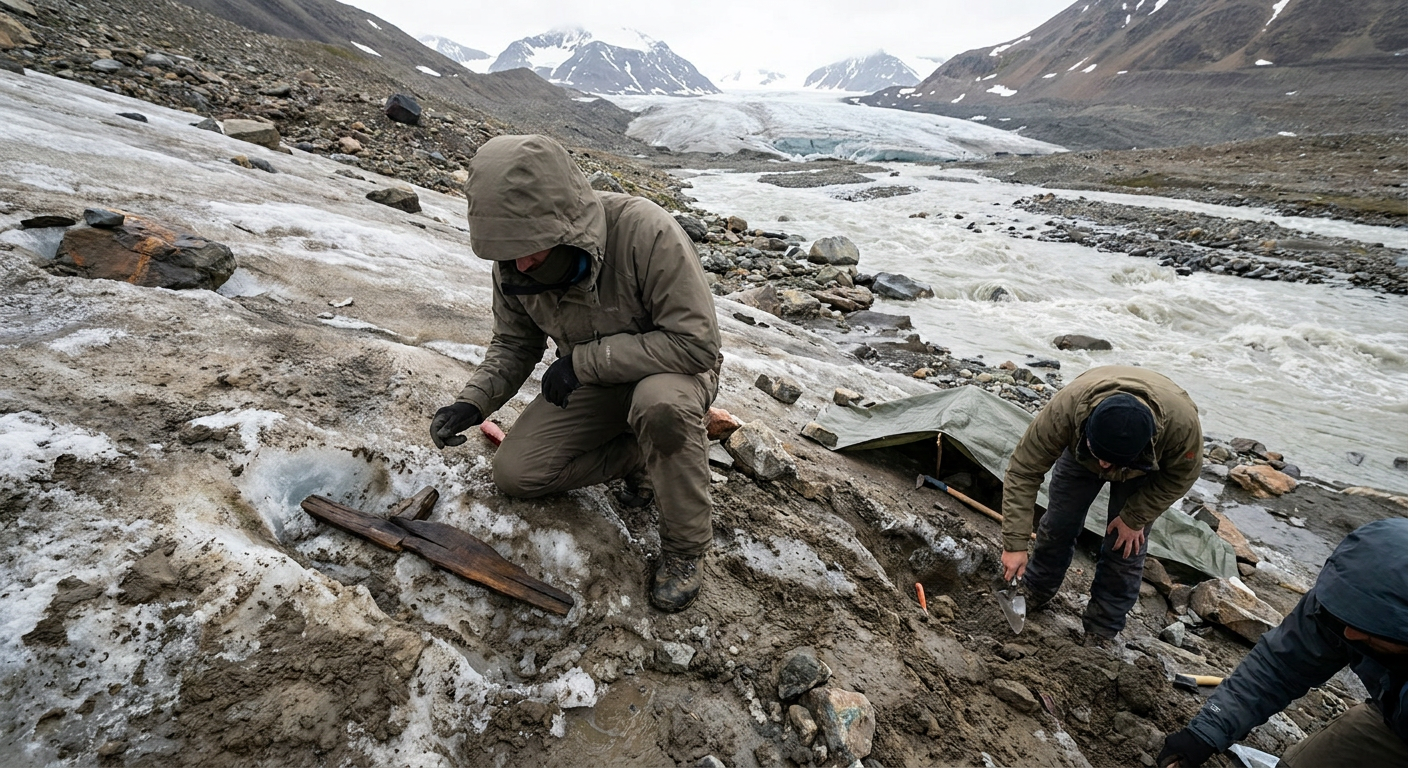
Droughts and rising temperatures are revealing previously submerged or frozen archaeological artifacts, while simultaneously accelerating the decay of remains that rely on stable environments for preservation. Jørgen Hollesen, a senior researcher at the National Museum of Denmark, stated that recent extreme weather in Europe has uncovered mammoth skeletons and historical vessels in riverbeds, but warned that the loss of soil moisture threatens items still buried underground.
The impact of changing environmental conditions varies by region, with researchers noting specific discoveries in the Andes mountains and the Arctic. In Peru, a mummified girl was recovered from melting ice, an event Hollesen attributed to chance discovery. In the Arctic and Greenland, the melting of permafrost acts as a "big freezer" being turned off, exposing organic artifacts to bacteria that cause rapid degradation once the ground thaws.
Archaeologists are also monitoring how wildfires and emergency response efforts affect historical sites. Hollesen noted that intense heat from fires can damage masonry and underground remains. Furthermore, the use of heavy machinery to extinguish these fires can physically deteriorate archaeological materials. To mitigate these losses, some countries like Norway and the United States have organized teams to survey melting snow patches for artifacts, though Hollesen indicated many mountain regions remain unmonitored.
The scale of this issue involves archaeological sites across entire continents, from the riverbeds of the Danube and Rhine in Europe to the high-altitude peaks of the Andes. While concrete figures for total sites at risk were not reported, the environmental changes affect any location where preservation depends on stable water levels or sub-zero temperatures. For the public and local communities, this means a potential loss of historical identity and a reliance on "pure luck" for discoveries rather than systematic preservation, as dry soil loses the moisture necessary to protect buried items.
In the immediate term, the concrete change for archaeological teams is an increased time pressure to document finds before they deteriorate. This requires shifts in funding and labor, such as the organized mountain surveys mentioned in Norway, to ensure artifacts are not destroyed by heat, bacteria, or heavy machinery during disaster response. As droughts and heatwaves continue, the international archaeological community faces a choice between increasing surveillance of vulnerable regions or accepting the permanent loss of artifacts currently shielded by ice and water.
What happens next is dependent on weather patterns and regional monitoring efforts. While some countries have established practices for documenting sites quickly, Hollesen indicated that many regions lack the personnel to survey areas where ice is receding. No specific deadlines or upcoming legislative votes were reported regarding international archaeological preservation funding or policy.