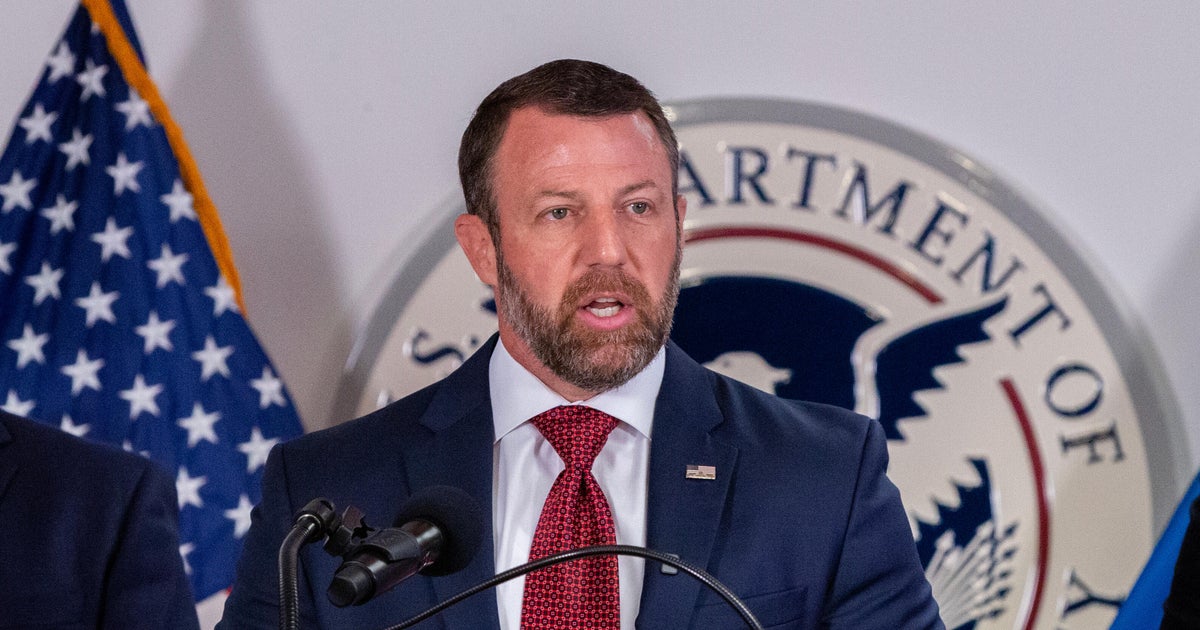
A U.S. Coast Guard jet carrying Homeland Security Secretary Markwayne Mullin and other high-ranking officials made an emergency landing at Ronald Reagan Washington National Airport on Wednesday afternoon. The pilot of the C-37A aircraft reported a right-engine failure to air traffic controllers before performing the single-engine landing. There were 14 people on board at the time of the incident, and no injuries were reported.
The C-37A, a military version of the Gulfstream V, is used by the Department of Homeland Security (DHS) to transport senior personnel. Secretary Mullin confirmed the event on social media, describing the landing as "routine" due to the professionalism of the pilots. The DHS had previously characterized this aircraft as 22 years old, citing concerns regarding obsolete communications and electronics systems.
Government records indicate that DHS requested approximately $50 million in its fiscal year 2025 budget to replace the jet, which then-Secretary Kristi Noem testified was beyond its usable hours. This request faced opposition from some members of Congress, including Reps. Bennie Thompson (D-MS) and LaMonica McIver (D-NJ), who questioned the priority of executive transport over search-and-rescue aircraft. By October 2025, the Coast Guard increased its request to approximately $200 million for two new Gulfstream G700 jets.
The $25 billion "One Big Beautiful Bill," signed by President Donald J. Trump, provided funding for the Coast Guard, including $14.1 billion for cutters, $3.7 billion for aircraft, and $6 billion for infrastructure. According to the Coast Guard, this funding is intended to purchase an estimated 17 new icebreakers, 21 new cutters, 40 helicopters, and six C-130J aircraft. Despite these investments, the specific request for two executive Gulfstream G700s has drawn scrutiny from lawmakers. The DHS has not yet reported a specific timeline for when the C-37A involved in the emergency landing will be permanently retired.