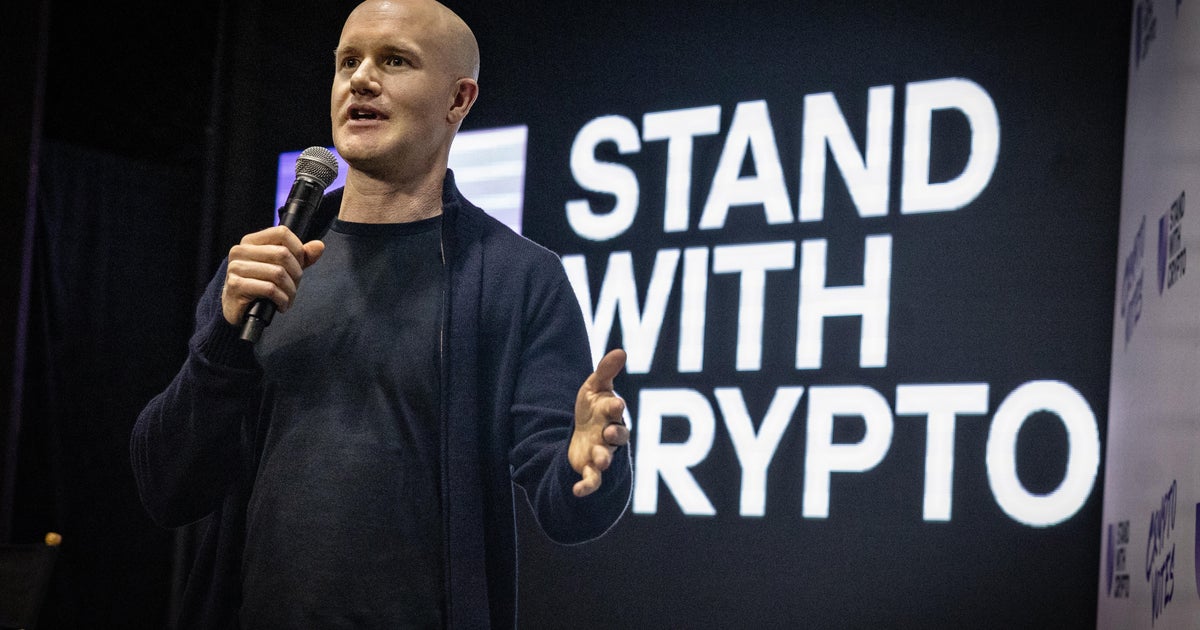
Coinbase CEO Brian Armstrong and President Trump are advocating for the passage of the CLARITY Act, a bipartisan bill that establishes a regulatory framework for the cryptocurrency industry. In a Thursday interview, Armstrong stated that the legislation would increase consumer protections and help prevent financial failures similar to the 2022 collapse of the FTX exchange. The bill, which has already passed the House of Representatives, is scheduled for a vote in the Senate this September.
The proposed legislation aims to clarify legal standards for digital assets, which currently operate in what Armstrong described as a "gray area." Under the CLARITY Act, two federal agencies—the Securities and Exchange Commission (SEC) and the Commodity Futures Trading Commission (CFTC)—would share joint responsibility for regulating the market. The SEC typically oversees stocks and bonds, while the CFTC manages derivatives and commodities markets.
President Trump met with technology leaders at the White House on Wednesday to urge Congress to pass the measure, arguing it is necessary for the U.S. to remain competitive with China. During the same period, the Trump family has expanded its involvement in the sector; a Trump-appointed regulator recently gave preliminary approval for a bank charter to World Liberty Trust Company. This entity is affiliated with World Liberty Financial, a venture founded in 2024 by the president's sons and the sons of Steve Witkoff, the administration's special envoy to the Middle East.
Critics of the bill, including Sen. Elizabeth Warren (D-MA), have raised concerns regarding potential conflicts of interest. In a July statement, Sen. Warren argued the legislation does not prevent the president from profiting from his personal cryptocurrency ventures, which she stated have generated more than $1.4 billion. Armstrong defended the bill by pointing to an included ethics provision, noting it is rare for legislation to impose such requirements on the executive branch.
On a broader scale, the bill shifts the industry from a self-regulated or "gray" status to a dual-agency federal oversight model. This change would provide law enforcement with specific tools to target illicit activity while standardizing the rules for financial service providers. Small-business owners and tech startups in the crypto space would face new compliance requirements, but proponents like Armstrong argue this would also make it easier for these firms to raise capital legally within the U.S. financial system.
The precedent set by the bill includes a specific ethics provision targeting the executive branch, a detail Armstrong noted as unusual. As the Trump family continues to develop its own crypto-related bank and financial ventures, the effectiveness of these ethics rules will be a point of ongoing debate among lawmakers. The next major step for the legislation is the scheduled Senate vote in September, which will determine if the regulatory framework moves toward final implementation. Following news of the White House meeting, bitcoin and ethereum prices rose 5.9% and 2.8% respectively on Thursday.