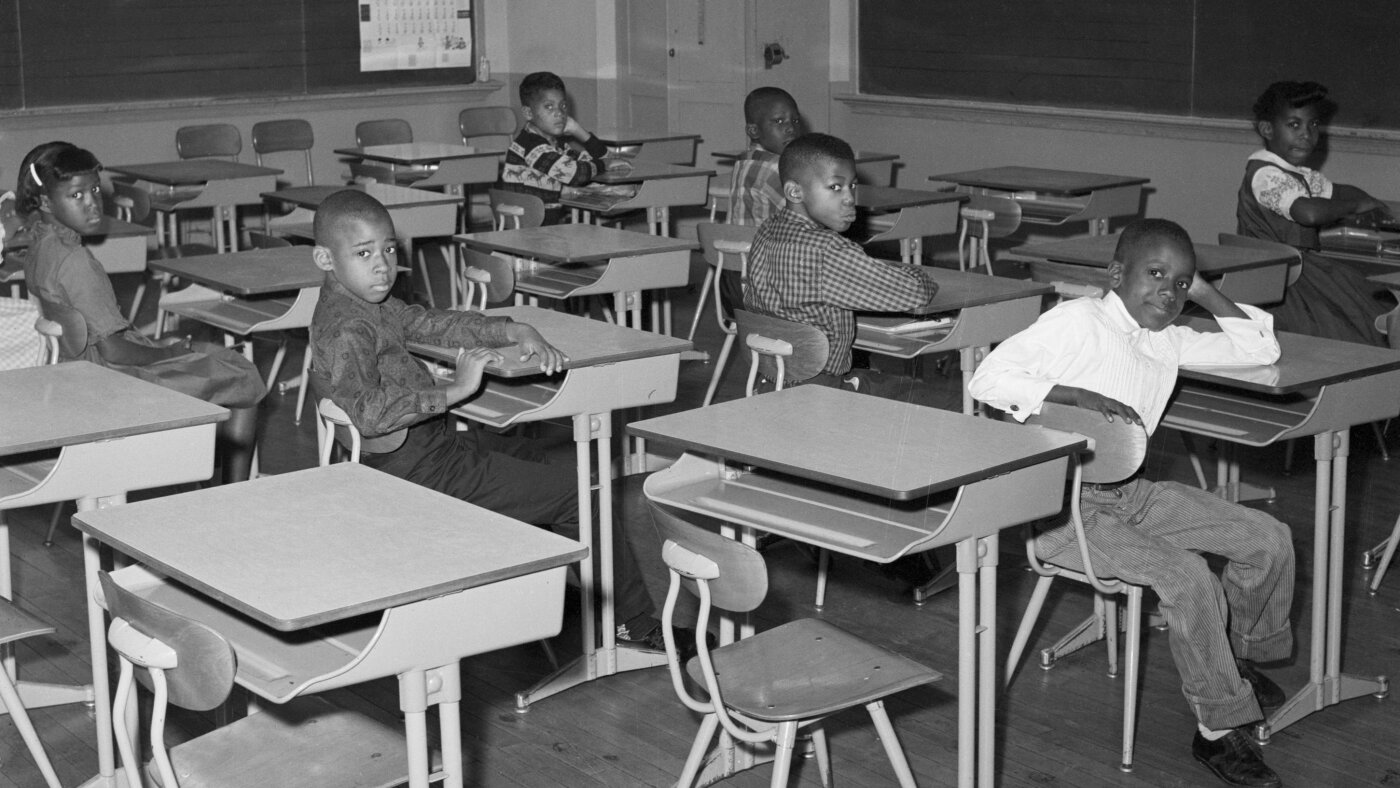
In 1966, the federal government commissioned a massive survey designed to address educational inequality across the United States. Known as the Coleman Report, the study was intended to provide solutions for disparity in schools but instead sparked a 60-year debate concerning the roles of race and resources in American public education. This report and the subsequent policy decisions have shaped the ongoing discussion regarding the purpose of schooling in the U.S.
The history of federal involvement in education dates back to the post-Civil War era. According to Michael Studman, an assistant professor at Penn State University, education in the early 1800s was fragmentary, with no federal and few state systems. Reformers like Henry Barnard and Horace Mann led the "common school movement" in the 1830s, advocating for free public schools with shared curricula and teacher requirements to foster civic culture and stability amid rising industrialization and immigration.
Following the Civil War, Congress established the first Department of Education to assist in reunifying the country and managing the transition as black Americans were emancipated. However, this initial department was essentially shut down only one year after its creation. The current U.S. Department of Education, which oversees federal student loans, civil rights complaints, and billions of dollars in school funding, was not established in its modern form until roughly 50 years ago, following a 1976 campaign pledge by President Jimmy Carter.
The debate over education has often centered on literacy and social control. Before the Civil War, many Southern states passed anti-literacy laws to prevent enslaved people from learning to read, a move intensified after Nat Turner’s 1831 rebellion. In the North, reformers viewed education as a tool for moral and civic training, though some were motivated by concerns over the religious and political views of new immigrants.
The scale of this impact is reflected in the shifting policies of successive presidential administrations. Over the last three decades, policies have ranged from the "No Child Left Behind" Act under George W. Bush to the "Race to the Top" competition under Barack Obama, each affecting how local districts qualify for federal money. These changes can result in shifts in school testing requirements, the availability of specialized grants for low-income students, and the legal guidelines schools must follow regarding student privacy and equity.
Knock-on effects include the long-term economic trajectory of the workforce and the financial stability of higher education institutions reliant on federal student aid. Future policy remains a subject of active political contention, with some recent proposals suggesting the dismantling of the Department of Education, while others advocate for expanded federal student loan cancellations. The next significant milestones in this ongoing debate will likely occur during federal budget negotiations and the implementation of administration guidelines for student loan programs and school civil rights enforcement.