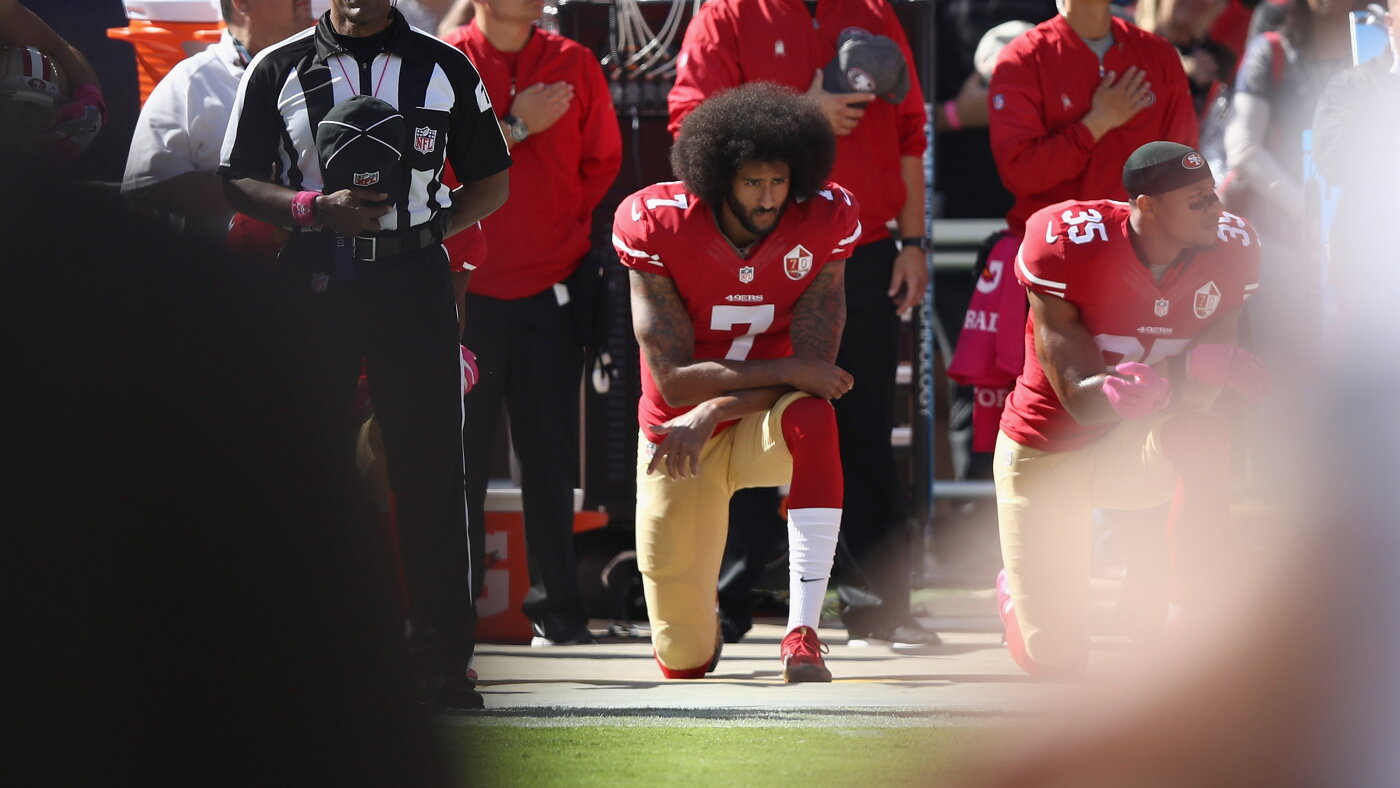
Former NFL quarterback Colin Kaepernick has released a memoir, *The Perilous Fight*, which details his path to professional football and his decision to protest police violence during the 2016 season. In the book, Kaepernick addresses personal experiences that shaped his perspective on race, including an incident at age eight where he was targeted by older children. He also states that he remains interested in returning to the National Football League (NFL) despite having not played in a game since the 2016 season concluded.
Kaepernick played for the San Francisco 49ers from 2011 to 2016, appearing in the NFC championship games in 2013 and 2014 and the 2013 Super Bowl. During the 2016 season, he began kneeling during the national anthem to draw attention to police shootings of Black individuals, including Mario Woods, Alton Sterling, and Philando Castile. This action resulted in public debate and led to Kaepernick's departure from the league. In 2019, he reached a settlement with the NFL after filing a grievance that accused team owners of colluding to keep him out of the league.
In his memoir, Kaepernick describes the NFL’s environment as one that prioritizes player obedience over social advocacy. He recalls being surprised when another player told him they needed to ask their "owner" for permission to protest, a dynamic he attributes to the league’s ability to threaten players' careers. Kaepernick also addresses perceptions of his absence from the field, stating that claims he no longer wanted to play were false. He notes that while he is passionate about the sport, he and his family would avoid letting their children play contact football until high school due to concerns regarding brain development.
The scale of the impact involves the 32 private businesses that make up the NFL and the players who must navigate the league’s workplace culture. Kaepernick’s 2019 settlement followed a grievance alleging collusion among owners to prevent his employment. For players, the "obedience" culture Kaepernick describes translates to a choice between job security and personal expression on the field. The memoir highlights how the league's response to 2016 protests influenced how subsequent social issues are addressed within the sports industry.
The knock-on effects include a lasting debate over the intersection of sports, national symbols, and civil rights. While Kaepernick maintains his desire to return to the field, the period since his protest began has seen him transition to an advocate and author. His refusal to accept his current professional status as the "end outcome" suggests ongoing efforts to challenge the league's narrative. Future developments may include further discussions on player safety and brain health, as Kaepernick’s memoir joins other literature from former players advising against youth participation in contact football.