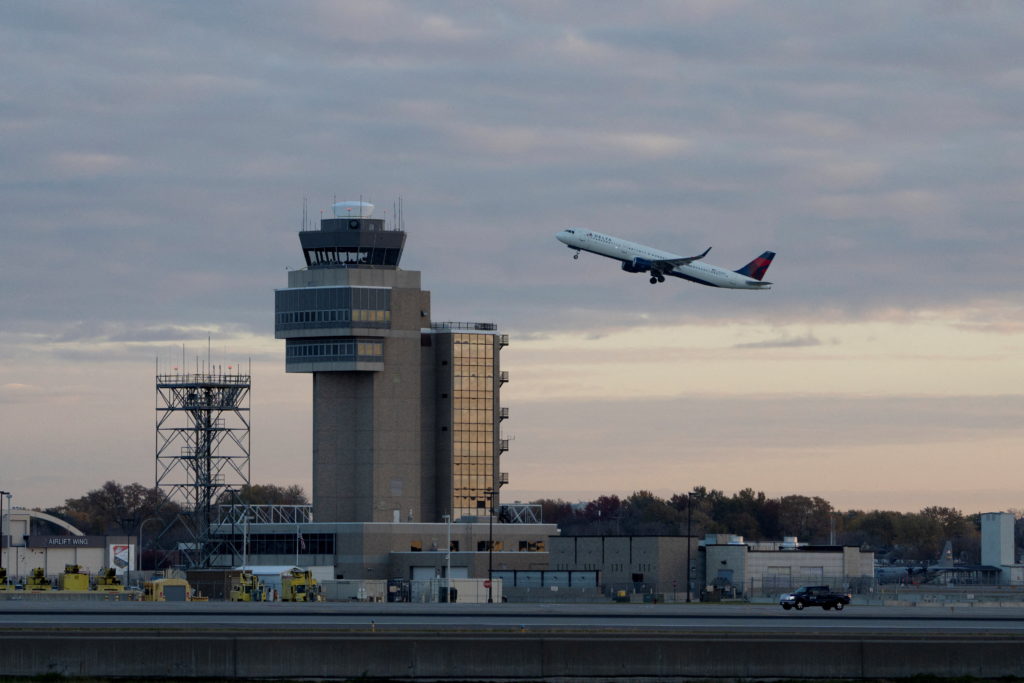
Communications failures at a regional Federal Aviation Administration (FAA) facility in Philadelphia disrupted hundreds of flights across the Northeast on Monday, September 21, 2026. The outage affected every major airport in the New York area, prompting Transportation Secretary Sean Duffy to request an additional $20 billion from Congress to pay for the next phase of the air traffic control overhaul.
The disruption occurred when a switch on the Philadelphia facility's primary communications line failed, and a backup fiber optic line was found to have been severed by railroad construction workers. The dual failure left controllers without radar or communications for several hours. This event follows similar technical outages over the past year at facilities in Minneapolis and Dallas, as well as a 2025 collision over the Potomac River that killed 67 people.
According to Flightradar24, Newark Liberty International Airport saw a near-standstill of commercial traffic, with no commercial landings from 9:40 a.m. to just after 5:20 p.m. local time on Monday. Philadelphia International Airport reported more than 200 cancellations, while LaGuardia and Kennedy airports also faced disruptions. By midday Tuesday, nearly 100 additional flights were canceled as airlines worked to reposition crews and aircraft.
The scale of the requested funding is significant, as Secretary Duffy is seeking $20 billion on top of the $12.5 billion Congress provided last year. The FAA reported it has already replaced 3,346 communications lines and 190 voice switches. However, Duffy stated that the current "40-year-old architecture" requires a new design, including moving systems to the cloud and implementing an AI-based predictive tool. Engineering experts like Sheldon Jacobson warn that when systems at major hubs go down, they cause ripple effects across dozens of other airports.
The precedent for these upgrades is tied to safety and reliability concerns following the 2025 Potomac River crash. While the National Air Traffic Controllers Association praised the professionalism of controllers during the equipment failure, industry groups like the Modern Skies Coalition are using the event to urge Congress to approve the money for technology replacement. Moving forward, the Reason Foundation suggests the FAA needs reliable long-term funding rather than annual appropriations, or potentially a transition to an independent agency funded by airline ticket fees. Congress has not yet set a date for a vote on the requested $20 billion in additional funding.