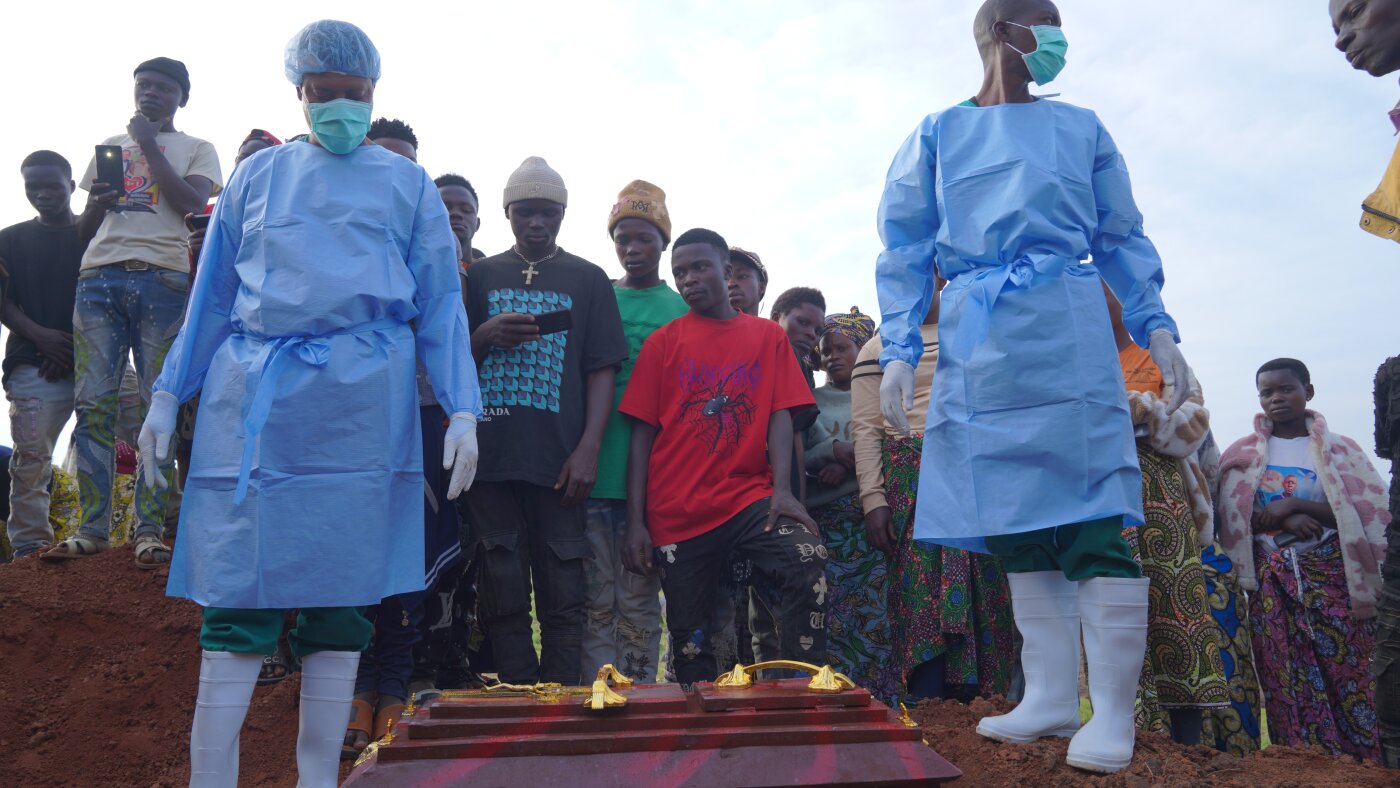
Government data released Wednesday shows that the Ebola outbreak in the Democratic Republic of Congo has reached 5,021 recorded cases. According to the Ministry of Health, the virus has resulted in 2,378 deaths as of Sunday.
The current outbreak is spreading through remote regions characterized by insecurity, displacement, and significant population movement. Responders reported that the virus is moving at a speed that has outpaced efforts to contain it. Since the first case was detected, the infection rate has been approximately three times faster than the 2014-2016 West Africa outbreak, which caused more than 11,000 deaths.
World Health Organization (WHO) Director-General Tedros Adhanom Ghebreyesus stated at a meeting on Tuesday that the risk of further national and international spread remains high. Tedros noted that the epidemic is not yet under control. Safety concerns have complicated the medical response, as health workers have been targeted by local residents.
In Ituri province, which is the most affected area, a health team was attacked on Monday in the territory of Aru following a report of a suspected case. Michael Wani, president of the Union of Cultural Associations for the Development of Ituri, reported that a mob set fire to an ambulance and damaged two additional vehicles during the incident.
The situation directly impacts the safety and mobility of health responders and local citizens. Residents in affected territories like Aru may experience a breakdown in emergency services, as evidenced by the destruction of medical transport vehicles and attacks on personnel. These security risks prevent health agencies from conducting contact tracing and providing treatment, which in turn allows the virus to spread further into new districts or across international borders. The instability complicates the delivery of basic health care and humanitarian aid to displaced populations already living in challenging conditions.
The knock-on effects include a high risk of international transmission, which could lead to travel restrictions or increased screenings at borders for neighboring countries. The precedent of medical teams being targeted by local mobs sets a difficult standard for future humanitarian interventions in the region. According to the WHO, the epidemic is far from controlled, meaning the immediate future will likely involve intensified international meetings and continued deployment of emergency resources. No specific end date for the outbreak or deadline for new containment measures was reported.